Berkshire Hathaway’s Utility Is Asking for a Historic Rate Hike in California
A Berkshire-owned utility wants far more from 46,000 customers in rural California, while its credit rating sits one notch above junk and its parent quietly pulls back. Is this a billion-dollar blip or an early warning for Buffett's empire?

This post may contain links from our sponsors and affiliates, and Flywheel Publishing may receive compensation for actions taken through them.
About 46,000 electricity customers in far northern California could see their rates rise sharply if regulators approve a utility’s rate request. On November 6, 2026, PacifiCorp, which operates as Pacific Power and is owned by Berkshire Hathaway (NYSE:BRK-B | BRK-B Price Prediction) through Berkshire Hathaway Energy, asked the California Public Utilities Commission for a $103.4 million increase effective January 1, 2027. That works out to a net increase of 57%.
“Historic” is how press coverage described the request. The filing itself does not use the word. Our own comparison supports the label, because the current ask is more than double the 25.7% Pacific Power sought on May 5, 2022.
Class B shares last traded at $571.06, down 0.22% on the session. Berkshire Hathaway Class A (NYSE:BRK-A) was at $861,627.07. No source ties either move to the filing, and for a $1.2397 trillion company, the dollars involved are small. The filing shows considerable strain inside one of Berkshire’s regulated utilities.
What PacifiCorp Actually Filed
The base revenue requirement would rise $82.8 million, or 56.8%. Residential customers face 56.9%, and the overall figure is 57.0%, while other customer classes range from 55.6% to 58.0%. A case number has not been assigned yet.
A company pricing director testified that the average residential Schedule D bill would rise $121.15 a month, and the average CARE discount customer’s bill would rise $90.24. Press coverage rounded the residential figure to $120. It is unclear whether either number accounts for a separate 14% decrease that also takes effect January 1. That decrease will partly offset the increase, and review could take several months.
The filing is a request, and regulators can approve less. On the 2022 ask of $28 million, regulators approved 17.5% in late 2023.
Wildfire Costs Drive the Ask
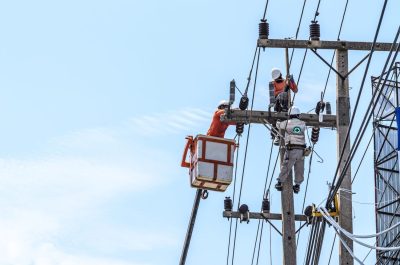
PacifiCorp names three drivers: wildfire-prevention spending, higher insurance costs tied to wildfire risk, and inflation. California customers have had no general increase since 2023, so the request covers three years of investment. Since 2022, the company has added more than 300 miles of covered power lines and replaced more than 7,000 wooden poles with steel or fiberglass.
The request also seeks to recover deferred wildfire costs projected through year-end 2026. Those include $93.8 million in the mitigation plan account, $11.1 million in liability insurance premiums and $0.2 million in a fire-risk account, recovered over six years at about $19.7 million a year.
Signs Berkshire Is Shrinking PacifiCorp
Between June 2023 and early 2026, PacifiCorp’s credit rating was cut several times because of wildfire litigation, weaker cash flow and adverse decisions in other states. Its issuer rating now stands one notch above junk (non-investment grade). That matters because a utility that has to keep borrowing to strengthen its grid pays a higher rate on every new bond as its rating falls.
Under current rates, PacifiCorp would earn a return on equity (profit on shareholder capital) of negative 2.636% in California, against an authorized 10.0%. The company is asking for 10.5%, a 7.96% overall return and a 50/50 debt-equity structure.
Berkshire has responded by pulling back. PacifiCorp suspended dividends to its parent, did a sale-leaseback of the Boardman-to-Hemingway line with Berkshire Hathaway Energy, proposed selling its Washington territory to an affiliate of Portland General Electric (NYSE:POR) and cut near-term capital spending.
California Is a Tiny Slice of Berkshire
The California territory covers more than 11,292 square miles across Siskiyou, Modoc, Shasta and Del Norte counties. In 2025 it produced $153.6 million in operating revenue and a 5.35% return on rate base. For scale, all of Berkshire Hathaway Energy earned $891 million in operating earnings in the second quarter, compared with $12.98 billion for Berkshire as a whole.
On the same day, Pacific Power announced a 7.9% decrease for Washington customers. Asking for a 57% increase in a rural, fire-prone region is politically difficult, and regulators cut the last request.
What Really Moves BRK.B Stock From Here
Insurance, BNSF, and the investment portfolio move this stock far more than the utility does. Class B shares are up 13.61% year to date, within a 52-week range of $464.01 to $586.30.

The main risk to the stock is further credit damage or wildfire liability in other states. The third-quarter release and 10-Q, due November 7, 2026, will show how the energy unit is performing. If PacifiCorp is downgraded to junk, or if California approves less than the 17.5% it granted last time, the utility problem gets bigger. For investors who would rather borrow Buffett’s homework than parse a rate case, we sorted Berkshire’s own portfolio for the cheapest dividend payers in a free report here.
Contact [email protected] for any questions or corrections.
Omor Ibne Ehsan is a writer at 24/7 Wall St. He is a self-taught investor with a focus on growth, cyclical, and dividend equities that have strong fundamentals, value, and long-term potential. He also has an interest in high-risk, high-reward investments such as penny stocks.