Hyperliquid Users Borrow $269 Million Against HYPE on Day One: What It Means for the Token
Hyperliquid just turned its own token into collateral, and the lending rules give HYPE holders more borrowing power than Bitcoin backers get. That unusual decision carries a catch that could accelerate losses when prices fall.

This post may contain links from our sponsors and affiliates, and Flywheel Publishing may receive compensation for actions taken through them.
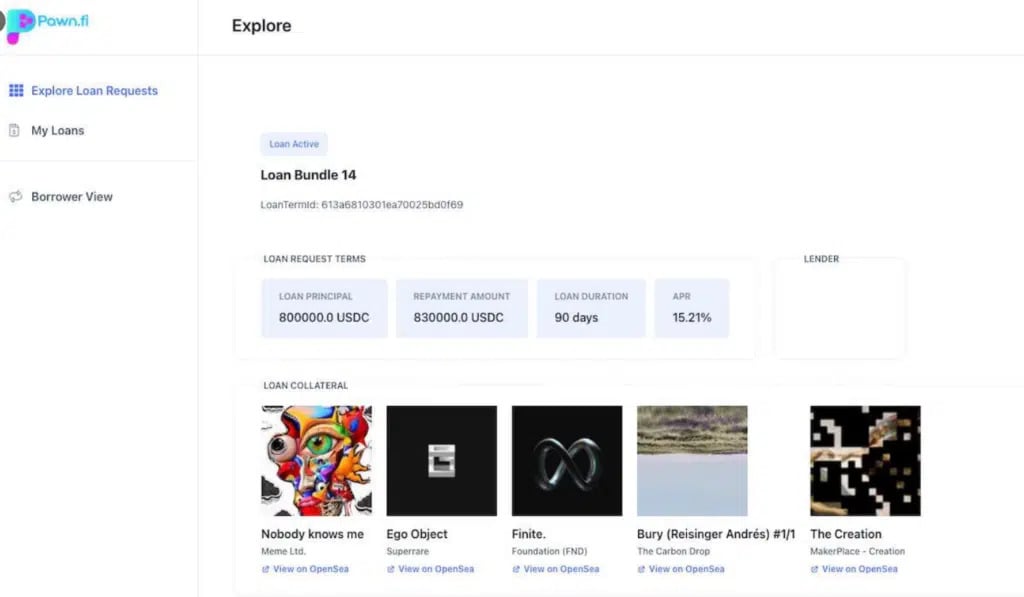
On September 18, 2026, the Hyperliquid lending platform went live, allowing users to borrow dollar stablecoins USDC and USDT by using HYPE (CRYPTO:HYPE) or Bitcoin (CRYPTO:BTC) as collateral. On its first day, a staggering $269 million was borrowed, Hyperliquid co-founder Jeff Yan confirmed.
The launch effectively turned HYPE into collateral, pushing its price to a record near $93 that day. As of September 24, HYPE is trading at $94, surpassing that initial high and up 18.7% over the week. So, does this new lending feature change HYPE’s nature as an asset? What implications does this have for its holders?
Hyperliquid Now Lends USDC and USDT Against HYPE and Bitcoin

Hyperliquid has introduced a money market within HyperCore, which powers its exchange. In this model, some users lend stablecoins while others borrow them. A borrower deposits HYPE or Bitcoin as collateral, borrows USDC or USDT, and pays interest to the lenders. The interest rate fluctuates based on utilization, meaning borrowing becomes more expensive as the pool fills.
At launch, Hyperliquid capped the total borrowing at $500 million for USDC and $10 million for USDT. With $269 million borrowed in the first 24 hours, about 53% of the combined limit was already used. As a safeguard, Hyperliquid retains 10% of the interest paid by borrowers as a reserve for situations where forced sales of collateral do not cover a loan.
Before September 18, HYPE holders generated income from trading fees and staking rewards. Builders creating their own markets under HIP-3 must stake 500,000 HYPE, roughly $47 million. The introduction of lending adds another utility for HYPE, allowing holders to access cash without selling their tokens.
Hyperliquid Lets Borrowers Take More Against HYPE Than Against Bitcoin

Hyperliquid set HYPE’s loan-to-value (LTV) limit at 65%. This means users can borrow up to $650 in stablecoins for every $1,000 of HYPE. In contrast, Bitcoin’s LTV limit is only 50%, allowing a maximum of $500 to be borrowed against $1,000 worth of Bitcoin. Although Bitcoin’s market capitalization is about 80 times larger at $1.7 trillion, HYPE, valued at about $20.9 billion, offers greater borrowing power.
The liquidation thresholds also differ. A HYPE loan liquidates when its value reaches 82.5% of the collateral, while Bitcoin’s threshold is 75%. This means a borrower who maximizes their loan against HYPE risks liquidation after a 21% price drop, which would be around $74 if HYPE is trading at $94. Conversely, a Bitcoin borrower faces a liquidation risk after a 33% drop, roughly $56,300 from an initial price of $84,388.
Given that HYPE has risen 18.7% in the week leading up to September 24, a 21% decline is within reach—close to the size of its latest weekly move.
A Sharp Drop in HYPE Now Turns Into Forced Selling on Hyperliquid

HYPE pricing is now closely tied to Hyperliquid’s credit market. If HYPE falls sharply, loans backed by HYPE approach their liquidation thresholds, prompting Hyperliquid to liquidate collateral to repay stablecoin lenders. This selling pressure can drive HYPE prices down further, creating a vicious cycle in which more loans are liquidated.
Any lending platform that uses its own token as collateral has to contend with this dynamic. Hyperliquid’s decision to set a higher borrowing limit for HYPE could mean liquidations happen more quickly during a downturn than on Bitcoin.
What borrowers choose to do with the $269 million also plays a role in managing this risk. While Hyperliquid hasn’t released a breakdown of how the funds were used, if borrowers use the stablecoins to buy more HYPE, they increase their exposure to the very asset securing their loan.
Does $269 Million in Borrowing Make HYPE a Different Asset?
Absolutely. HYPE has shifted from a fee-earning and staking token to a collateral asset. Hyperliquid considers HYPE more reliable collateral than Bitcoin, giving holders the option to access cash without selling their tokens. However, this also introduces a new avenue for forced selling, as maximum HYPE loans can be liquidated after a relatively small 21% price drop.
The sustainability of this increased borrowing will determine the long-term impact on HYPE. If borrowing remains significant and the token can withstand market fluctuations without triggering mass liquidations, lending may have permanently altered HYPE’s status. As Payward, Kraken’s parent company, moves forward with regulated Hyperliquid perpetuals for U.S. traders, demand could potentially grow. On the other hand, if borrowing decreases, the initial $269 million may only reflect a temporary surge rather than ongoing engagement.
Contact [email protected] for any questions or corrections.
Sam Daodu is a crypto analyst who's spent nearly a decade making blockchain understandable—no easy task when most whitepapers read like fever dreams. He writes for 24/7 Wall St., covering Bitcoin, altcoins, and crypto market analysis for investors. Before crypto, he was a tech writer (back when explaining "the cloud" was peak innovation). Since 2018, he's written for CoinTelegraph, Yahoo Finance, The Block, Cryptonews, Zypto, Rain, and more—basically anywhere people want crypto news without the headache. Sam runs MacLabs Marketing, a content agency for crypto brands tired of sounding like AI wrote their website. He also publishes free crypto education on his site for Web3 enthusiasts who think "gas fees" is a typo. When he's not writing or staring at charts, Sam's either: - Watching anime (currently convinced One Piece has better tokenomics than most altcoins) - At the gym sculpting himself into a Greek god - Listening to the music your mum warned you only bad boys listen to Connect: LinkedIn | Email | MacLabs Marketing