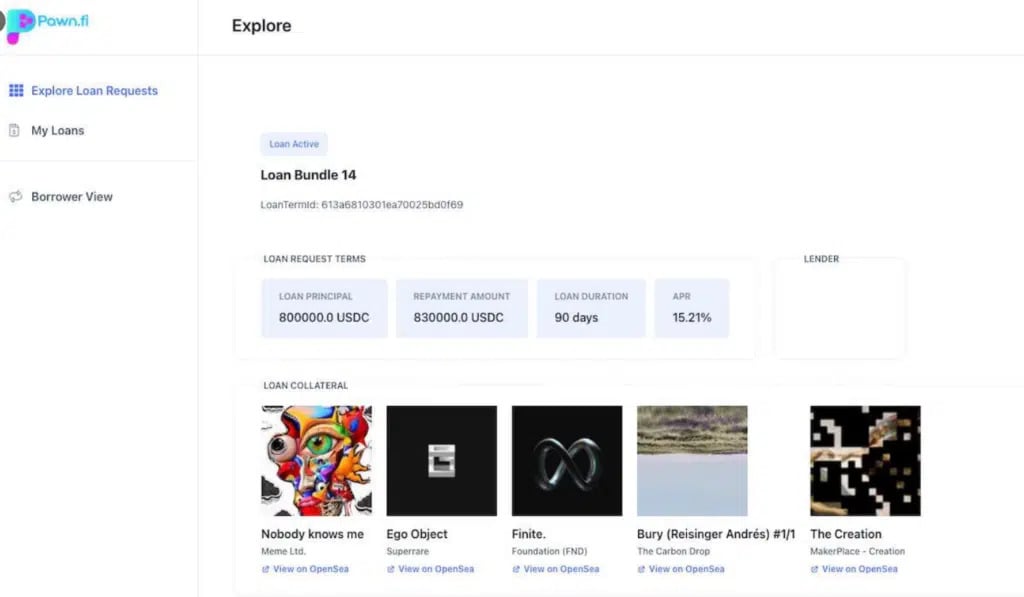
Aave Is Moving Closer to Accepting Native Bitcoin as Collateral. Is AAVE a Better Buy Than BTC?
Babylon Labs just asked Aave to accept native Bitcoin as collateral, cutting out custodians entirely, and AAVE has already surged 32% in a month. Whether that momentum holds depends on a governance gauntlet with no finish date in sight.

This post may contain links from our sponsors and affiliates, and Flywheel Publishing may receive compensation for actions taken through them.

Babylon Labs wants Aave (CRYPTO: AAVE), the lending protocol where users can borrow cryptocurrency using their deposits as collateral, to accept native Bitcoin. On October 14, 2026, Babylon, which focuses on Bitcoin infrastructure, submitted a formal proposal on Aave’s governance forum. This proposal asks Aave to accept Bitcoin that stays on the Bitcoin blockchain as collateral, the asset borrowers lock up to secure a loan and lose if the loan goes bad.
As of October 16, AAVE trades at $154, up 32.5% over the past month, despite a 7.2% drop over the past week. Bitcoin (CRYPTO: BTC), meanwhile, trades at $81,548, up 7.8% over the same month.
If Bitcoin holders begin moving their assets into Aave, could native Bitcoin on Aave make AAVE a better buy than Bitcoin?
Babylon’s Native Bitcoin Proposal Still Needs an Aave Vote
Babylon’s proposal is called an Aave Request for Final Comment (ARFC). The community is currently reviewing this detailed draft before taking an official vote. It introduces two new components, or “spokes,” to Aave’s upcoming V4 version. The Babylon spoke would accept only native Bitcoin as collateral.
Historically, Bitcoin holders have used wrapped Bitcoin, which is a token that mirrors Bitcoin’s price while a custodian holds the actual coins. In contrast, Babylon’s proposal locks the Bitcoin directly in a script on the Bitcoin network. This means borrowers wouldn’t have to rely on a middleman.
The proposal emphasizes that the coins are “not wrapped, bridged or held by a custodian.” Nonetheless, wrapped Bitcoin is still involved in liquidation processes, which occur when collateral loses too much value.
Earlier this year, Aave holders supported the idea through an informal poll called a temperature check. However, several steps remain before any Bitcoin integration happens. The process begins with community feedback and a risk review, followed by a Snapshot vote, which is an off-chain poll of AAVE holders. Finally, a binding on-chain vote called an Aave Improvement Proposal (AIP) will establish the full risk parameters.
As of October 16, Aave had not announced a date for the public vote, and information about borrowing limits and liquidation thresholds is still pending.
How Native Bitcoin Could Boost Aave’s Lending Revenue
Aave generates revenue when users borrow funds. Borrowers pay interest, and Aave keeps a portion of those payments, so adding a new collateral type like Bitcoin could increase loans and fees. The primary use suggested in the proposal is borrowing stablecoins—tokens that are pegged to the U.S. dollar—using native Bitcoin as collateral.
Bitcoin is the largest cryptocurrency, and some holders prefer not to give their assets to a custodian. A custodian-free structure could attract these holders to Aave for the first time, bringing in more interest income for the platform.
The proposal also promises early revenue for the Aave DAO, the group of AAVE holders that governs the protocol and decides how the treasury is allocated. However, any increase in revenue will depend on how many Bitcoin holders trust the new vault system. Aave has yet to clarify borrowing limits.
AAVE Has Beaten Bitcoin Over 30 Days, but It Swings Harder
AAVE’s 32.5% gain over the last month outperformed Bitcoin’s 7.8% gain in the same period. However, over the past week, AAVE has dropped 7.2%, while Bitcoin has fallen only 1.2%. AAVE’s decline coincided with the October 14 filing of the proposal, suggesting some traders may have taken profits on the news.
In the long term, the price gap widens significantly. AAVE is currently trading 76.7% below its all-time high, while Bitcoin is down 35.3% from its record set on October 6, 2025. Because AAVE has further to climb, it has more potential for significant gains but also carries a higher risk of larger losses if demand wanes.
Bitcoin holders could benefit from this proposal without voting themselves. If lending with native BTC becomes popular, they could access cash without selling their Bitcoin, encouraging them to hold onto their assets.
Does Native Bitcoin on Aave Make AAVE a Better Buy Than BTC?
At this point, AAVE doesn’t seem like a better investment than Bitcoin, since Babylon’s plan is still only a proposal. The upcoming community review, risk assessments, Snapshot vote, and on-chain AIP must occur before Aave can add native Bitcoin. Until then, Bitcoin’s smaller weekly drop underscores its stability as an investment while the governance process unfolds.
The next crucial indicator will be the Snapshot vote on Babylon’s ARFC. If it gains substantial support and the risk settings allow ample borrowing, AAVE could become an appealing higher-risk option alongside Bitcoin. Conversely, if the proposal stalls or if risk limits are overly restrictive, AAVE’s recent rally could fade, solidifying Bitcoin’s position as the stronger investment.
Contact [email protected] for any questions or corrections.
Sam Daodu is a crypto analyst who's spent nearly a decade making blockchain understandable—no easy task when most whitepapers read like fever dreams. He writes for 24/7 Wall St., covering Bitcoin, altcoins, and crypto market analysis for investors. Before crypto, he was a tech writer (back when explaining "the cloud" was peak innovation). Since 2018, he's written for CoinTelegraph, Yahoo Finance, The Block, Cryptonews, Zypto, Rain, and more—basically anywhere people want crypto news without the headache. Sam runs MacLabs Marketing, a content agency for crypto brands tired of sounding like AI wrote their website. He also publishes free crypto education on his site for Web3 enthusiasts who think "gas fees" is a typo. When he's not writing or staring at charts, Sam's either: - Watching anime (currently convinced One Piece has better tokenomics than most altcoins) - At the gym sculpting himself into a Greek god - Listening to the music your mum warned you only bad boys listen to Connect: LinkedIn | Email | MacLabs Marketing