Russia Is Opening Bitcoin and Ethereum to Retail Investors This Month. Can a 300,000-Ruble Cap Move the BTC and ETH Price?
Russia just handed ordinary citizens a legal path to Bitcoin and Ethereum, yet Coinbase and Strategy shrugged. Between sanctions, broker bottlenecks, and heavy ETF outflows in the US, one number may matter far less than headlines suggest.

This post may contain links from our sponsors and affiliates, and Flywheel Publishing may receive compensation for actions taken through them.

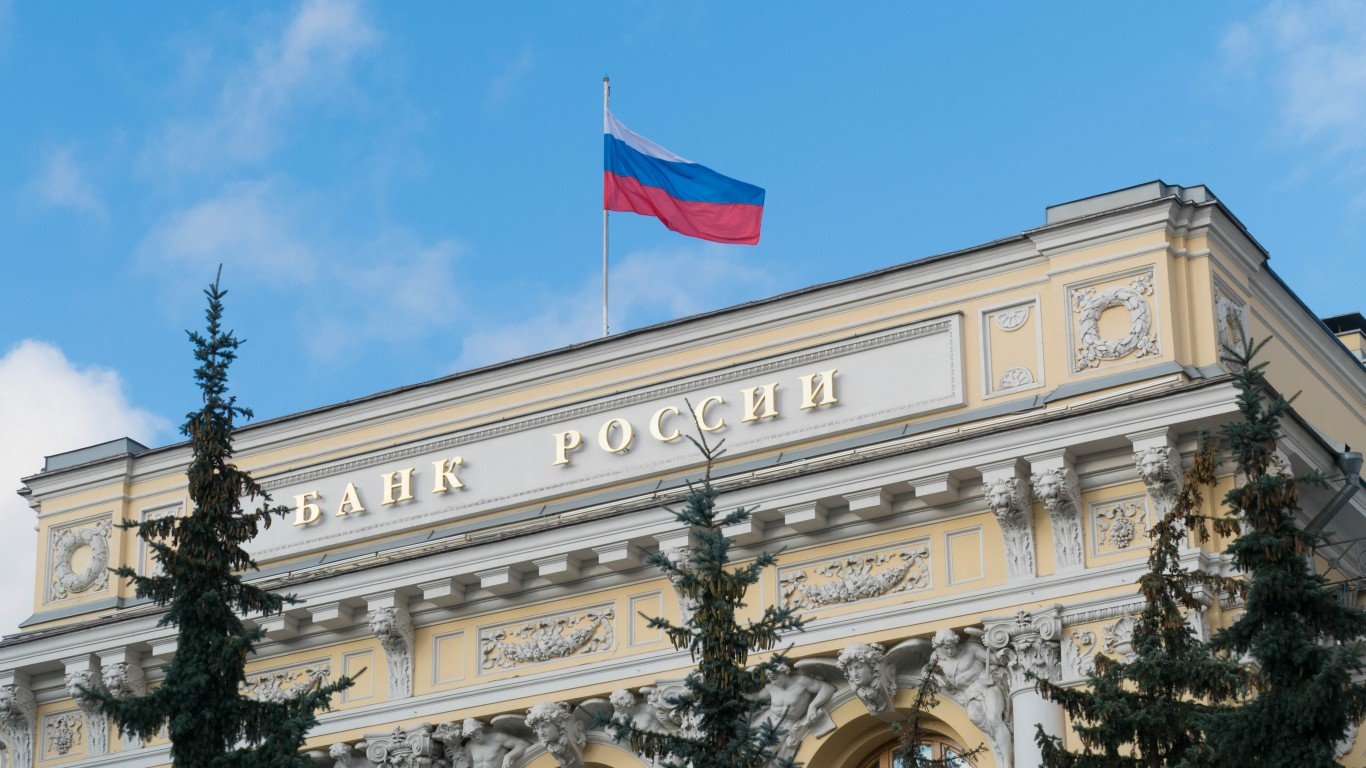
Russia’s central bank opened the crypto market to retail investors. Under a new Bank of Russia regulation, investors who aren’t classified as professional buyers can start buying Bitcoin (CRYPTO:BTC), Ethereum (CRYPTO:ETH), and the Tether (CRYPTO:USDT) stablecoin from November 17. However, purchases through any one intermediary are capped at 300,000 rubles a year, roughly $3,662 at the November 8 exchange rate.
US-listed crypto stocks showed little reaction. Coinbase (NASDAQ:COIN | COIN Price Prediction) fell 1.5% to $134.76 on November 6, while Strategy Inc. (NASDAQ:MSTR) dipped 0.3% to $128.93. Bitcoin trades at $75,662 and Ethereum at $2,226 today. So can a cap this small move either coin’s price?
Russia Set the Rules, but Brokers Decide How Much Money Flows In

The regulation has been officially released, naming the three cryptocurrencies eligible for purchase, the start date, and the cap for each intermediary. All buyers will also need to pass a knowledge test before investing. Qualified investors, on the other hand, face no purchase limits.
While the rules are clear, how retail buyers will reach the market remains uncertain. In October, the Bank of Russia authorized Sberbank, the country’s largest bank, to provide crypto exchange services. On November 2, Moscow Exchange announced plans to start Bitcoin, Ethereum, and USDT trading on December 1, beginning with pilot trades. However, Russia hasn’t disclosed how many brokers it will license at launch, nor has it shared a demand forecast.
Since the 300,000-ruble cap applies to each intermediary, a buyer with accounts at several brokers could buy more than the cap in a year. That makes the theoretical ceiling look large on paper. Even so, the knowledge test, a potentially long licensing process, and restrictions on moving coins to private wallets could significantly reduce actual demand.
Why Coinbase and Strategy Stock Showed Little Response
Coinbase Can’t Serve Russian Buyers
Because of OFAC sanctions, Coinbase can’t serve Russian customers, so it won’t earn any direct revenue from the new regulation. Russian buying could only help Coinbase through higher crypto prices, which could in turn lift its trading and subscription income. Against Coinbase’s third-quarter revenue of $1.22 billion, any such increase would be minimal. Our Coinbase stock outlook looks at what moves the shares.
Strategy’s Value Is Tied to Bitcoin, Not Russian Buyers
Strategy holds about 848,517 BTC but has no retail customers. Executive Chairman Michael Saylor told analysts on February 5 that crypto is moving from an asset class few could buy to one where everyone is competing to offer access. Russia’s new rules support that view, but Strategy’s stock closely follows Bitcoin’s price. Given that the cap applies inside a sanctioned country, the rule is unlikely to meaningfully move Bitcoin’s market value.
Earlier Access Milestones Didn’t Move Prices Much

US spot Bitcoin ETFs saw $1.28 billion in net outflows in the week to November 6. To offset that one week of outflows, about 350,000 Russian buyers would each need to buy the full annual cap.
History points the same way. When El Salvador made Bitcoin legal tender on September 7, 2021, Bitcoin dropped that same day sharply. Similarly, the launch of Hong Kong’s spot Bitcoin and Ethereum ETFs in April 2024 didn’t lead to sustained price gains.
Russia also plans to ban peer-to-peer crypto trading starting July 1, 2027. So some of the new regulated buying could come from existing Russian traders moving off informal channels ahead of that ban, rather than from new investors.
Will the 300,000-Ruble Cap Move Bitcoin and Ethereum Prices?
On the current evidence, the 300,000-ruble cap seems unlikely to move Bitcoin’s price much, and Ethereum looks even less likely to benefit. Bitcoin trades below its 20-day average of $79,362 and has slipped below its 30-day low close of $75,775, suggesting selling by US fund holders is a far bigger factor than potential Russian buying.
Ethereum also trades below its 30-day low close of $2,236, and capped Russian buyers might prefer Bitcoin, the better-known coin. If Bitcoin fails to reclaim its $79,362 20-day average before Moscow Exchange’s December 1 launch, that would suggest the new rules had little effect on its price. For Ethereum, the key level is its $2,156 200-day average, about 3% below its price. Our look at Ethereum’s year-end outlook runs the longer numbers.
Contact [email protected] for any questions or corrections.
Sam Daodu is a crypto analyst and the editor of 24/7 Wall St.'s Crypto Desk, where he covers Bitcoin, XRP, Ethereum, Solana and the altcoins investors search for most. His work focuses on price levels, spot ETF flows, on-chain data and the regulatory decisions that move crypto markets, written so a first-time buyer and a seasoned trader can both use it.
Sam has written about crypto professionally since 2019 and has published more than 2,000 articles. Before joining 24/7 Wall St., he wrote for crypto media outlets and Web3 companies and ghostwrote for crypto founders and token launches. His analysis is syndicated on Yahoo Finance, MSN and AOL and has been cited by other crypto news sites. He also founded MacLabs Marketing, a content and personal branding agency for crypto founders and executives.
When he isn't reading charts, Sam is usually at the gym or watching One Piece, a series he maintains has better tokenomics than most altcoins.