Moscow Exchange Launches XRP Futures in Rubles. What’s Behind the Timing?
Russia's biggest exchange just started letting qualified investors bet on XRP without ever touching a single token, and the margin requirements reveal exactly how nervous the exchange is about what it just unleashed.

This post may contain links from our sponsors and affiliates, and Flywheel Publishing may receive compensation for actions taken through them.
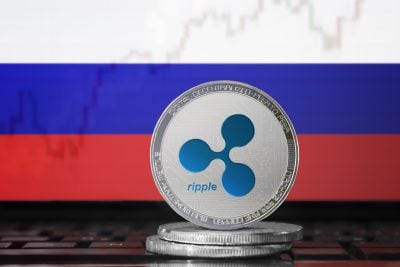
Moscow Exchange, Russia’s largest financial marketplace, has introduced XRP (CRYPTO:XRP) perpetual futures. Alongside established cryptocurrencies like Bitcoin, Ethereum, Solana, and Tron, XRP has gained interest, leading many to wonder why the exchange chose this particular moment and cryptocurrency for its new products.
Moscow Exchange’s XRP Futures Never Touch a Single XRP
Moscow Exchange’s XRP futures are unique because they settle in rubles, the Russian currency, rather than directly involving XRP. These contracts let qualified investors speculate on XRP’s price without owning the cryptocurrency. As of the launch date, XRP’s price stood at $1.57, up 22% over the previous week, coinciding with a broader rally that also boosted Bitcoin by 14%.
A perpetual future is a contract on an asset’s price that never expires. The exchange rolls these contracts over daily, meaning that as long as traders maintain their margin—cash collateral required by the exchange—they can keep their positions open indefinitely.
The XRP futures follow a price index based on U.S. dollar values, and all settlement occurs in rubles, creating a dual layer of speculation: one on the price of XRP and the other on the exchange rate.
The Moscow Exchange does not actually hold or deliver XRP when a trade occurs. Instead, the system lets funds circulate between Russian traders without directly interacting with the cryptocurrency itself. This contrasts with U.S. spot XRP ETFs, which purchase actual XRP with the funds those investors provide.
A Year of Crypto Futures Explains Why Moscow Exchange Launched Now

The launch of XRP futures has been in the works for some time. The Moscow Exchange has offered dated crypto futures since the summer of 2025, and by September 16, it reported that over 72,000 qualified investors had participated in these trades, with turnover exceeding 600 billion rubles (approximately $7 billion).
These contracts have fixed expiration dates, and traders must manually roll them over each month. Introducing perpetual futures eliminates that need, making trading more convenient for investors.
Moreover, the exchange already offers a variety of perpetual contracts across currencies, stock indices, bond indices, and precious metals, integrating cryptocurrency into its established product lineup rather than starting from scratch.
Qualified investors in Russia, who meet certain asset and experience criteria, represent a specific market segment that keeps these crypto products in a more professional trading environment rather than making them available to the public at large.
Similar regulatory moves have occurred elsewhere, as shown by the U.S. launch of CFTC-regulated perpetual contracts by Payward, the parent company of Kraken, in June 2026. The CFTC also proposed new crypto regulations to the White House on September 18.
Moscow Exchange Priced XRP as the Riskiest of Its Five Crypto Contracts

The Moscow Exchange has determined varying margin requirements for each crypto contract, positioning XRP as the riskiest among its offerings. Traders must post nearly double the margin to take an XRP position compared to Bitcoin, with a margin requirement of 43%. This reflects the exchange’s view that XRP is more volatile than the other cryptocurrencies listed.
XRP’s recent performance has shown this volatility, with an 8% drop on September 15 due to political roadblocks, followed by a significant rally the following week.
Why XRP, and Why Now?
The Moscow Exchange’s decision to include XRP stems from its status as one of the five cryptocurrencies the exchange monitors with its own pricing indices. The timing also aligns with a productive year for dated crypto futures, which has drawn interest from many qualified investors. However, the higher margin requirement suggests the exchange views XRP as a higher-risk investment.
Ultimately, this ruble-settled contract means that any positions taken on XRP remain within Russia. If the Moscow Exchange eventually offers contracts that allow delivery of XRP, or if a Russian bank begins using the XRP Ledger for transactions, that could create new demand for the token itself.
In contrast, if the exchange introduces more cash-settled options, XRP futures may become just another entry in a growing product catalog, leaving XRP holders with headlines rather than increased buying pressure.
Contact [email protected] for any questions or corrections.
Sam Daodu is a crypto analyst who's spent nearly a decade making blockchain understandable—no easy task when most whitepapers read like fever dreams. He writes for 24/7 Wall St., covering Bitcoin, altcoins, and crypto market analysis for investors. Before crypto, he was a tech writer (back when explaining "the cloud" was peak innovation). Since 2018, he's written for CoinTelegraph, Yahoo Finance, The Block, Cryptonews, Zypto, Rain, and more—basically anywhere people want crypto news without the headache. Sam runs MacLabs Marketing, a content agency for crypto brands tired of sounding like AI wrote their website. He also publishes free crypto education on his site for Web3 enthusiasts who think "gas fees" is a typo. When he's not writing or staring at charts, Sam's either: - Watching anime (currently convinced One Piece has better tokenomics than most altcoins) - At the gym sculpting himself into a Greek god - Listening to the music your mum warned you only bad boys listen to Connect: LinkedIn | Email | MacLabs Marketing