Chainlink Price Prediction: What Is the Most Likely Scenario for 2030?

This post may contain links from our sponsors and affiliates, and Flywheel Publishing may receive compensation for actions taken through them.

Standard Chartered has projected that Chainlink (CRYPTO:LINK) could soar to $200 by the end of the decade, which would be nearly 22 times higher than its current price. LINK is trading at about $9, down 82.7% from its all-time high of $52.70.
Chainlink operates oracles, which are services that bring external data, like asset prices, into blockchains. Unfortunately, LINK has had a difficult year, having fallen 25.3% since January 1 and 31.6% over the past year, and it holds the 17th spot by market value. Just within a month, LINK dropped from a high of nearly $12 on October 21 to below $9 by November 14.
So what is the most likely Chainlink price prediction for 2030?
Standard Chartered’s $200 Call Rests on $4 Trillion in Tokenized Assets

Standard Chartered’s $200 prediction relies heavily on the expectation that tokenized assets will reach $4 trillion by the end of 2028. Tokenized assets include stocks, bonds, and funds converted into blockchain tokens, which require accurate pricing and a reliable method to transfer between networks, and Chainlink provides both. This trend raises questions about whether Chainlink or XRP stands to benefit more, which our look at banks tokenizing everything weighs.
Institutions Keep Signing With Chainlink, but ETF Money Is Leaving

On November 10, Moody’s (NYSE:MCO | MCO Price Prediction) launched a credit-data pilot in collaboration with Chainlink. This initiative utilizes Chainlink’s Cross-Chain Interoperability Protocol (CCIP) to send credit ratings to multiple networks simultaneously. The pilot runs on a test network, so live transactions have not yet begun.
Additionally, on October 29, Korean brokerage Hanwha Investment & Securities integrated Chainlink’s data standard and CCIP for its tokenization platform. Despite this progress, LINK fell 11.1% over the past week, suggesting traders are waiting for these partnerships to generate fees for the token.
In the U.S., two spot ETFs hold LINK directly. The Grayscale Chainlink Trust ETF (NYSE:GLNK) has been active since December 2, 2025, and the Bitwise Chainlink ETF (NYSE:CLNK) followed on January 14 with a 0.34% annual fee.
Cumulative net inflows into these ETFs totaled $179.2 million as of October 29, but fell to $174.4 million by November 16 after four days of outflows. Total net assets fell about 30% during this period, from $224.8 million to $157.5 million, as LINK’s price declined.
LINK Could Close 2030 Anywhere From $7 to $200
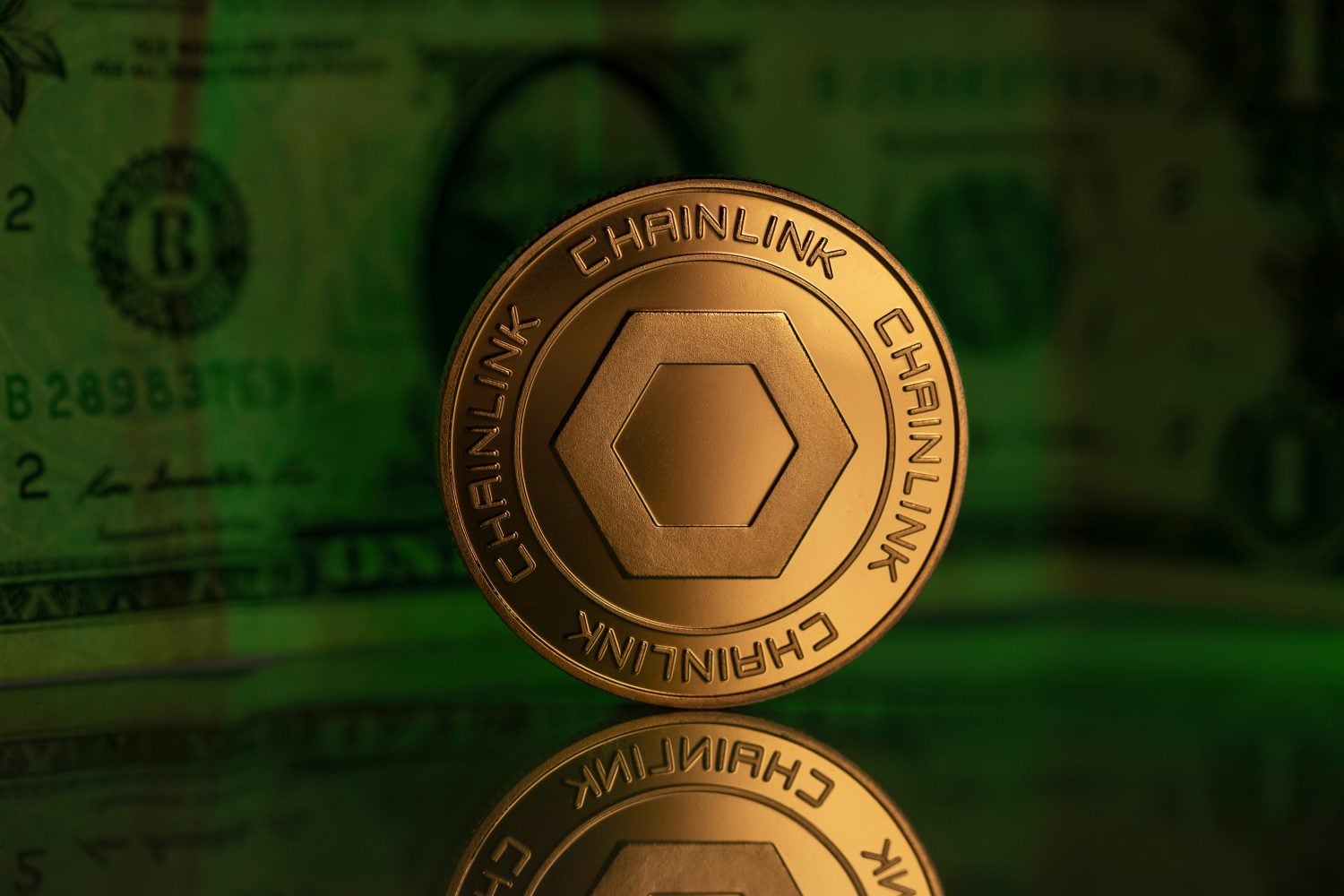
All three scenarios depend on token supply. Market value is calculated by multiplying the token price by its circulating supply, which stands at approximately 766.9 million LINK, giving it a worth of around $6.97 billion, out of a maximum supply of 1 billion. As more tokens unlock, the same price can result in a higher market value, and our $25 billion market value estimate reflects that supply math.
Low Scenario Keeps LINK Within Its One-Year Range
In this scenario, tokenization continues, but most of the value goes to the banks and blockchains that use Chainlink’s data rather than to the token. LINK could continue to trade within a range of about $7 to $15, which is 23% below and 65% above its current price. With more tokens in circulation by 2030, its market value may end up slightly higher than today’s $6.97 billion.
Middle Scenario Sends LINK Back to $25
Here, tokenized assets grow rapidly, and fees begin to flow back to the token. Chainlink’s Payment Abstraction feature lets customers pay in LINK for the Chainlink Reserve, a pool that ties network use to the token.
This could push LINK back to around $25, its level on December 23, 2024, representing a 175% increase from its current price. At the current supply level, this equates to a market value of about $19 billion. Our look at what 1,000 LINK could be worth by 2030 runs similar numbers.
High Scenario Delivers Standard Chartered’s $200
In this optimistic scenario, tokenized assets reach $4 trillion as expected, and a significant portion of that value benefits LINK holders. For LINK to reach $200, it would need to rise about 2,100%, to almost four times its $52.70 all-time high. At today’s circulating supply, this price would equate to a market value of around $153 billion, which would be unprecedented for Chainlink.
What’s the Most Likely Scenario for Chainlink by 2030?
The low scenario appears most realistic. It suggests that LINK might trade between $7 and $15 at the end of 2030. Over the past five years, LINK has lost 65.7%, while Bitcoin (CRYPTO:BTC) has gained 13.8%. Meanwhile, ETF investors are pulling money out. Although partnerships are developing, the token has yet to prove that it can capture the value from these deals.
Claude’s forecast on whether XRP or Chainlink recovers first by 2027 shows how LINK compares with XRP (CRYPTO:XRP). For the middle scenario to materialize, LINK first needs to climb above its 200-day moving average near $10, about 10% higher. Next, it would have to surpass its one-year high over $15, with ETF cumulative inflows back above $179.2 million. If LINK breaks below $7, the $200 target could drift even further out of reach.
Contact [email protected] for any questions or corrections.
Sam Daodu is a crypto analyst and the editor of 24/7 Wall St.'s Crypto Desk, where he covers Bitcoin, XRP, Ethereum, Solana and the altcoins investors search for most. His work focuses on price levels, spot ETF flows, on-chain data and the regulatory decisions that move crypto markets, written so a first-time buyer and a seasoned trader can both use it.
Sam has written about crypto professionally since 2019 and has published more than 2,000 articles. Before joining 24/7 Wall St., he wrote for crypto media outlets and Web3 companies and ghostwrote for crypto founders and token launches. His analysis is syndicated on Yahoo Finance, MSN and AOL and has been cited by other crypto news sites. He also founded MacLabs Marketing, a content and personal branding agency for crypto founders and executives.
When he isn't reading charts, Sam is usually at the gym or watching One Piece, a series he maintains has better tokenomics than most altcoins.