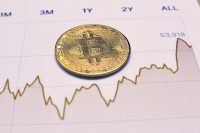
Is XRP or Bitcoin the Better Buy After Both Fell About 20% in November?

This post may contain links from our sponsors and affiliates, and Flywheel Publishing may receive compensation for actions taken through them.
XRP (CRYPTO: XRP) and Bitcoin (CRYPTO: BTC) both dropped roughly 20% in November 2026, leaving buyers to choose between the two after similar declines. Since the end of October, Bitcoin’s price has fallen by 19.1% to around $62,601, while XRP has declined by 20.9% to about 99 cents.
Both cryptocurrencies hit their lowest daily closes of the past month on November 20, with Bitcoin at $58,818 and XRP at 91 cents. Market analyst Charlie Bilello noted on X on November 21 that “At today’s low, Bitcoin was down 56% from its peak in October 2025, the biggest correction since 2022 and now the longest peak-to-trough decline ever at 411 days.”
However, major targets remain on the horizon. A February 2026 note from Standard Chartered set a target of $7 for XRP by 2027, while a podcast guest said $250,000 for Bitcoin by the end of 2027 was still a good prediction. After matching declines, which is the smarter buy: XRP or Bitcoin?
XRP at $7 means a $444.6 Billion Market Cap; Bitcoin at $250,000 is about $5 trillion
Market cap is the price times the number of coins in circulation. Currently, about 63.5 billion XRP circulate, valued at approximately $62.8 billion. If XRP reached $7, its market cap would rise to about $444.6 billion, requiring a hefty 608% increase.
Additionally, XRP’s supply complicates that rise. With a maximum supply of 100 billion XRP, Ripple releases around 300 million XRP to the market every month through escrow. As more coins enter circulation, XRP needs even more new money just to hold its current price.
Standard Chartered also lowered its 2026 target for XRP to $2.80 from $8 in February, and with XRP near 99 cents, that target already seems out of reach.
On the other hand, Bitcoin’s supply is simpler. About 20.1 million BTC circulate out of a 21 million cap. If Bitcoin reached $250,000, its market cap would be around $5.03 trillion, a 299% increase. The same podcast guest said a return to the prior high near $125,000 “wouldn’t be crazy at all.”
Bitcoin Funds Shed $1.79 Billion in a Week While XRP Funds Shed $11.1 Million
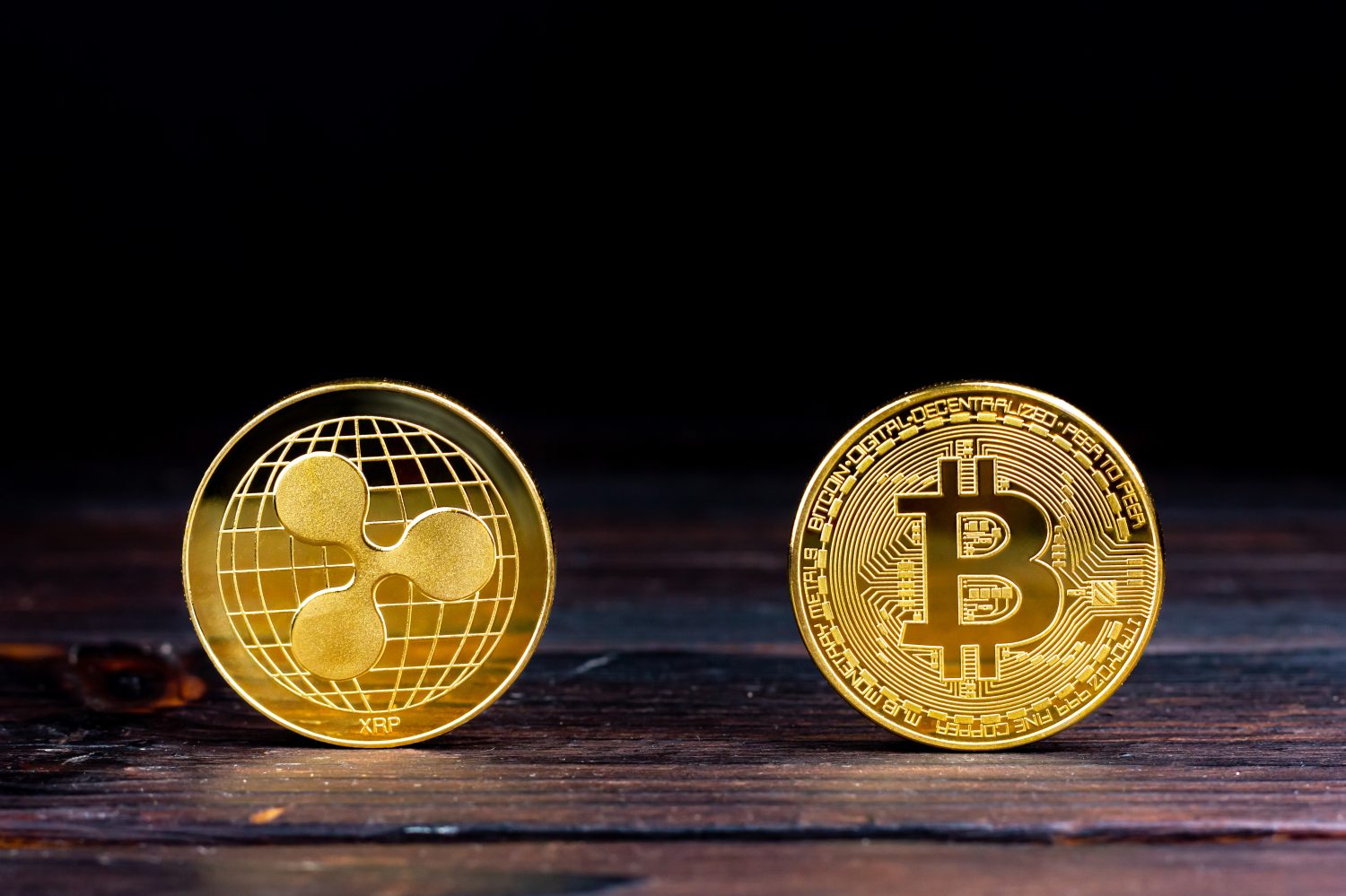
Over the week to November 20, U.S. spot Bitcoin ETFs recorded $1.79 billion in outflows, while U.S. spot XRP ETFs recorded smaller outflows of $11.1 million. Although Bitcoin’s outflow is larger in dollar terms, it also reflects Bitcoin’s much larger market.
XRP’s ETF holders have stayed put. SoSoValue data shows cumulative net inflows into XRP funds stood at about $1.78 billion on November 18, close to the $1.81 billion peak on October 29, suggesting that falling prices, not mass selling, drove the drop in fund assets.
Bitcoin faces added pressure from corporate holders like Strategy Inc. (NASDAQ: MSTR | MSTR Price Prediction), which owns about 851,305 BTC bought for about $64.2 billion and now worth roughly $53.3 billion. Although Strategy hasn’t sold, a paper loss that size could deter new buying.
Retail investors have also shifted their focus. Ripple CEO Brad Garlinghouse said investors sold XRP and Bitcoin to invest in the Anthropic (NASDAQ: ANT) IPO, which began trading on November 19. However, after a similar IPO in June 2026, XRP rose 17.9%, and Bitcoin rose 20.5% over the following three months.
Bitcoin Recovered From Every 50% Drop, but XRP Took Years After Its 70% Drops
Historically, Bitcoin has set a new all-time high after every 50% drop. Each time, it fell for 1 to 13 months before recovering, and the quickest new high came in 2021, five months after Bitcoin crossed the 50% mark. Bitcoin now trades 50.3% below its all-time high of $126,080 from October 6, 2025.
In contrast, XRP trades 72.9% below its all-time high of $3.65 from July 17, 2025, and its history shows slower recoveries. After its two earlier 70% drops, XRP kept sliding to 92% and 95% below the peak, then needed about three years and almost seven years to surpass its old high.
Standard Chartered has tied its higher XRP targets to the CLARITY Act, which would clarify which regulator oversees which tokens, along with $4 billion to $8 billion of XRP ETF inflows. Those inflows stand at around $1.78 billion, and the bill faces uncertainty, with Senator Elizabeth Warren likely to chair the Senate Banking Committee.
Bitcoin Looks Like the Better Buy After November’s Drop
Bitcoin seems to present the better buying opportunity. While both fell about 20% in November, Bitcoin is much closer to its all-time high, has a fixed supply, and has set a new high after every earlier 50% drop. In contrast, XRP faces a hard climb to its $7 target by 2027, needing a 608% rise while its supply keeps growing.
Bitcoin’s $250,000 target may seem ambitious as well, but a return to around $126,080, 101% higher, is more plausible for 2027. For Bitcoin, the key level to watch is the November 20 close of $58,818, about 6% lower than its 200-day average near $72,334. XRP needs to reclaim $1; then it’s at its 50-day average near $1.22, 23% higher, and our $100-a-month comparison shows how both could look over five years.
Contact [email protected] for any questions or corrections.
Sam Daodu is a crypto analyst and the editor of 24/7 Wall St.'s Crypto Desk, where he covers Bitcoin, XRP, Ethereum, Solana and the altcoins investors search for most. His work focuses on price levels, spot ETF flows, on-chain data and the regulatory decisions that move crypto markets, written so a first-time buyer and a seasoned trader can both use it.
Sam has written about crypto professionally since 2019 and has published more than 2,000 articles. Before joining 24/7 Wall St., he wrote for crypto media outlets and Web3 companies and ghostwrote for crypto founders and token launches. His analysis is syndicated on Yahoo Finance, MSN and AOL and has been cited by other crypto news sites. He also founded MacLabs Marketing, a content and personal branding agency for crypto founders and executives.
When he isn't reading charts, Sam is usually at the gym or watching One Piece, a series he maintains has better tokenomics than most altcoins.