AGQ vs. ZSL: Betting on or Against Silver, Which 2x ETF Survives the Volatility?
Silver just delivered one of its most turbulent stretches in years, and the two funds designed to profit from it in opposite directions are both sitting on massive losses. Understanding why reveals something deeply counterintuitive about how leveraged ETFs actually…

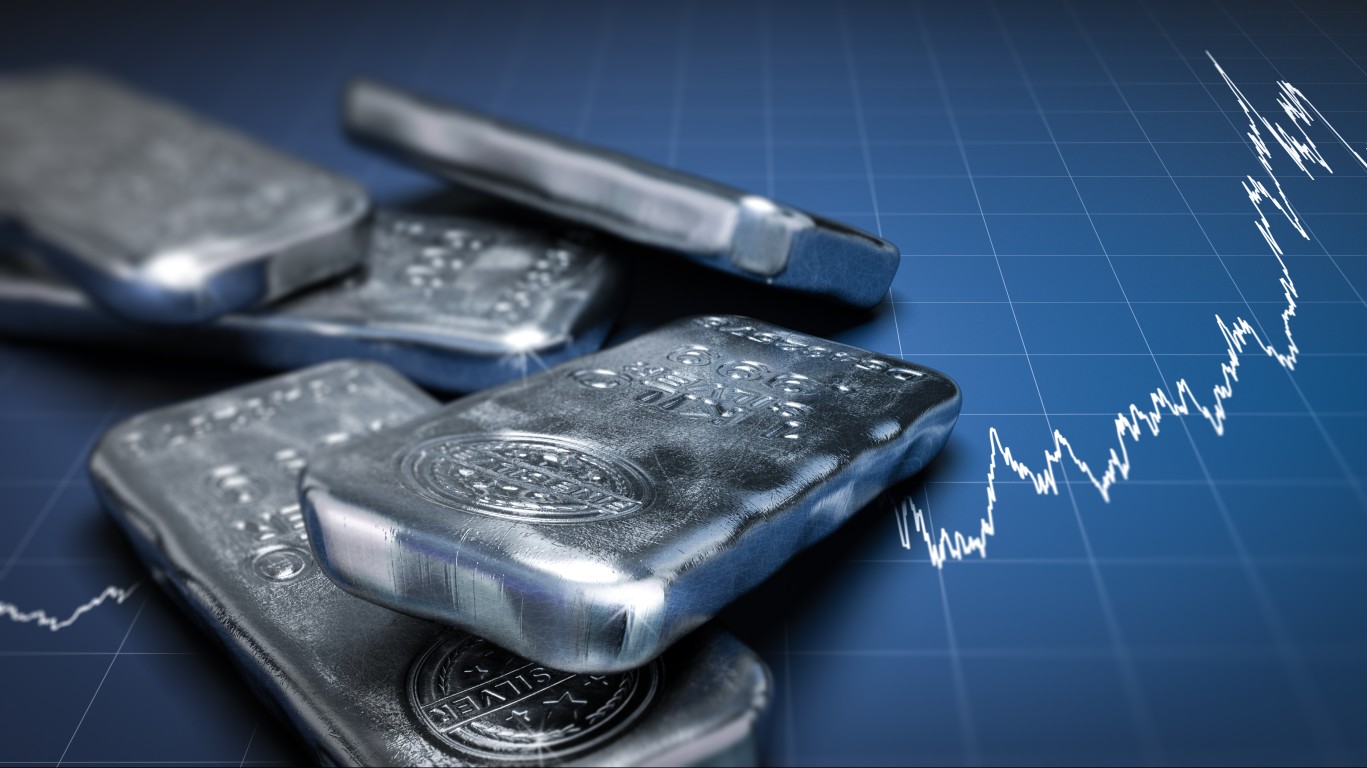
ProShares Ultra Silver (NYSEARCA:AGQ) and ProShares UltraShort Silver (NYSEARCA:ZSL) look like mirror images: one bets 2x long on silver, the other 2x short. The counterintuitive truth is that both funds are down sharply in 2026. AGQ has shed 58.74% year to date, and its supposed opposite, ZSL, is also down 40.11% YTD. That single fact reveals what this comparison is really about: volatility decay.
What Each Fund Is Actually Betting On
AGQ seeks 2x the daily performance of the Bloomberg Silver Subindex. ZSL seeks negative 2x that same index. The word that matters is daily. Both funds reset their leverage every trading session, meaning neither delivers a clean 2x or -2x return over any period longer than a day. The implicit bet in AGQ is that silver rises in a smooth trend with low realized volatility. ZSL requires the same smoothness, only pointed downward.
In choppy markets, both lose. Silver’s 2026 price action has been exactly that, and the split records confirm the damage. ZSL executed a 1-for-10 reverse split on February 26, 2026, its seventh reverse split since 2010. AGQ has needed only one reverse split in its history, a 1-for-4 in 2014.
Where the Difference Shows Up
Silver’s move over the past year exposed the asymmetry. AGQ is up 16.09% over the trailing 12 months, while ZSL collapsed 85.47% in the same window. Over five years, AGQ eked out a 37.9% gain, while ZSL cratered 96.53%. Inverse leverage on a commodity with a long-term upward drift is a slow bleed punctuated by reverse splits.
The recent selloff shows the opposite side. In the past month, AGQ dropped 29.42%, while ZSL rallied 31.5%. Retail felt it. One options-subreddit post titled “I lost 2/3 of my life savings from silver crash” drew 269 upvotes as AGQ sentiment collapsed from a score of 88 in late December to 8 by early February. A ZSL trader on wallstreetbets posted the opposite outcome: “GAIN: Avoided The Train Crash (+~15% gain closed via $85k ZSL Silver Short/ Top Clip).”
The Practical Comparison
| Factor | AGQ | ZSL |
|---|---|---|
| Daily target | +2x silver | -2x silver |
| YTD 2026 return | -58.74% | -40.11% |
| 5-year return | +37.9% | -96.53% |
| Reverse splits since 2010 | 1 | 6 |
| Tax form | K-1 | K-1 |
Both funds are commodity pools issuing K-1 partnership statements, not the 1099s typical ETF holders expect. That alone rules them out for many tax-sheltered accounts and casual investors.
The Verdict
Both AGQ and ZSL are short-term trading vehicles rather than buy-and-hold instruments. AGQ suits a trader with a strong short-term bullish view on silver, tied to a specific catalyst like a Fed pivot, industrial demand surge from solar and EV wiring, or a squeeze in physical bullion. ZSL fits a trader hedging an existing silver position for days, not months, or expressing a sharp bearish call ahead of a known event. For anyone whose holding period stretches beyond a week, unleveraged exposure through physical-backed silver funds preserves the directional thesis without the compounding tax. The condition that would flip either recommendation is realized volatility. Only when silver enters a smooth, sustained trend do these vehicles reward patience, and 2026 has offered no such trend.
Contact [email protected] for any questions or corrections.
After 15 years on Wall Street with 7 of them as Director of Corporate and Municipal Bond Trading for a NYSE member firm, I started my own project and corporate finance consultancy. Much of the work involves writing business plans, presentations, white papers and marketing materials for companies seeking budgetary allocations for spinoffs and new initiatives or for raising capital for expansion or startup companies and entrepreneurs. On financial topics, I have been published under my own byline at The Motley Fool, 247wallst.com, DealFlow Events’ Healthcare Services Investment Newsletter and The Microcap Newsletter, among others. Additionally, I have done freelance ghostwriting writing and editing for several financial websites, such as Seeking Alpha and Shmoop Financial. I have also written and been published on a variety of other topics from music, audiophile sound and film to musical instrument history, martial arts, and current events. Publications include Copper Magazine, Fidelity (Germany), Blasting News, Inside Kung-Fu, and other periodicals.