The Netflix Shock Reveals Which ETF Structure Protects You Better in a Downturn
Netflix shares dropped sharply after its Q2 earnings, but three popular ETFs that all hold the stock reacted in surprisingly different ways. The structure of each fund tells you far more about your real risk than the name on the…

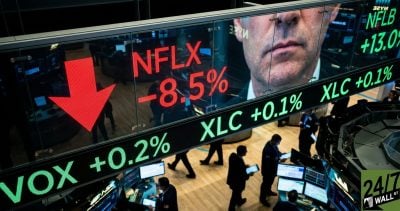
Netflix (NASDAQ:NFLX | NFLX Price Prediction) has spent the past three months moving in the wrong direction, and the ripples are showing up unevenly across the exchange-traded funds (ETFs) that hold it. Shares closed at $74.20 on August 5, down 15.9% from $88.25 on May 7 and off 35.4% over the trailing year. The stock is still up 41.4% over five years and 664.7% over a decade, so this is a drawdown inside a much longer uptrend. The trigger was familiar: soft near-term guidance and a sharp step-down in free cash flow reported at the July 16 Q2 print. What matters for ETF holders is how three funds with very different construction absorbed the same shock.
FDN: Internet-Pure, but the Basket Ran Away From Netflix
The First Trust Dow Jones Internet Index Fund (NYSEARCA:FDN) tracks a concentrated basket of U.S. internet businesses, and Netflix has historically been a top-tier constituent. On last check it was nearly 4% of the fund’s assets. FDN closed at $287.38 on August 5, up roughly 6% over the same May 7 to August 5 window while Netflix fell by double digits.
That gap reveals almost everything about why concentration cuts both ways. FDN also gained 7.3% over the past week and 7.6% over the past month, and it is up nearly 7% year to date. Netflix has been a drag inside the portfolio, but the fund’s other internet exposures (advertising, e-commerce, cloud names) have more than offset the slide. For holders, FDN behaves like an internet-thematic bet, even when Netflix is the story.
XLC: About 5% in Netflix, But Meta and Alphabet Steer the Ship
The Communication Services Select Sector SPDR Fund (NYSEARCA:XLC) is the market-cap sector fund. Netflix regularly ranks as a top five holding and currently accounts for 4.9% of net assets, but it is overshadowed by the likes of Meta (16.6%) and Alphabet (11.0% class A, 8.9% class C). The fund’s net expense ratio is 0.09%.
XLC closed at $110.87 on August 5, down roughly 5% over the May 7 to August 5 window and off 6.3% year to date. That is materially softer than Netflix itself, which is the point of the structure: with more than a third of the fund in Meta and both Alphabet share classes, XLC’s fate follows digital-ad platforms first and Netflix second. For XLC holders who worry about Netflix specifically, a 5% NFLX weighting will not drive their next 12 months.
VOX: Broader Bench, Similar Cushion
The Vanguard Communication Services Index Fund (NYSEARCA:VOX) tracks a wider MSCI communication services index and carries a net expense ratio of 0.09% as of the June 30, 2026, prospectus. The fund’s mandate covers the same universe XLC does, with Netflix currently at 4.2%, but with a longer tail of small and mid caps that dampens single-name exposure further.
VOX finished at $186.48 on August 5, down roughly 6% over the 90-day window and off 4.2% year to date, while still up 7.1% over the trailing year. VOX and XLC moved almost in lockstep during the Netflix drawdown, which is what you would expect from two funds anchored to the same Meta/Alphabet-heavy sector definition.
What to Watch From Here
The macro variable that matters most over the next 12 months is U.S. digital ad spend, because it drives Meta, Alphabet, and increasingly Netflix itself, where advertising revenue is guided to roughly double to about $3.0 billion in 2026. Track it through the quarterly ad-revenue disclosures at Meta and Alphabet and the monthly IAB internet advertising updates. FDN’s Netflix exposure carries weight but is diluted by a strong internet cohort, while XLC and VOX will keep trading with Meta and Alphabet regardless of what Netflix does next. For investors who bought any of these funds thinking they owned a Netflix bet, the past 90 days say otherwise.
Contact [email protected] for any questions or corrections.
Trey has been an editor and author at 24/7 Wall St. for more than a decade, where he has published thousands of articles analyzing corporate earnings, dividend stocks, short interest, insider buying, private equity, and market trends. His comprehensive coverage spans the full spectrum of financial markets, from blue-chip stalwarts to emerging growth companies.
Beyond 24/7 Wall St., Trey has created and edited financial content for Benzinga and AOL's BloggingStocks, contributing additional hundreds of articles to the investment community.
Trey's editorial expertise extends across multiple publishing environments. He served as production editor at Dearborn Financial Publishing and development editor at Kaplan, where he helped shape financial education materials. Earlier in his career, he worked as a writer-producer at SVE. His freelance editing portfolio includes work for prestigious clients such as Sage Publications, Rand McNally, the Institute for Supply Management, the American Library Association, Eggplant Literary Productions, and Spiegel.
Outside of financial journalism, Trey writes fiction and has been an active member of the writing community for years, moderating workshop sessions at regional conventions.