If Long-Duration Rates Stay Above 5%, Here’s What AIFR Investors Should Expect
Defiance's new foundry ETF trades at a moment when long-duration rates and Taiwan Strait tensions could either turbocharge or torpedo the entire thematic bet, and the first few weeks of price discovery will reveal which force wins.

This post may contain links from our sponsors and affiliates, and Flywheel Publishing may receive compensation for actions taken through them.
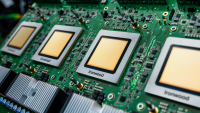
The Defiance Global Foundries ETF (NASDAQ:AIFR) launched into a market that has spent most of 2026 obsessing over who actually fabricates the world’s leading-edge silicon. AIFR is a thematic vehicle designed to give investors direct exposure to the global pure-play and captive foundry stack, the layer of the semiconductor supply chain that sits between chip designers and end devices. With only five trading days of history and a most recent close of $23.68, AIFR is still in the price-discovery window where structural factors dictate what a holder should be watching.
Fund Setup and Why It Deserves Attention Now
AIFR is issued by Defiance ETFs under the Tidal Trust V series and trades on Nasdaq. The prospectus, dated September 1, 2026, sets the net expense ratio at 0.71%, which is roughly double what an investor pays for a broad semiconductor index fund. That premium only makes sense if the foundry-specific tilt actually delivers differentiated exposure, so the transmission from macro conditions and portfolio construction to NAV is what matters here during these early trading sessions.
Macro Factor to Watch: Long-Duration Rates Sitting at Cycle Highs
The single most important macro variable for AIFR over the next 12 months is the 10-year Treasury yield. The benchmark closed at 5.00% on September 15, 2026, up 32 basis points over the prior month and sitting in the 99.6th percentile of readings over the trailing year. Foundry equities are long-duration cash flow stories tied to multi-year fab build-outs, and a discount rate this high compresses the terminal value that supports every name in this basket.
The concrete threshold to monitor: if the 10-year holds above 5% through the next two FOMC meetings, expect valuation multiples on capital-intensive foundry names to stay capped even if utilization improves. If the yield breaks back below 4.73%, where it sat a month ago, that removes the most visible headwind. Track the daily print on the St. Louis Fed’s FRED series DGS10 and the CME FedWatch tool for rate-cut probabilities, and check weekly at minimum.
Fund-Specific Factor: Concentration, Geography, and New-Fund Liquidity
The global foundry universe is one of the most concentrated corners of technology. A market-cap-weighted foundry basket is dominated by TSMC, with meaningful weights in Samsung, SMIC, UMC, GlobalFoundries, and increasingly Intel Foundry Services. That means AIFR is effectively a leveraged bet on Taiwan Strait geopolitics and on TSMC’s leading-edge capacity ramp at N2 and A16. When AIFR files its first NPORT-P, the specific weight of TSMC and the combined Taiwan exposure are the two numbers to underline. Anything north of 25% in a single issuer or 50% in a single country materially changes the fund’s risk profile versus a diversified semi ETF like VanEck Semiconductor ETF (NASDAQ:SMH), which manages more than $52 billion and charges 0.35%.
The second fund-specific issue is liquidity. With only a handful of trading sessions on record and no reported AUM in the latest snapshot, bid-ask spreads will be wide and premium/discount to NAV can swing. Use limit orders, and check the daily premium/discount posted on the Defiance fund page before adding size. For readers trying to figure out which foundry name inside the basket has the most asymmetric upside, we reverse-engineered the traits past 100x semiconductor winners shared in a free playbook here: The Next Nvidia Playbook.
Bottom Line
Watch the 10-year Treasury yield: a sustained move back under 4.75% is the clearest macro tailwind for AIFR, while a decisive break above 5% keeps foundry multiples pinned. On the fund itself, the first NPORT-P disclosure is the event that matters. If TSMC and Taiwan-domiciled names dominate the book, AIFR is a concentrated geopolitical trade dressed as a diversified thematic ETF, and position sizing should reflect that.
Contact [email protected] for any questions or corrections.
Jake has been been working in financial media for almost 15 years. He focuses on all things personal finance for 24/7 Wall St. with high hopes to educate and entertain. Most recently, Jake spent 12 years working various roles at The Motley Fool. He started copy editing fool.com content, worked on premium and marketing campaigns, and helped launch The Ascent, a personal finance brand.
His work has been featured on platforms like MSN, Yahoo Finance, USA Today, and more. He's written about credit cards, social security, ETFs, savings accounts, and just about anything else you can imagine when thinking about money. Jake love to cook, play golf, and tell people he's never had a cavity. (It's true!)