This 8% Yield Bond ETF Bets Against Hurricanes, Earthquakes and Wildfires
Most bond investors bet on interest rates or corporate survival. A small corner of the fixed-income market takes a completely different wager, one where the Federal Reserve is irrelevant and the real question is whether a hurricane makes landfall.

This post may contain links from our sponsors and affiliates, and Flywheel Publishing may receive compensation for actions taken through them.
Bond investors generally get paid for accepting one of two major risks: credit, duration, or some combination of both. Buy high-yield corporate bonds and you’re compensated for lending to companies with a greater chance of default. Buy long-term Treasuries and you’re taking considerably less credit risk but much more sensitivity to changes in interest rates.
Which risk you want to emphasize depends heavily on your macroeconomic outlook. Falling rates can benefit long-duration bonds, while a resilient economy can support lower-quality credit. Inflation, recessions, Federal Reserve policy, and corporate earnings can all influence the outcome.
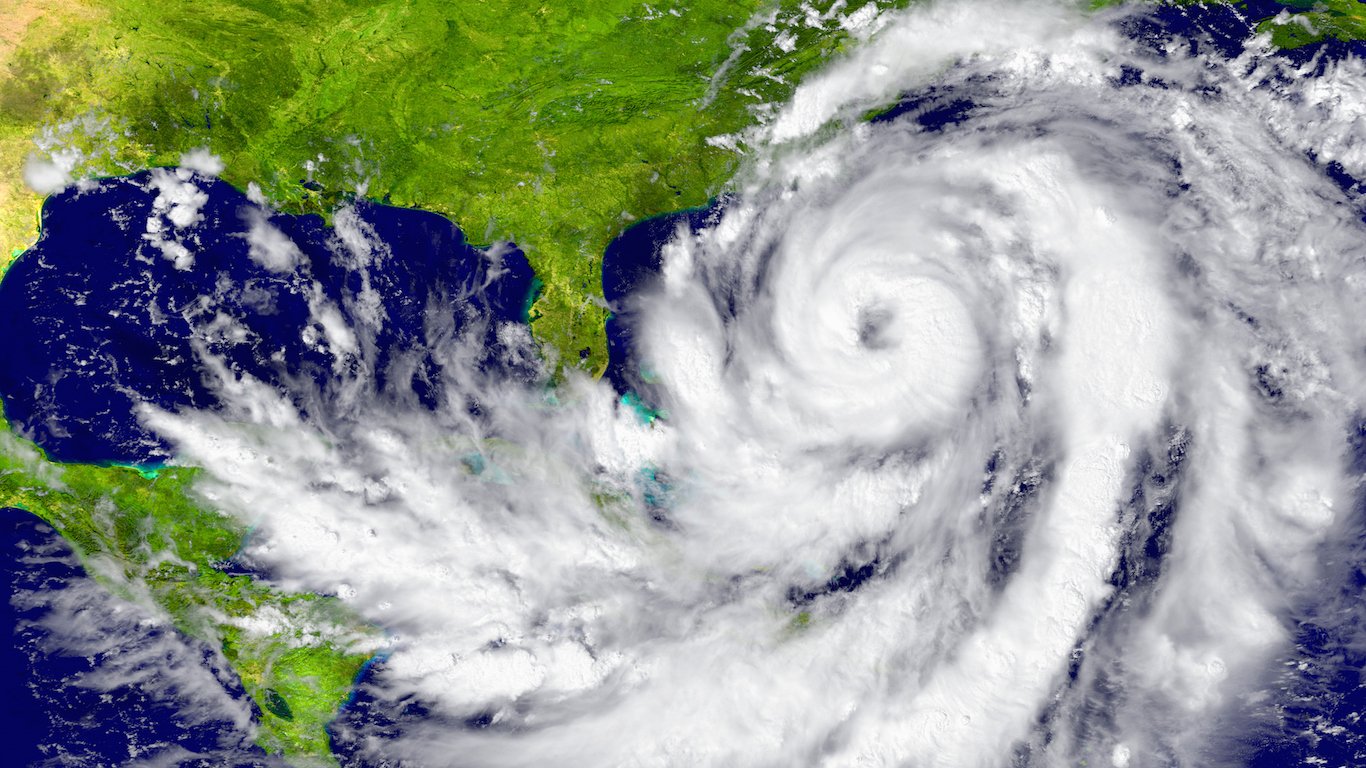
But there’s another source of fixed-income returns that’s largely disconnected from those variables: natural disasters. Insurance companies are routinely paid to assume the financial risk associated with hurricanes, earthquakes, wildfires, and other catastrophic events.
Through insurance-linked securities, investors can take the other side of that trade and collect income for assuming some of that risk themselves. The Brookmont Catastrophic Bond ETF (ILS) packages that unusual asset class inside an ETF, currently offering a yield of roughly 8%.
How Insurance-Linked Securities Work
Catastrophe bonds are generally issued to transfer specific insurance risks from insurers, reinsurers, governments, and other entities to capital-market investors. Imagine an insurer has billions of dollars of exposure to Florida hurricanes. It may sponsor a catastrophe bond covering a portion of those potential losses.
Investors supply the capital and receive an attractive yield in exchange. If the specified catastrophe doesn’t occur, investors continue collecting interest and eventually receive their principal back. If a qualifying event occurs and meets the bond’s predetermined trigger, some or all of that principal can be used to cover insured losses.
Those triggers can be structured in several ways. An indemnity trigger may depend on the sponsor’s actual insured losses. An industry-loss trigger can reference total losses across the insurance industry. Parametric triggers can instead depend on measurable characteristics of an event, such as hurricane wind speed or earthquake magnitude.
That creates risks conventional bond investors don’t normally encounter. You can correctly anticipate that a hurricane will occur and still have difficulty predicting whether a particular bond’s trigger will be breached. Modeling catastrophe frequency, severity, location, and insured losses requires specialized expertise.
Diversification therefore becomes especially important. Rather than making one concentrated bet against a Florida hurricane, a portfolio should spread exposure across different perils and geographic regions, including hurricanes, earthquakes, wildfires, severe storms, and other insured events.
The attraction is low dependence on the traditional economic cycle. Whether the Federal Reserve cuts rates or corporate earnings enter a recession doesn’t determine whether an earthquake occurs. That gives catastrophe bonds the potential to provide a return stream with relatively low correlation to conventional stocks and bonds.
What Makes ILS Different
One feature I particularly like about ILS is that the ETF obtains its catastrophe-bond exposure through physical holdings rather than using swaps to synthetically recreate the strategy. Investors are getting a portfolio of the underlying insurance-linked securities rather than adding another layer of counterparty exposure through a derivatives contract.
The income is also substantial. ILS currently yields around 8%, with distributions paid quarterly rather than monthly. That’s an important distinction for retirees accustomed to monthly bond ETF distributions, although distribution frequency has no effect on the underlying economic return.
Liquidity has improved as the fund has grown. ILS currently has a 30-day median bid-ask spread of approximately 0.0982%, making the trading friction considerably more manageable than investors might expect from such a specialized strategy. The bigger hurdle is cost. ILS charges a very high 2.65% expense ratio.
More importantly, an 8% yield shouldn’t be confused with low risk simply because ILS is technically a bond ETF. A major insured catastrophe, or several events occurring close together, can cause permanent principal losses in affected securities. What you’re getting in return is a different source of risk.
Instead of making another bet on interest rates, inflation, economic growth, or corporate defaults, you’re accepting catastrophe risk in exchange for insurance premiums. For investors whose existing fixed-income portfolio is already dominated by credit and duration, I think that makes ILS more interesting as a diversifier than as a replacement for core bonds.
Contact [email protected] for any questions or corrections.
Tony Dong is the founder of ETF Portfolio Blueprint. He also serves as Lead ETF Analyst for ETF Central, a partnership between Trackinsight and the NYSE.
Tony’s work focuses on ETF strategy, portfolio construction, and risk management, with an emphasis on making complex investment concepts accessible to everyday investors. His insights and analysis have also appeared in U.S. News & World Report, Kiplinger, MoneySense, and The Motley Fool.
Tony holds a Master of Science degree in enterprise risk management from Columbia University and the Certified ETF Advisor (CETF) designation from The ETF Institute.