The Stock Certificates in Your Safe-Deposit Box at 76 Belong in These 3 ETFs

This post may contain links from our sponsors and affiliates, and Flywheel Publishing may receive compensation for actions taken through them.
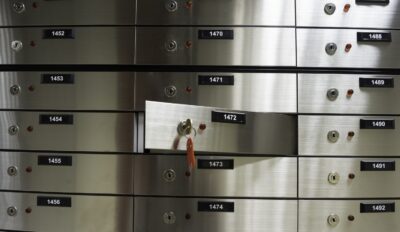
Somewhere in a bank vault sits a folder of engraved paper. It might hold shares your parents bought decades ago, a block from an old employer, or a certificate from a company that has changed its name twice since. At 76, those certificates feel safe. They are also among the hardest assets you own to sell, track, or pass on. Three low-cost funds can turn that pile into a portfolio you manage from one statement: the Invesco S&P 500 Equal Weight ETF (NYSEARCA:RSP), the SPDR Portfolio Developed World ex-US ETF (NYSEARCA:SPDW), and the SPDR Portfolio Aggregate Bond Index ETF (NYSEARCA:SPAB).
Hidden Risks Sitting in Your Safe-Deposit Box
Paper certificates can be lost, damaged, or stolen, and replacing them usually means affidavits and fees. Selling one can take days of mailing and signature guarantees. Companies merge, rename, or disappear, so the name on the certificate may not match anything trading today, and dividends mailed to an old address can go uncashed and end up with a state unclaimed property office. Leave the box untouched, and your heirs inherit a paperwork puzzle.
Get the Shares Into a Brokerage Account First
Start with the company’s transfer agent, usually listed on the certificate or the company’s investor relations page. You can ask the agent to hold the shares electronically, or open a brokerage account and have the firm deposit the certificates for you. Check each name for mergers or acquisitions, because a certificate for a long-gone company may now represent shares of the buyer, and then search your state’s unclaimed property database for dividends that never reached you.
Before selling anything, find the original purchase records. The IRS notes that you generally must work out your adjusted basis before you can figure any gain or loss on a sale. Shares bought long ago may carry large unrealized gains, and selling them triggers capital gains taxes. Heirs who inherit shares generally receive a basis equal to the fair market value of the property at the date of the decedent’s death[1] under 26 U.S.C. § 1014(a)(1). For some readers, moving the certificates into a brokerage account and keeping a portion makes more sense than selling everything. Consider that with a tax professional.
RSP Spreads Your U.S. Stock Money Evenly
RSP tracks the S&P 500 Equal Weight Index, giving every S&P 500 company roughly the same piece. In its July 31, 2026[2] holdings report, individual positions sat near 0.2% each, so no single giant drives your results. If your wealth sits in a few large U.S. names, this is a broad replacement that spreads risk across hundreds of companies.
The fund launched in April 2003, holds roughly $96.5 billion[2] and charges 0.20%, or about $2 a year per $1,000 invested. It has gained 17.32% over the past year and 202.5% over 10 years.
The catch: equal weighting leans toward mid-size companies and requires more trading than a standard S&P 500 fund. When mega-caps lead the market, RSP can lag.
SPDW Adds the World Your Certificates Miss
Old certificate holdings rarely include foreign companies. SPDW tracks the S&P Developed Ex-U.S. BMI Index, holding stocks from Japan, the U.K., Germany, France, Switzerland, Australia, South Korea and other developed markets. In its June 30, 2026[3] filing, ASML Holding (NASDAQ:ASML | ASML Price Prediction) stood out at about 2.3% of assets. The fund held about $40.3 billion[4] and ranks among the cheapest developed-market international ETFs available. It has returned 12.88% over the past year and 49.22% over five years.
Bear in mind that currency swings can add to or subtract from your returns, and the fund excludes emerging markets such as China and India.
SPAB Gives a 76-Year-Old Steadier Footing
SPAB tracks the Bloomberg U.S. Aggregate Bond Index, a mix of investment-grade Treasuries, agency mortgage bonds and corporate debt. A box of stocks offers no buffer when markets fall. A broad bond fund pays steady interest and typically moves far less than stocks, which matters when you may need to draw on your money soon. With the 10-year Treasury yielding 5.15%[5] as of Nov. 13, 2026, new bond money earns more than it did a few years ago.
Keep in mind that bond prices fall when interest rates rise. SPAB’s adjusted share price has slipped 1.47% over five years, a reminder that rate jumps can trim values even as interest keeps coming.
Trade-Offs to Weigh Before You Sell
Diversifying means giving up the chance that one old holding becomes a windfall. Selling appreciated shares can create a tax bill you would not face by holding them, and that matters more if you plan to leave them to family. The right mix of these three funds varies. It depends on your income needs, tax picture, and plans for your estate (we put the full checklist, from beneficiary forms to account titling, in a free estate guide here).
Two Steps to a Simpler Portfolio
Getting the certificates out of the box is the first step. The second step is choosing what to keep and what to diversify. Together, RSP, SPDW and SPAB cover U.S. stocks without leaning on a few giants, the developed world beyond U.S. borders, and a steadier bond core. That is three tickers you can follow on one statement, and three your heirs can understand at a glance.
Contact [email protected] for any questions or corrections.
Ryne Mauck is an investment writer covering exchange-traded funds, retirement planning, and portfolio strategy. Through his work at 24/7 Wall St. and other investment platforms, including Seeking Alpha, he aims to provide clear, research-driven insights that help investors make more informed decisions while maintaining a long-term approach to investing.
Ryne holds a B.Sc. in Finance and an M.A. in Political Science. He is a formerly registered Municipal Advisor Representative and has passed the Series 50, Series 63, and Series 65 exams. His articles are not intended to be, nor should they be interpreted as, financial advice.