The 1 Country Doing The Most For NATO Right Now
One of the main criticisms of the North Atlantic Treaty Organization (NATO) is that the United States assumes a disproportionate share of the burden. To address the imbalance a political commitment was reached at a 2014 summit in Wales. NATO…


One of the main criticisms of the North Atlantic Treaty Organization (NATO) is that the United States assumes a disproportionate share of the burden. To address the imbalance a political commitment was reached at a 2014 summit in Wales. NATO members committed to spending at least 2% of their GDP on defense. When the agreement was made, only four countries (US, UK, Greece, Estonia) were at or near the required spending level. Today, 23 NATO members now meet that criteria.
The United States is still the largest overall spender and has the biggest military. However, by percentage of GDP, the United States is now third in defense spending in NATO, behind Poland and Greece. Poland spends far more of its GDP on defense than any other member of NATO at 4.12%. It’s the fastest-growing military in NATO and will only grow stronger if its defense reforms come to fruition. This article will look at how Poland has become the most committed member of the alliance since it joined 25 years ago.
This post was updated on September 21, 2025 to clarify statistics regarding defense spending, the number of nations complying with the 2% agreement in 2014, Poland’s army size, timeline for vehicle goals, and number of Ukrainian refugees.
Why This Matters
Poland’s enormous military build-up stems from escalating tensions in Eastern Europe. As the war in Ukraine continues, Poland seeks to become a regional power to guarantee its security. With memories of the turmoil of the 20th century still fresh, Poland’s military ambitions will go a long way to shaping the geopolitical picture in Eastern Europe.
Historical Context
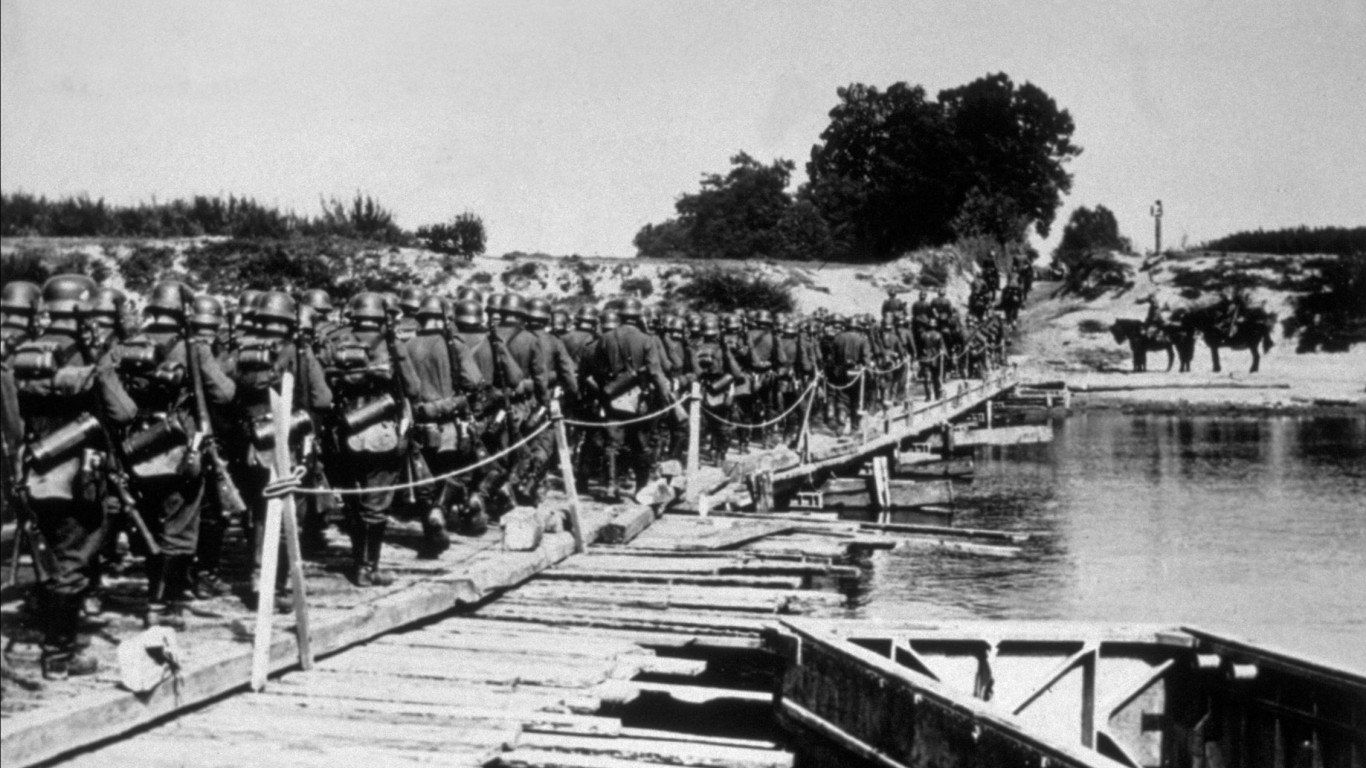
Poland struggled to gain and keep its independence throughout the 19th and 20th centuries. After World War One, Poland regained statehood for the first time in over a century. Yet this independence would be short-lived. The Second Polish Republic fell after 20 years in 1939. Caught in a hopeless position between two hostile powers, Warsaw was overwhelmed in the opening weeks of World War Two.
After decades under communist dominion, Poland broke away from the Soviet Union in 1989 with the establishment of the Third Polish Republic. At this time, Poland pivoted towards democracy and the West, though it was still an active member of the Warsaw Pact, the Eastern Bloc’s equivalent to NATO. The pact dissolved in July 1991, and the USSR crumbled a few months later.
Poland joined the Partnership for Peace program in 1994 as it sought full NATO membership. President Bill Clinton expressed support for expanding NATO during a visit to Warsaw in July 1994. The US House of Representatives passed the NATO Enlargement Facilitation Act in 1996 to support Central and Eastern European states seeking to join NATO.
Poland and NATO
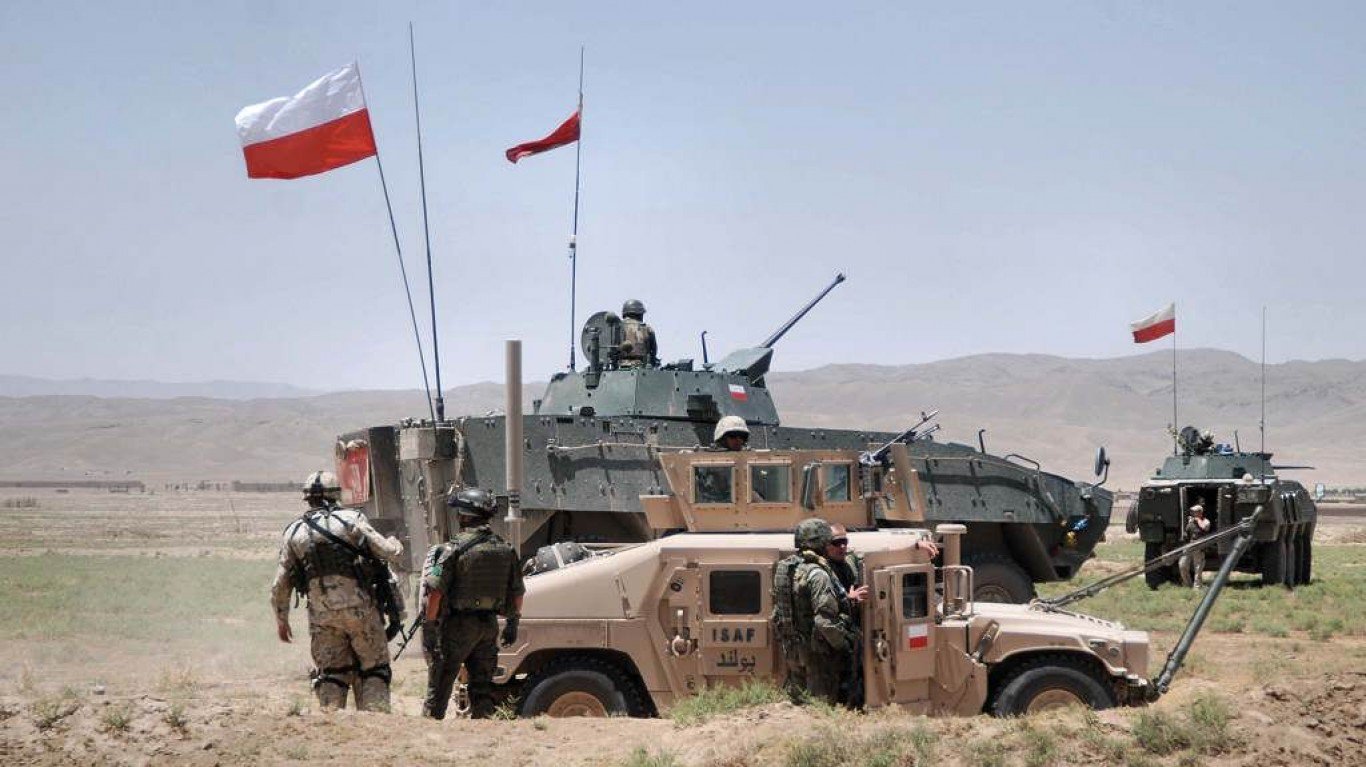
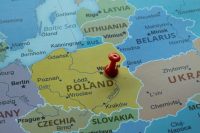
Poland joined NATO along with Hungary and Czechia in 1999 as part of NATO’s first post-Cold War enlargement. The expansion greatly increased NATO’s presence in central and eastern Europe. Poland’s strategic position is an asset to NATO as it offers a key forward deployment position. Poland borders the Russian exclave Kaliningrad, Russia’s sole European ally Belarus, and Ukraine. A missile defense base at Redzikowo, in northern Poland near the coast, is now operational. Additionally, the United States has around 10,000 soldiers deployed in Poland. The US Army V Corps’ forward headquarters is in Poznan.
Poland gains enhanced security, prestige, and access to cutting-edge weapons and hardware as it modernizes its armed forces. Warsaw is currently divesting from its old Soviet-era arsenal to a modern, well-equipped, and large military. For some members of NATO, joining the alliance was a controversial decision but that’s not the case in Poland. Around 70% of the Polish public holds a positive view of NATO and its role in Poland’s security. Defense Minister Władysław Kosiniak spoke on the 25th anniversary of Poland’s ascension to NATO and the alliance’s 75th year:
The decision to join NATO was one of the most important moments in modern Polish history – we have become a member of the largest and strongest defensive alliance in the history of the modern world – let us remember that this year we celebrate its 75th anniversary.
Ukraine
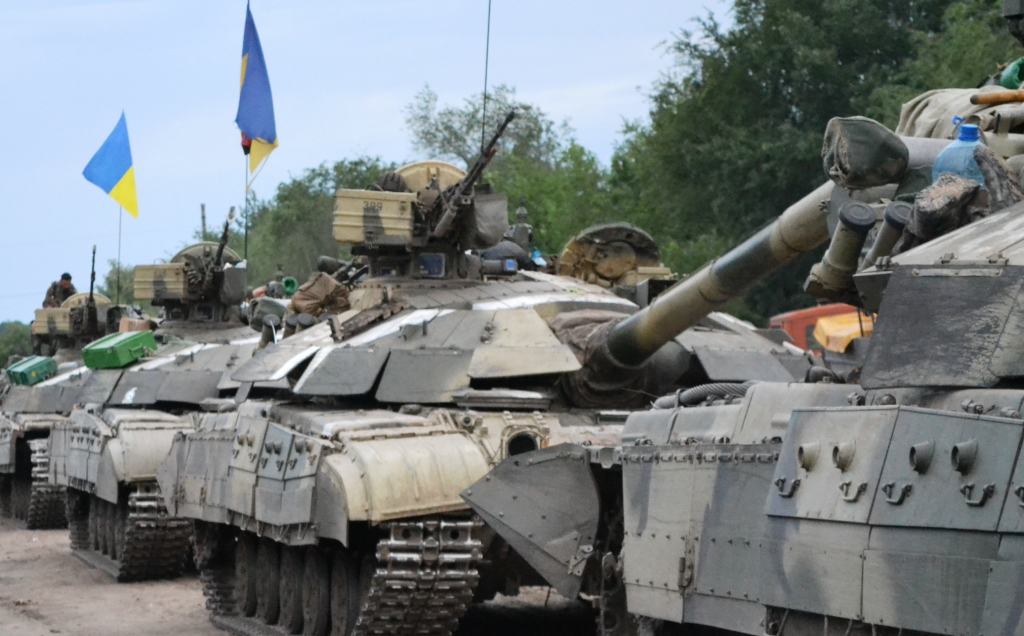
Poland’s strategic value to NATO was underlined when the war in Ukraine broke out in 2022 as the two nations share a 300-mile border. Warsaw moved quickly and decisively to send aid to its neighbor. Poland gradually transferred over 300 tanks (T-72s and PT-91s) to Ukraine over the course of 2022–2023. Many were older T-72 models which were more familiar to the Ukrainian armed forces than modern armor. Poland has also sent infantry fighting vehicles (IFVs), and a handful of older fighter jets. The gear might not have been cutting-edge, but they were badly needed and helped curb the Russian invasion. Additionally, Poland took in between 1.5-2 million Ukrainian refugees.
Unfortunately, a dispute over grain exports soured relations between Warsaw and Kyiv and led to a halt in military aid. Those frosty relations later thawed, and the two countries agreed on a security deal in July 2024. Other nations have struggled to make good on their promises to Ukraine but all of Poland’s allocated aid to Ukraine has arrived.
Poland’s Military Build-Up
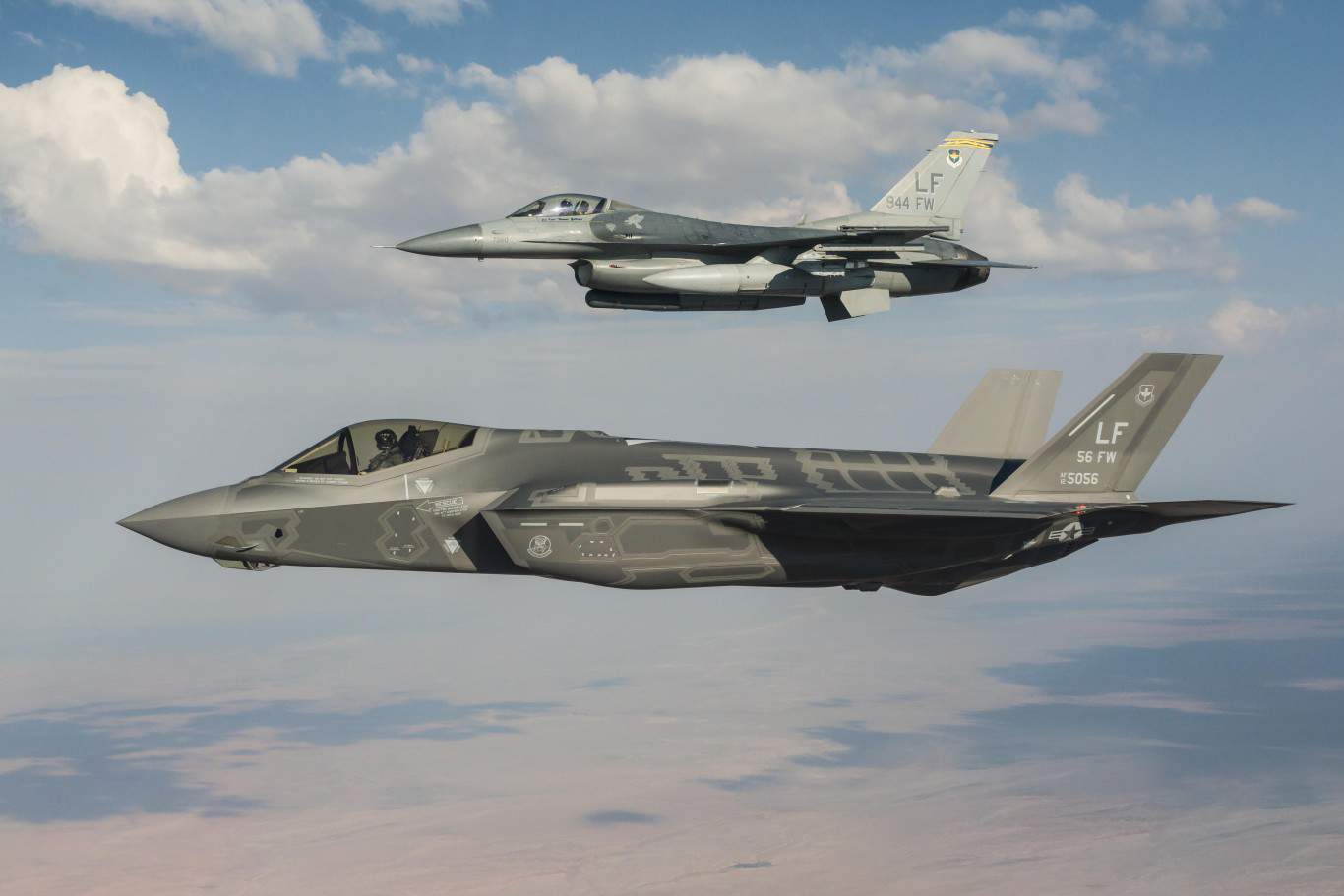
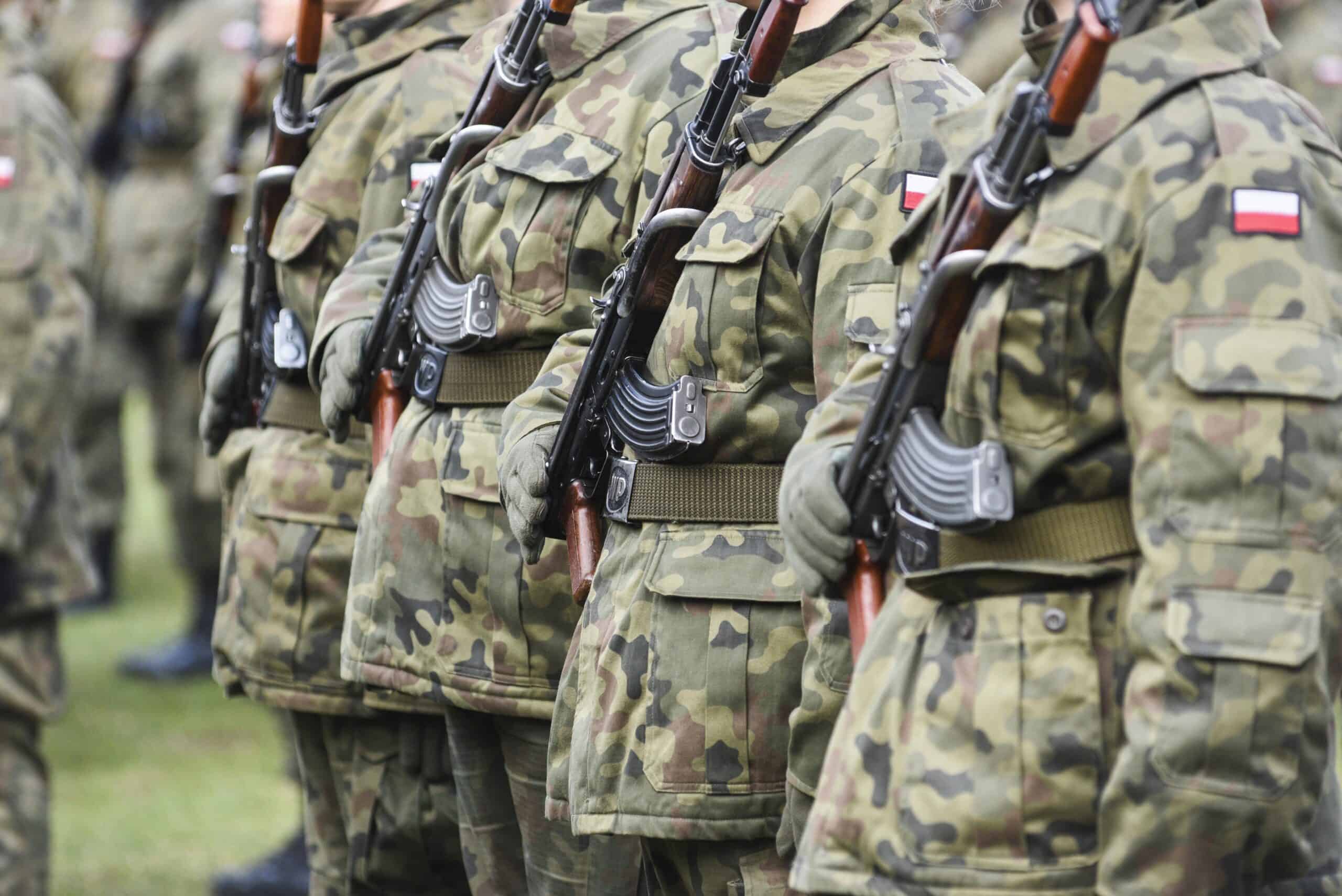
Poland’s military has significantly increased in size in the last decade. In 2014, the military was just under 100,000 personnel. In 2024, it had increased to about 130,000–160,000, with reserves bringing the total higher. Poland currently has the 5th largest army in NATO, behind the U.S., Turkey, France, and Germany. But the country plans to surpass both Germany and France to become the third largest army in NATO. In March 2022, Poland passed the Homeland Security Act to increase military recruitment and spending. Under the terms of the act, Poland will increase its armed forces to 300,000 personnel (250,000 regulars plus 50,000 reservists). Poland will also eventually increase its defense spending to 5% of its GDP. The aim is to strengthen Poland’s defensive capabilities and deterrence.
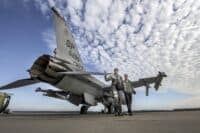
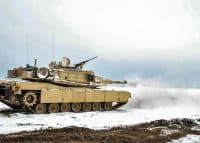
As Poland seeks to become, in the words of former Defense Minister, Mariusz Błaszczak, “the most powerful land force in Europe”, it is spending huge sums on procuring new equipment. Poland signed a deal with the United States for 32 F-35 Lightning II jets, worth $4.6 billion in January 2020. This was followed by two deals to purchase over 350 M1 Abrams tanks from the United States to replace the older tanks donated to Ukraine. However, deliveries are phased. As of 2025, fewer than 50 have been delivered.
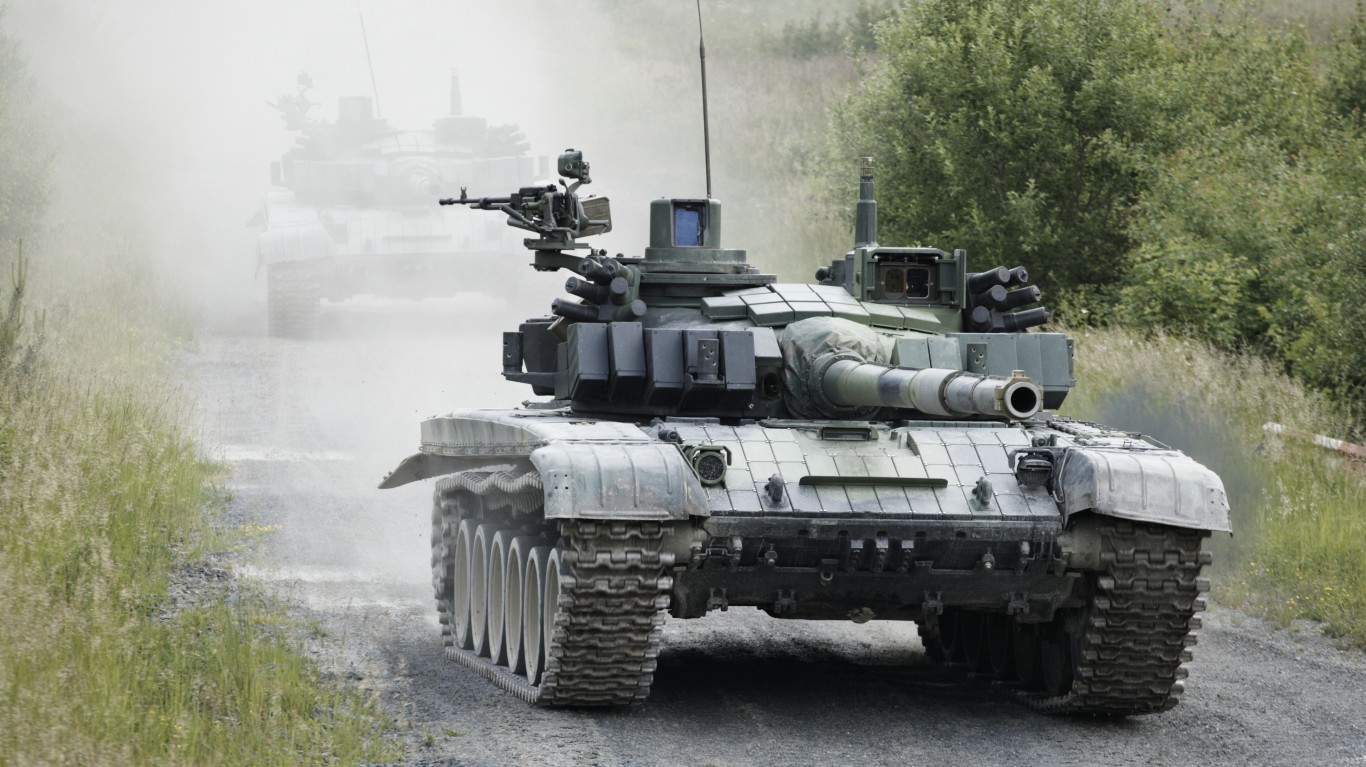
Poland’s other major defense partner is South Korea which has emerged as a major arms producer on the global stage. From 2018-22 South Korean arms exports surged by 74%. Poland and South Korea agreed on the framework for 1000 K2 Black Panther tanks. The first 180 will be purchased directly from Seoul; the remaining 820 will be produced domestically in Poland under license. As of early 2025, only the first 28–40 have been delivered; the majority are long-term production goals. Poland currently has the fourth-largest tank army in NATO, and it will climb to at least third by the end of the decade.
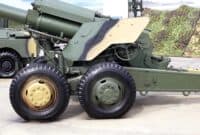
Additionally, Poland is beefing up its air defenses, rocket launchers, and self-propelled artillery. Poland agreed to buy 48 Patriot system launchers from the United States in August 2024 that will be made locally. South Korea is also selling Poland hundreds of K9 Thunder howitzers and Chunmoo multiple rocket launchers.
Conclusion
Outgoing Secretary General of NATO Jens Stoltenberg described the 2% spending goal as a floor rather than a ceiling and Poland has certainly taken that message to heart. Warsaw’s surge in military spending is motivated by a combination of historical experience, geographic position, and a genuine commitment to NATO. Poland has experienced a loss of statehood more than once in its history. Russia’s renewed aggression against its neighbors is a threat Poland takes more seriously than most.
The Ukraine war is unfolding in Poland’s backyard and with a Russian exclave and a de facto Russian satellite at its border, Poland is being proactive with security as are Poland’s Baltic neighbors. While NATO still has internal issues between members to work on, the alliance has made huge progress in meeting defense spending goals. The United States is still the top heavyweight in NATO but Poland is now undoubtedly the pound-for-pound champion in the alliance.
Contact [email protected] for any questions or corrections.
Michael is a seasoned editor, educator, and writer who has recently begun contributing articles to Flywheel Publishing. He covers many topics, specializing in defense, history, and politics.
A dual UK-US citizen, Michael earned a master’s degree in military history at the University of Wolverhampton. He was awarded the Postgraduate Prize for outstanding academic performance in 2019. He has lived and worked in multiple countries including the United Kingdom, South Korea, and Japan.
He has enjoyed a varied career in academia, editing, writing, and online publishing. He’s written hundreds of articles covering entertainment, history, politics, and sports. As well as 24/7 Wall Street, his work can be found at National Geographic, Ranker, and many others.
When he’s not making complex historical and geopolitical concepts accessible to a wide audience, he unwinds by working out, playing soccer, and conquering the world in grand strategy games.