We’re in our 60s with $9 million saved for retirement — excited but worried about the large tax liability coming up
One of the trickier obstacles to handle when retiring with a sizable nest egg is dealing with taxes. Finally getting to enjoy the fruits of years of scrimping, saving, and sacrifice is a prospect few would pass up, but a…

This post may contain links from our sponsors and affiliates, and Flywheel Publishing may receive compensation for actions taken through them.

Retiring with a sizable nest egg is a hard-won achievement, but it comes with a tax puzzle that many couples underestimate. A sound tax strategy is the tool that ensures the government collects only what it is legally owed, and for couples sitting on millions in deferred accounts, the planning decisions made in the years just before and after retirement can be worth far more than any single investment call.
Paying One’s Fair Share of Tax, Not More

A 62-year-old and his 58-year-old wife posted on Reddit’s r/ChubbyFIRE community with this exact problem. He still enjoys his job, which pays a $180,000 annual salary. His employer contributes $22,000 per year to his traditional 401(k), and he directs $30,000 annually into his personal Roth 401(k). His wife retired in 2021 and draws a $70,000 per year pension with a 2% cost-of-living adjustment. Two rental properties round out the picture, generating a net $2,000 per month in passive income.
Consider This: Dave Ramsey: “You Make $140K. Stay Out of Restaurants, Don’t Go on Vacation, And Get Rid of the Ferrari Bike”
The husband wants to join his wife in retirement at 63, but tax concerns are holding him back. His financial planner does not advise on taxes, leaving the couple to navigate a complex landscape largely on their own. His traditional 401(k) holds $4.3 million, his Roth 401(k) $400,000, and his wife’s 401(k) another $2.2 million. Beyond those retirement accounts, $2.5 million in liquid investments sits untouched. Their combined income from salary, pension, and rental properties consistently outpaces spending, and their financial planner has even urged them to spend more freely. The couple has responded with pricier vacations and new luxury cars.
A snapshot of their assets, earnings, and liabilities shows the following:
|
Asset or Income Type |
Amount |
Tax Status |
|
Husband’s 401(k) (+$22,000 contribution annually) |
$4,300,000 |
Deferred |
|
Husband’s Roth 401(k) (+$30K contribution annually) |
$400,000 |
Paid |
|
Wife’s 401(k) |
$2,200,000 |
Deferred |
|
Wife’s Pension (w/2% COLA) |
$70,000/year |
Taxable |
|
Husband’s salary |
$180,000/year |
Taxable |
|
Liquid Investments |
$2,500,000 |
Cap gains taxable |
|
Rental Income |
$24,000/year |
Taxable |
|
Social Security (if taken at age 63) |
$XX,000/year |
Taxable |
Some Tax Strategies To Use While Enjoying Life
Depending on the couple’s long-term goals, several strategies are worth exploring. Each addresses a different piece of the tax puzzle, and most can be stacked for compounding effect.
- Relocation: Retirees often move to states like Florida for the weather, but the bigger financial draw is the absence of state income tax. Florida, Texas, Nevada, and several other states levy no income tax at all, which can be a meaningful saving for couples currently living in California or New York, where state and local taxes take a substantial bite from income. Some retirees go further and relocate abroad to countries with a lower cost of living, such as Greece, Thailand, or Portugal, though the logistics and tax implications of expatriation deserve their own dedicated discussion. One development worth noting: the One Big Beautiful Bill Act, signed into law on July 4, 2025, raised the federal SALT deduction cap from $10,000 to $40,000 for joint filers with incomes under $500,000 (through 2029). For couples still living in a high-tax state, this may soften the sting somewhat while they evaluate a move.
- Maximize an HSA: The couple currently has no Health Savings Account, which represents a missed opportunity. An HSA is triple tax-advantaged: contributions go in pre-tax, the balance grows tax-deferred, and qualified medical withdrawals are tax-free. For 2026, the IRS allows up to $4,400 for self-only coverage or $8,750 for family coverage, with an additional $1,000 catch-up contribution for those 55 and older. The husband must be enrolled in an HSA-eligible high-deductible health plan (HDHP) to contribute, and eligibility ends upon Medicare enrollment at 65. At 62, he has a narrow window remaining to build this account. Even modest annual contributions can compound tax-free for decades and later cover Medicare premiums and other qualified medical costs in retirement.
- Turn a Hobby Into a Business: If either spouse pursues a hobby that could legitimately qualify as a business, the tax benefits are real. Business-related expenses including transportation, materials, and promotion become deductible and can be pooled with other 1099 passive income to reduce the net taxable base. Establishing an active business before full retirement also creates a documented income history that can support a lower bracket in subsequent years. One practical boundary to keep in mind: the IRS generally allows a company to take losses in three out of five consecutive years before reclassifying the activity as a hobby, giving roughly a five-year window to assess whether the venture is worth continuing.
- The OBBBA senior deduction: Beginning with the 2025 tax year and running through 2028, individuals age 65 and older can claim an additional $6,000 deduction. The deduction is available whether the filer takes the standard deduction or itemizes. For a qualifying married couple where both spouses are 65 or older, the combined benefit reaches $12,000 annually. The phaseout begins at $150,000 in modified adjusted gross income for joint filers and is fully eliminated at $250,000. Given that the husband plans to retire at 63 and both spouses will reach 65 while this provision is active, the deduction could meaningfully reduce the tax cost of Roth conversions during those years.
Portfolio Considerations
With $6.5 million sitting in tax-deferred accounts and a significant runway before required distributions arrive, the couple has a real planning window. The following moves are worth prioritizing now rather than after retirement, when flexibility narrows.
- Municipal bonds: While the husband is still employed and the $2.5 million in liquid investments sits untouched, shifting a portion of that portfolio into tax-free municipal bond funds is worth exploring. Municipal bond coupon payments are exempt from federal income tax, and for couples residing in a high-tax state, a state-specific muni fund can be double or even triple tax-free. That benefit is most powerful during high-income years, which describes this couple precisely.
- Roth conversion ladder: With $6.5 million in pre-tax retirement accounts, the couple faces a large deferred tax bill once required minimum distributions begin. One way to reduce that burden is to begin converting portions of the traditional 401(k) balances into Roth accounts after retirement. There is no annual dollar cap on Roth conversions (only on direct contributions), so the couple can convert strategically each year during the gap between retirement and the start of RMDs, paying ordinary income taxes on each converted amount at what should be a lower marginal rate. The goal is to reduce the eventual RMD base without pushing into a higher bracket. Each converted amount must remain in the Roth account for five years before tax-free and penalty-free withdrawal is permitted, so starting conversions promptly after retirement maximizes the long-run benefit.
- Withdrawal order: When retirement income is needed, the Roth 401(k) balance should generally be tapped first, since those withdrawals are tax-free. The liquid taxable investments come next, where long-term capital gains rates typically apply. The traditional 401(k) and the wife’s 401(k) should be left to grow as long as possible, consistent with the Roth conversion strategy above.
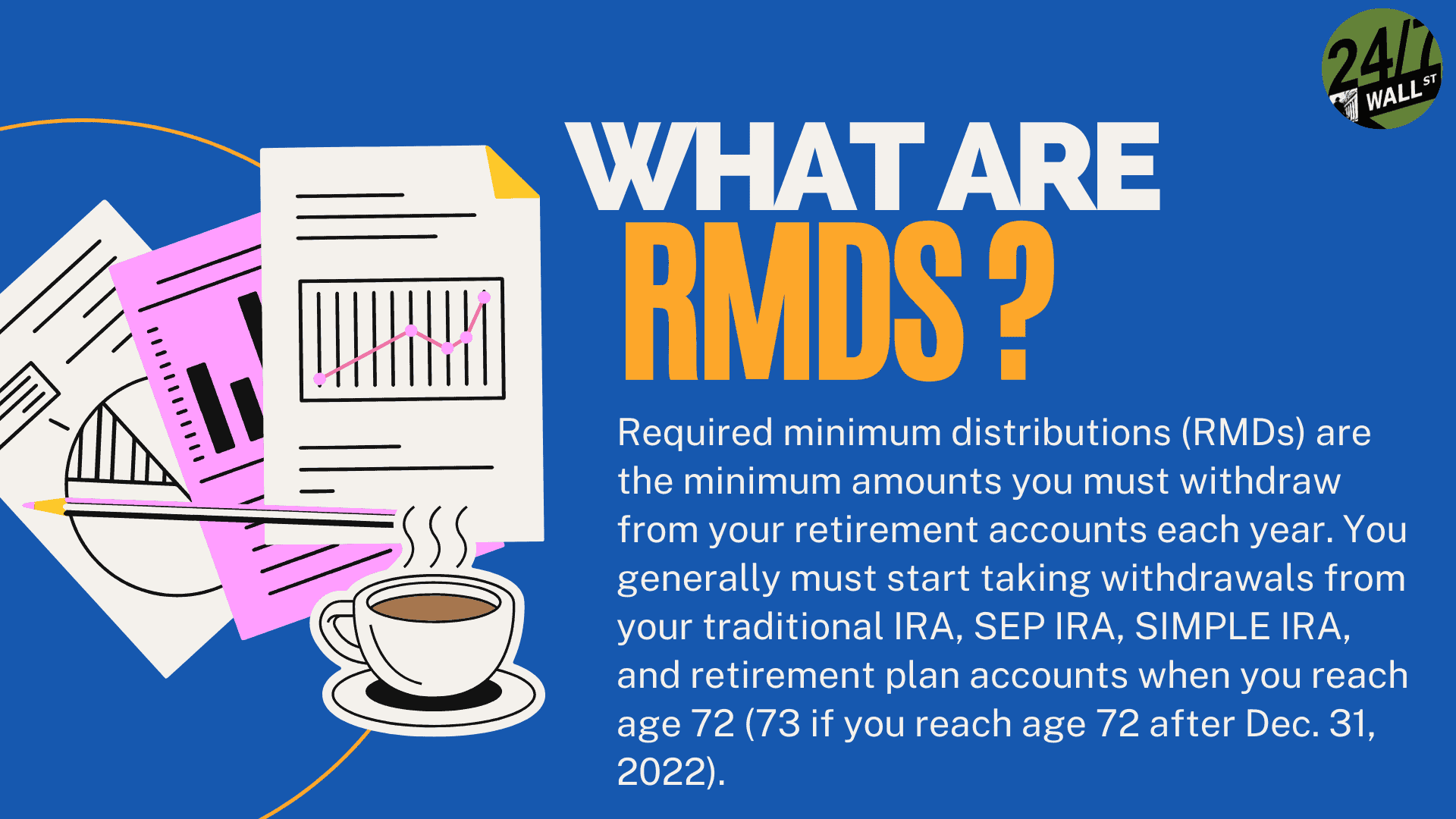
- Required minimum distributions: Under the SECURE 2.0 Act, required minimum distributions from traditional 401(k) accounts now begin at age 73 for those born between 1951 and 1959. For those born in 1960 or later, including the wife who is currently 58, the starting age rises to 75, effective in 2033. Roth 401(k) accounts are no longer subject to RMDs during the owner’s lifetime as of 2024, a change that gives the couple’s $400,000 Roth 401(k) additional flexibility to grow. When mandatory RMDs on the large pre-tax balances do arrive, they will likely push the couple into a higher bracket, which is exactly why early-retirement Roth conversions are so valuable. The OBBBA’s temporary senior deduction, available through 2028, creates a favorable window to accelerate those conversions at a lower effective rate.
This article should be considered as opinion only. Those seeking retirement planning and tax advice should consult a qualified financial or accounting professional.
Editor’s note: This pass added the OBBBA senior deduction phaseout ceiling of $250,000 MAGI for joint filers (the prior version noted only the $150,000 phase-out start), confirmed 2026 HSA contribution limits of $4,400 for self-only and $8,750 for family coverage, and clarified that the $6,000 senior deduction is claimable whether the filer itemizes or takes the standard deduction.
Contact [email protected] for any questions or corrections.
After 15 years on Wall Street with 7 of them as Director of Corporate and Municipal Bond Trading for a NYSE member firm, I started my own project and corporate finance consultancy. Much of the work involves writing business plans, presentations, white papers and marketing materials for companies seeking budgetary allocations for spinoffs and new initiatives or for raising capital for expansion or startup companies and entrepreneurs. On financial topics, I have been published under my own byline at The Motley Fool, 247wallst.com, DealFlow Events’ Healthcare Services Investment Newsletter and The Microcap Newsletter, among others. Additionally, I have done freelance ghostwriting writing and editing for several financial websites, such as Seeking Alpha and Shmoop Financial. I have also written and been published on a variety of other topics from music, audiophile sound and film to musical instrument history, martial arts, and current events. Publications include Copper Magazine, Fidelity (Germany), Blasting News, Inside Kung-Fu, and other periodicals.