I’ve been maxing out my after-tax 401(k) and converting it to a Roth for 2 years — is this a good strategy?
Roughly 70 million workers actively participate in 401(k) retirement plans, which now hold $10.1 trillion in assets as of year-end 2025. The program has become one of the premier vehicles for building a secure retirement. While the $24,500 contribution limit…

This post may contain links from our sponsors and affiliates, and Flywheel Publishing may receive compensation for actions taken through them.

Roughly 70 million workers actively participate in 401(k) retirement plans, and those plans now hold $10.1 trillion in assets as of year-end 2025. The program, which took shape in the late 1970s, has become one of the premier vehicles for American workers to build a financially secure retirement. For most employees, contributing to a traditional or Roth 401(k) is more than sufficient. For high earners, though, the standard limits tend to feel like a starting point rather than a destination.
The $24,500 elective deferral limit for 2026 is a threshold that average workers rarely approach, yet for top earners it functions more like a floor. Even stacking a Roth IRA on top, which allows up to $7,500 in after-tax contributions for those under 50 in 2026 (or $8,600 for those 50 and older, following the first inflation-indexed catch-up increase since SECURE 2.0), does not move the needle much for someone with substantial disposable income to shelter. That gap is precisely why more sophisticated strategies have gained traction among high-earning savers.
One of the most powerful of these approaches is the mega backdoor Roth conversion. The strategy works by first maxing out standard 401(k) contributions, then stacking additional after-tax dollars into the same plan up to the Section 415(c) combined ceiling of $72,000 for 2026. Workers who turn 60, 61, 62, or 63 during the year can go even further: the SECURE 2.0 “super catch-up” provision raises their overall plan cap to $83,250. Those extra after-tax dollars are then rolled into a Roth IRA or, if the plan allows it, converted inside the plan to a Roth 401(k).
A Roth IRA rollover and an in-plan Roth 401(k) conversion are two sides of the same coin, and both must generally be executed in the same year the after-tax contributions are made. The key difference is custody: one lands in an account you own directly, the other stays inside your employer’s plan. There is one significant new development for high earners. Under SECURE 2.0 rules that took full effect January 1, 2026, workers age 50 or older who earned more than $150,000 in FICA wages during 2025 must direct all catch-up contributions to a Roth account on an after-tax basis. Plans that do not offer a Roth contribution option must either add the feature or block catch-up contributions for affected participants entirely. The IRS issued final regulations on September 16, 2025, formally applying them to contributions beginning after December 31, 2026, with a reasonable good-faith interpretation standard governing compliance through the end of 2026.
This is the same situation many high-earning savers on retirement planning forums describe: they have been making mega backdoor Roth conversions for two or more years but are weighing whether to redirect excess cash into a taxable brokerage account instead, drawn by the flexibility it would offer for real estate or other opportunistic investments.
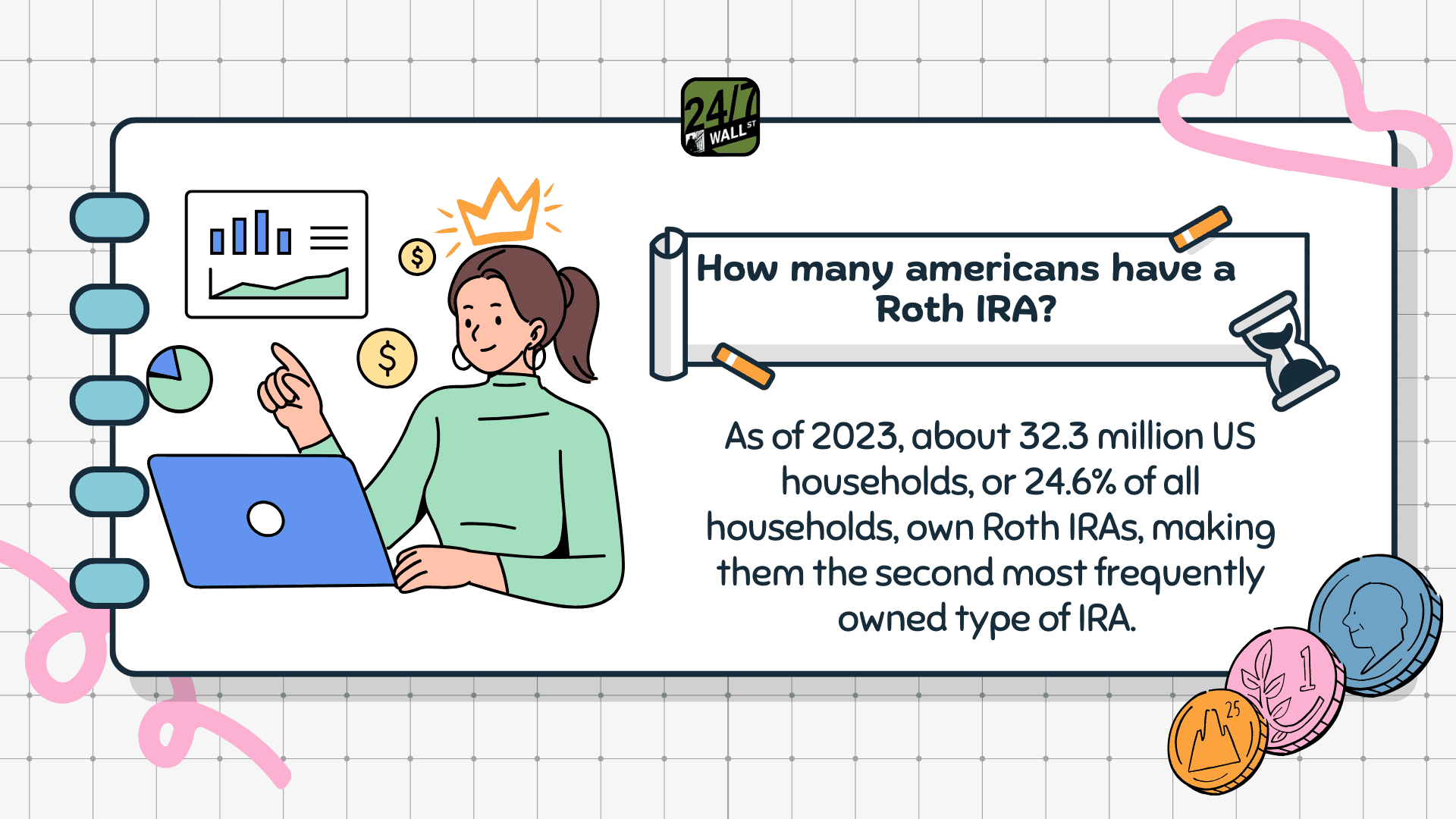
That question deserves a close look, because the implications cut across taxes, flexibility, and long-term wealth accumulation in ways that are easy to underestimate.
The backdoor path to a secure retirement
These are analytical observations, not financial planning advice. With that framing in place, the case for abandoning the mega backdoor Roth in favor of a taxable brokerage account is a largely weak one. Both approaches use after-tax dollars, but a taxable account subjects all gains to federal capital gains taxes and, in most states, state taxes as well. A handful of states exempt capital gains, though the federal bite applies regardless of where you live. The mega backdoor Roth, by contrast, preserves those same after-tax contributions for entirely tax-free withdrawal in retirement, a structural advantage that compounds with every passing year.
The main friction point is that any earnings accrued inside the plan before a conversion or rollover are treated as pre-tax income. Many modern workplace plans now sidestep this problem through automated daily in-plan conversions that sweep after-tax contributions into the Roth bucket before meaningful earnings can accumulate. When earnings have already built up before a rollover, plan administrators can split the distribution, routing the after-tax principal to a Roth IRA and the pre-tax earnings to a traditional IRA.
A Roth IRA carries another significant structural advantage: no Required Minimum Distributions (RMDs) during your lifetime. Contributions (though not earnings) can also be withdrawn at any point without tax or penalty. Roth 401(k) accounts now share that benefit as well, since SECURE 2.0 eliminated lifetime RMDs for designated Roth 401(k) accounts starting in 2024, aligning them with Roth IRA treatment. The mega backdoor strategy also sidesteps the pro-rata rule that can complicate a standard backdoor Roth IRA by aggregating all individual traditional IRA balances. Because the mega backdoor conversion operates entirely within the workplace plan framework, that complication simply does not arise.
The compounding power of tax-free growth over decades is tangible, not theoretical. Fidelity, the nation’s largest 401(k) provider, reported that the number of 401(k) accounts with balances of $1 million or more surged 19% to a record 769,000 in the second quarter of 2026. That milestone reflects decades of consistent, tax-advantaged saving, and strategies like the mega backdoor Roth are a key driver for high earners who want to build similar balances.
One additional tailwind worth noting: the One Big Beautiful Bill Act, signed into law on July 4, 2025, made current individual income tax brackets permanent, removing the uncertainty that had previously surrounded the expiration of Tax Cuts and Jobs Act provisions. That certainty makes Roth conversions more predictable, since savers no longer need to race a sunset deadline to lock in lower rates. The same legislation also introduced a temporary $6,000 additional deduction for taxpayers aged 65 or older for tax years 2025 through 2028, a provision worth factoring into any near-retirement Roth conversion plan. One important caveat for high earners: the deduction begins phasing out at $75,000 in modified adjusted gross income for single filers and $150,000 for joint filers, disappearing entirely at $175,000 and $250,000, respectively. Many of the savers best positioned to use the mega backdoor strategy may find the deduction only partially available or unavailable altogether.
The catch with the mega backdoor approach is availability. Not every 401(k) plan permits in-service withdrawals or after-tax contributions, and not every plan includes a Roth 401(k) option. Both features are discretionary, left entirely to the employer or plan administrator to offer. When a plan lacks either, the strategy is simply off the table, regardless of income level.
Key takeaways
High earners have a meaningful toolkit for retirement savings that extends well beyond standard contribution limits. Using it thoughtfully can make the difference between a comfortable retirement and a genuinely affluent one.
For workers whose plans support it, the mega backdoor Roth conversion stands out as a superior choice compared to a taxable brokerage account. Because both routes involve after-tax money, choosing the Roth path captures tax-free growth that would otherwise be left on the table. That advantage compounds substantially over time, particularly for savers who are still decades from retirement.
These strategies carry real complexity, and the mechanics of your specific plan matter enormously. Consulting a fee-only financial advisor before acting is a sensible move. A qualified advisor can map out a personalized strategy, identify any plan-level constraints, and help you avoid the administrative missteps that can turn a smart tax play into an unexpected tax bill.
Editor’s note: This pass updated the Fidelity 401(k) millionaire count to 769,000 accounts in Q2 2026, up 19% from the prior quarter, replacing the earlier mid-2025 figure of 595,000. It also clarified the 2026 Roth IRA contribution limit, noting that the catch-up contribution for those 50 and older rose to $1,100 (the first inflation-indexed increase since SECURE 2.0), bringing the total IRA contribution ceiling for that age group to $8,600.
Contact [email protected] for any questions or corrections.
After two decades of patrolling the dark corners of suburbia as a police officer, Rich Duprey hung up his badge and gun to begin writing full time about stocks and investing. For the past 20 years, he’s been cruising the markets looking for companies to lock up as long-term holdings in a portfolio while writing extensively on the broad sectors of consumer goods, technology, and industrials. Because his experience isn’t from the typical financial analyst track, Rich is able to break down complex topics into understandable and useful action points for the average investor. His writings have appeared on The Motley Fool, InvestorPlace, Yahoo! Finance, Money Morning, and, of course, 24/7 Wall St. He has been featured in both U.S. and international publications, including MarketWatch, Financial Times, Forbes, Fast Company, and USA Today.