Dave Ramsey thinks a 401(k) is better than a pension for these 5 simple reasons
Dave Ramsey has shared financial advice for decades, and one view he expressed in an older YouTube video continues to hold up well: 401(k) plans are better than pensions. He argues that 401(k)s have minted more millionaires than pensions ever…

This post may contain links from our sponsors and affiliates, and Flywheel Publishing may receive compensation for actions taken through them.
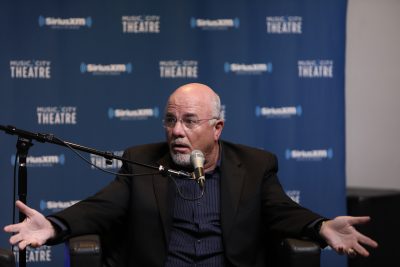
Dave Ramsey has shared financial advice for decades, and one view he expressed in an older YouTube video continues to hold up well: 401(k) plans are better than pensions. Ramsey argues that 401(k)s have minted more millionaires than pensions ever have and that they are simply more effective wealth generators for the average worker. That argument is hard to dismiss when Bureau of Labor Statistics data show that only 14% of private-sector employees now have access to a traditional defined-benefit pension, down from 15% in earlier surveys.
Ramsey has long pointed out that governments and unions are the primary remaining sources of traditional pensions, and the modern corporate landscape largely confirms that view. Starting January 1, 2024, IBM (NYSE:IBM | IBM Price Prediction) ended both its 5% 401(k) matching contribution and its 1% automatic contribution, redirecting the equivalent benefit into a cash balance component of its existing defined-benefit plan. Under that arrangement, IBM credits 5% of each employee’s pay into a “Retirement Benefit Account” each year, with the account earning a guaranteed 6% interest credit for the first three years and interest tied to the 10-year Treasury yield thereafter. Despite moves like this one, Ramsey’s core argument holds: 401(k) plans still offer compelling advantages for most workers navigating today’s economic environment.

Company Matches and the 2026 SECURE Act 2.0 Limits
Many employers offer 401(k) matches, and that free money is something a standard pension simply cannot replicate. For 2026, the IRS raised the standard employee deferral limit to $24,500, up from $23,500 in 2025, giving workers another incremental edge in building tax-advantaged wealth. The “Super Catch-Up” allowance for workers aged 60 to 63 holds at $11,250, meaning that age bracket can stash away as much as $35,750 in 2026 alone.
SECURE Act 2.0 has also broadened the 401(k)’s appeal for younger workers: employers can now offer matching contributions tied to qualified student loan payments, helping newer entrants to the workforce build retirement savings while they pay down debt. One important rule applies to higher earners. Workers whose prior-year FICA wages exceeded $150,000 must direct any catch-up contributions in 2026 into an after-tax Roth account rather than a pre-tax one, a change that took effect January 1, 2026, after a two-year IRS administrative delay.
You Are in Control: The Inflation Hedge
With a 401(k), you choose which funds and individual stocks to hold. That control stands in direct contrast to a pension, where a third-party manager makes every investment decision on your behalf. During periods of elevated inflation, this distinction matters enormously. Pensions typically pay fixed amounts or cap cost-of-living adjustments, while a 401(k) invested in diversified equities has historically offered a far stronger hedge against rising prices.
A 401(k) strategy can also evolve alongside a worker’s risk tolerance and expertise over time. Many plans offer self-directed brokerage windows that open access to a far broader investment universe than a standard fund menu. Capital locked inside a pension offers none of that flexibility, because pension managers maintain portfolios calibrated for the average participant, a profile that rarely aligns with the growth needs of a worker still decades away from retirement.
The 401(k) Is Portable in a Hybrid Market
A traditional pension is rarely fully portable. Most plans only vest after a set number of years with one employer, creating golden handcuffs that penalize workers who change jobs early in their careers. Modern employers have introduced hybrid cash balance plans offering somewhat more portability than older defined-benefit models, but the 401(k) remains the clear leader in flexibility for the mobile workforce.
When you leave a job, you can roll your 401(k) balance into a new employer’s plan or into an IRA without triggering taxes or penalties. Your savings keep compounding regardless of how many times you switch employers, and your retirement timeline never resets. That is a straightforward advantage that no pension structure can match for workers who change jobs every few years, as many Americans now do.
You Are in Charge of Your Life
Ramsey’s broader financial philosophy centers on staying in control of your money, and the 401(k) embodies that principle. A pension ties your retirement security to the continued solvency and competent management of an outside entity, whether a corporation, a union, or a government body. History offers cautionary examples in all three categories. According to a January 2026 WTW analysis, the aggregate funded status of 349 Fortune 1000 defined-benefit plans reached an estimated 104% at the end of 2025, up from 101% at the end of 2024. Even at that improved level, some individual plans in the group remain underfunded, and the gap between promises and assets has not been fully closed across the board.
A 401(k) belongs entirely to you. When the macroeconomic climate shifts, you can adjust your asset allocation on your own timeline, without waiting on a board of trustees or a plan administrator. That kind of responsiveness is something no traditional pension can match.
Immediate Access and Emergency Sidecars
Pension benefits are locked away until retirement eligibility, with no practical route to access the money early. A 401(k) works differently. Under provisions introduced by SECURE Act 2.0, some plans now allow “pension-linked emergency savings accounts,” commonly called sidecar accounts, that provide a dedicated pool of liquid cash for unexpected expenses. These accounts are capped at $2,500 and must be invested in principal-protected assets. Employer adoption has been slow, but the underlying option is a safety net that pensions simply cannot offer.
Certain life events also allow penalty-free withdrawals from a 401(k) well before retirement age. Qualifying medical expenses, higher-education costs, adoption expenses, and first-time home purchases can all open penalty-free access. That versatility cements the 401(k) as a tool for building wealth across all of life’s major milestones, not just the final chapter of a career.
Editor’s note: This version updates the Bureau of Labor Statistics figure for private-sector defined-benefit plan access to 14%, reflecting the BLS March 2025 National Compensation Survey released September 2025, and adds context on the 2026 Roth catch-up rule taking effect after a two-year IRS administrative delay. The WTW Fortune 1000 pension funded-status figures (104% for year-end 2025, up from 101% for year-end 2024) reflect the January 2026 WTW analysis.
Contact [email protected] for any questions or corrections.
Marc Guberti is a personal finance writer who has written for US News & World Report, Business Insider, Newsweek and other publications. He also hosts the Breakthrough Success Podcast which teaches listeners how to use content marketing to grow their businesses.