I’m Hesitant to Diversify My Portfolio, US Stocks Seem Crazy Overvalued
As the current S&P 500 bull run enters its 36th month, some concerns have arisen about a potential bubble. With some US company evaluations reaching unprecedented hundreds of billions, and even trillions in market capitalization, some investors are wary of…

This post may contain links from our sponsors and affiliates, and Flywheel Publishing may receive compensation for actions taken through them.

As the current S&P 500 bull run enters its 36th month, some concerns have arisen about a potential bubble. With some US company evaluations reaching unprecedented hundreds of billions, and even trillions in market capitalization, some investors are wary of another 2022, or even worse, for those old enough to remember, another 2008 bear market.
While diversification is always a good idea, it turns out that foreign investors are still heavily invested in the US with much more to follow. Some investors have posted on Reddit with varying opinions of the US market, both bullish and bearish, and their reasons why.
Why US Stocks Are Still The Preferred Choice For Foreign Investors

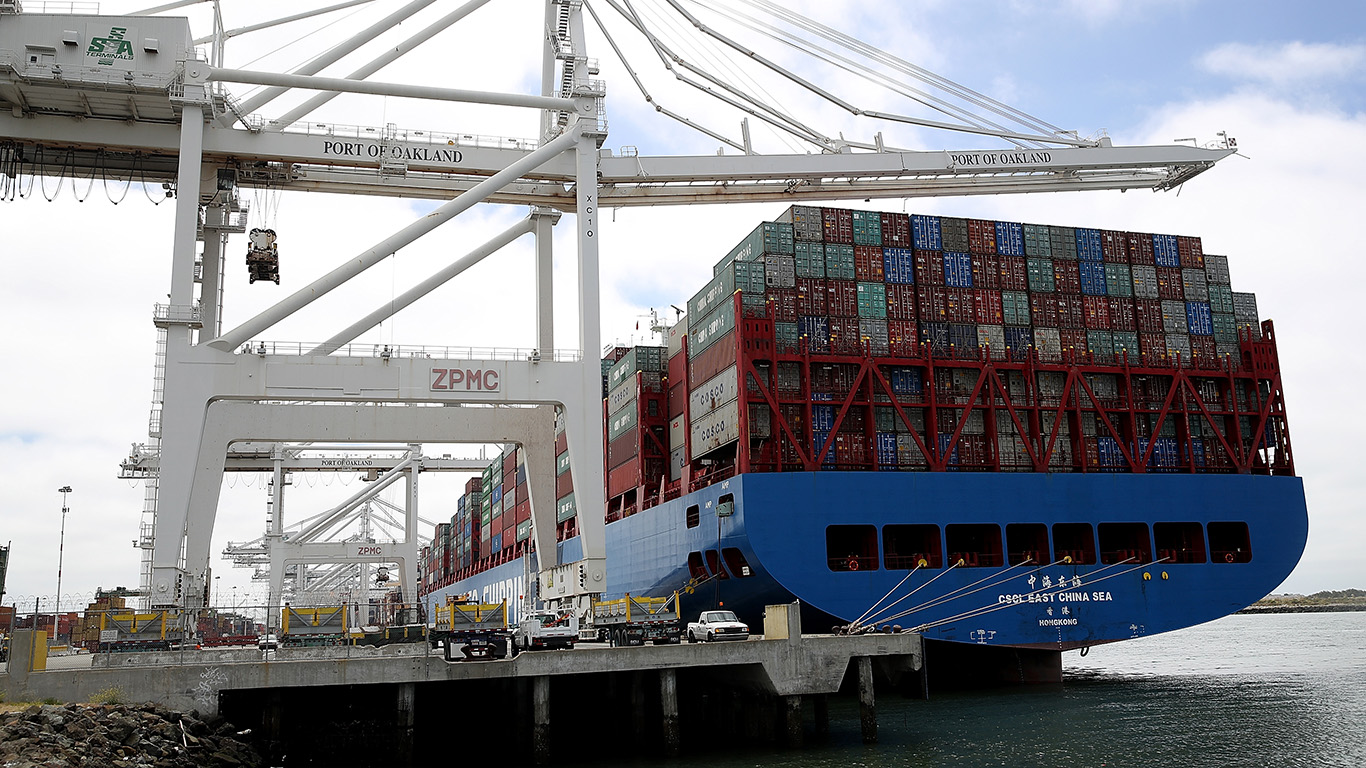
The second quarter of 2025 saw a record level of foreign investment in the US markets, at $8.24 billion, according to Trading Economics. There are a number of reasons that foreign investors have cited their preference for US stocks, such as:
- For the past few years, the Vanguard S&P 500 ETF benchmark has outperformed all other global and emerging market ETFs, reinforcing the perception of US primary market strength and resilience supremacy.
- The S&P 500’s “Magnificent 7” stocks: Apple, Amazon, Alphabet (Google), Microsoft, Meta Platforms (Facebook), Nvidia, and Tesla – are unrivalled in each of their respective sectors, marking US preeminence in AI development and technology. The Netherlands’ ASML Holding NV, the foremost supplier of Extreme Ultraviolet lithography machines used for semiconductor manufacturing, is perhaps Europe’s sole qualifier in that elite echelon.
- The top 100 US companies are essentially multinationals that either dominate or have a decidedly large market share in most other nations’ economies.
- Influential Fundstrat Capital founder Tom Lee, the issuer of the Fundstrat Granny Shots US Large Cap ETF, was quoted: “I am not in the same camp as those who believe that ‘U.S. exceptionalism is over.’ […] The best and most important companies in the world are American companies, they produce the best shareholder returns. […] 40% of the returns of the S&P comes from new companies every 10 years. Will the best new companies be coming from Europe instead of the U.S. because of the dollar? I doubt it.”
- Due to such pervasive US company market dominance, anything that adversely impacts the US markets are viewed as likely to bring down all foreign markets commensurately.
Foreign Market Geopolitical Reticence Justifications
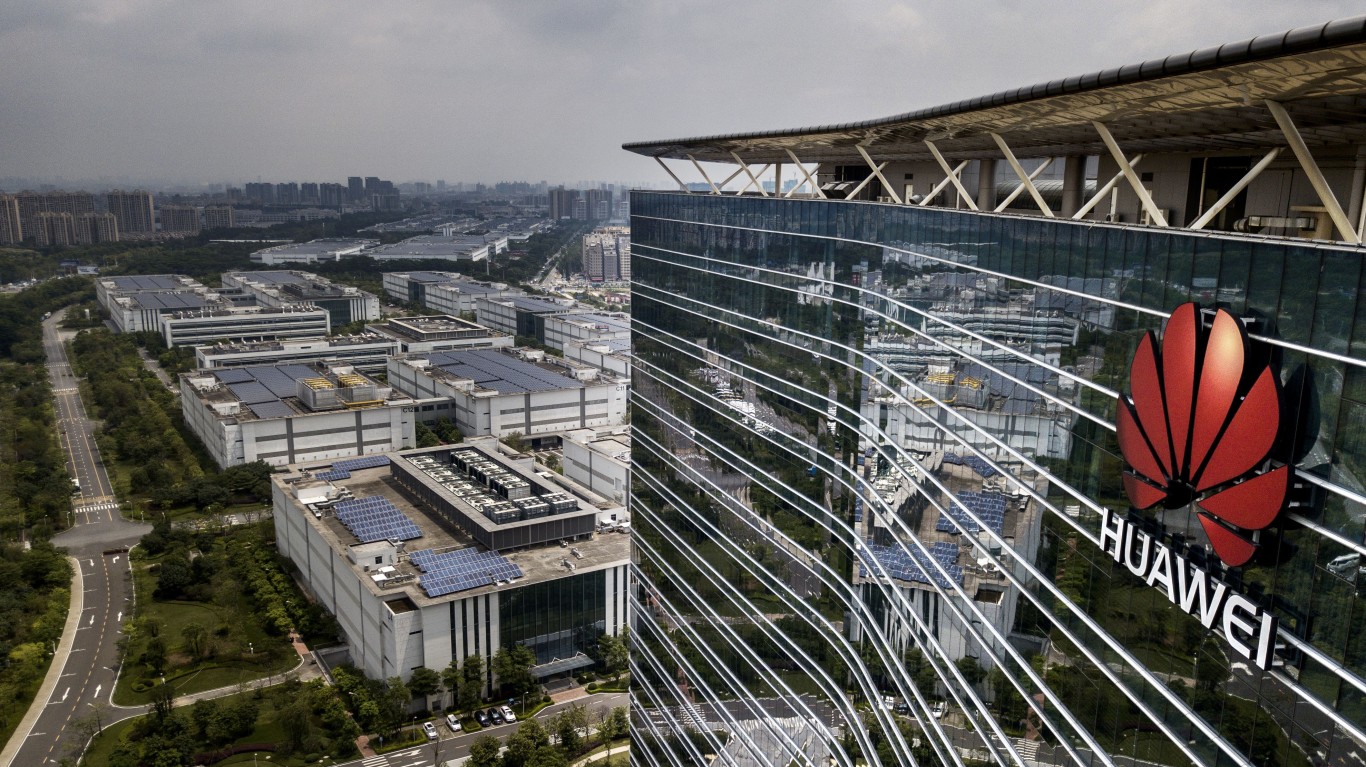
Although individual foreign stocks present opportunities that often will go under the radar in US financial news cycles, there are overall systemic and geopolitical reasons why many foreign investors prefer US markets:
- A large part of Latin America and Africa suffers from political instability, with continual wars, high crime rates, and pervasive government corruption.
- Germany, France, and the UK are all suffering from a slow economic recovery with high costs, bloated bureaucratic red-tape business obstacles, and similar border unrest issues that have already been addressed and rectified in the US.
- Japan and South Korea have aging populations, with Japan suffering from stagnant growth, despite ultra low interest rates, and South Korea has a high household debt problem.
- China’s economy has yet to turn the corner on its real estate collapse resulting from Evergrande’s bankruptcy. Housing prices in China have dropped 35% since the Evergrande fiasco, and Chinese domestic consumption is low, as millions lost their life savings. The decades in which China was able to get a free ride off its exports to the US have come to a halt due to President Trump’s reciprocal tariff policies, which now partially even the playing field, although the trade dispute continues.
- Although no country’s financial sector is completely scandal and corruption-free, US security law compliance still requires a level of transparency bar be met that other nations don’t approach, so foreign investors believe they can get fairer treatment in the US than in most foreign nations, including their own.
US Market Geopolitical Attractions

President Trump’s pro-business policies, including strategies devised by Treasury Secretary Scott Bessent, are fueling an entrepreneurial revival, as well as long overdue international trade support enforcement for fairer export terms. These policies are viewed by many as laying the foundation for a proliferation of future IPO and SPAC deals.
- Reciprocal tariff policy enforcement is allowing many US companies to make more equitable export profits in a fairer and more competitive environment than previously, where high foreign tariffs drastically cut margins. Companies like Netflix and Coca-Cola are just a few of the beneficiaries.
- Total US and Foreign investment in the US has reached $8.8 trillion to date according to the White House, with more pledges to follow.
- The American Innovation Act (increases small business tax deductions), the Expanding American Entrepreneurship Act (doubled the angel investor number cap and quintupled angel funding from $10 million to $50 million), and the Tax Relief For New Business Act (cuts red tape for new businesses and gives them a tax break) are all designed to give much needed support for entrepreneurs who were stumped by red tape and high cost barriers during the Biden Administration.
Emerging Market Opportunities

While foreign investors may think it wise for them to have sizable holdings in the US markets, diversification for US investors is still a good strategy – the question is: which foreign markets might offer the best opportunities? While certain individual companies from industrialized nations, such as the aforementioned ASML Holding NV or South Korea’s Samsung might be worth adding to a portfolio, there are emerging market nations whose recent geopolitical developments might lead to a “rising tide lifts all boats” scenario, so that a sovereign ETF, CEF or mutual funds in these countries may offer diversification upside exposure:
- El Salvador: Major crime fighting reforms implemented by President Bukele have improved security, which has increased tourism by 35%. Additionally, El Salvador has new tax exemptions for tech related ventures, which also dovetails to the nation’s adoption of Bitcoin as legal tender.
- Zimbabwe: By shifting to the gold backed ZIG, Zimbabwe addressed long standing currency devaluation issues. Rich in highly coveted natural resources like lithium, tobacco, platinum, and gold, Zimbabwe is projected to experience 6% GDP growth. Violent crime rates have been significantly reduced, although robbery and pickpocketing are still issues.
- Vietnam: Vietnam has one of the highest GDP growth rates in Asia. Its economy has transformed in the last few decades from one of Asia’s poorest nations to an upper-middle class one. The trade wars greatly benefited Vietnam, whose skilled workforce seamlessly took on complex tech manufacturing for Apple and other multinationals. Its foreign investment, led by Singapore, is very high, and shows no sign of curtailing. Vietnam was also removed from the FATF (Financial Action Task Force) list in 2024, meaning that previous issues over currency manipulation had been rectified and were no longer an issue.
Overall, keeping a sizable portion of one’s portfolio in the US markets seems to be a no-brainer. Diversification is a subjective issue, so one needs to diversify in accordance with personal risk tolerance and level of research to be informed on the liabilities in any potentially interesting new investment sector.
Contact [email protected] for any questions or corrections.
After 15 years on Wall Street with 7 of them as Director of Corporate and Municipal Bond Trading for a NYSE member firm, I started my own project and corporate finance consultancy. Much of the work involves writing business plans, presentations, white papers and marketing materials for companies seeking budgetary allocations for spinoffs and new initiatives or for raising capital for expansion or startup companies and entrepreneurs. On financial topics, I have been published under my own byline at The Motley Fool, 247wallst.com, DealFlow Events’ Healthcare Services Investment Newsletter and The Microcap Newsletter, among others. Additionally, I have done freelance ghostwriting writing and editing for several financial websites, such as Seeking Alpha and Shmoop Financial. I have also written and been published on a variety of other topics from music, audiophile sound and film to musical instrument history, martial arts, and current events. Publications include Copper Magazine, Fidelity (Germany), Blasting News, Inside Kung-Fu, and other periodicals.