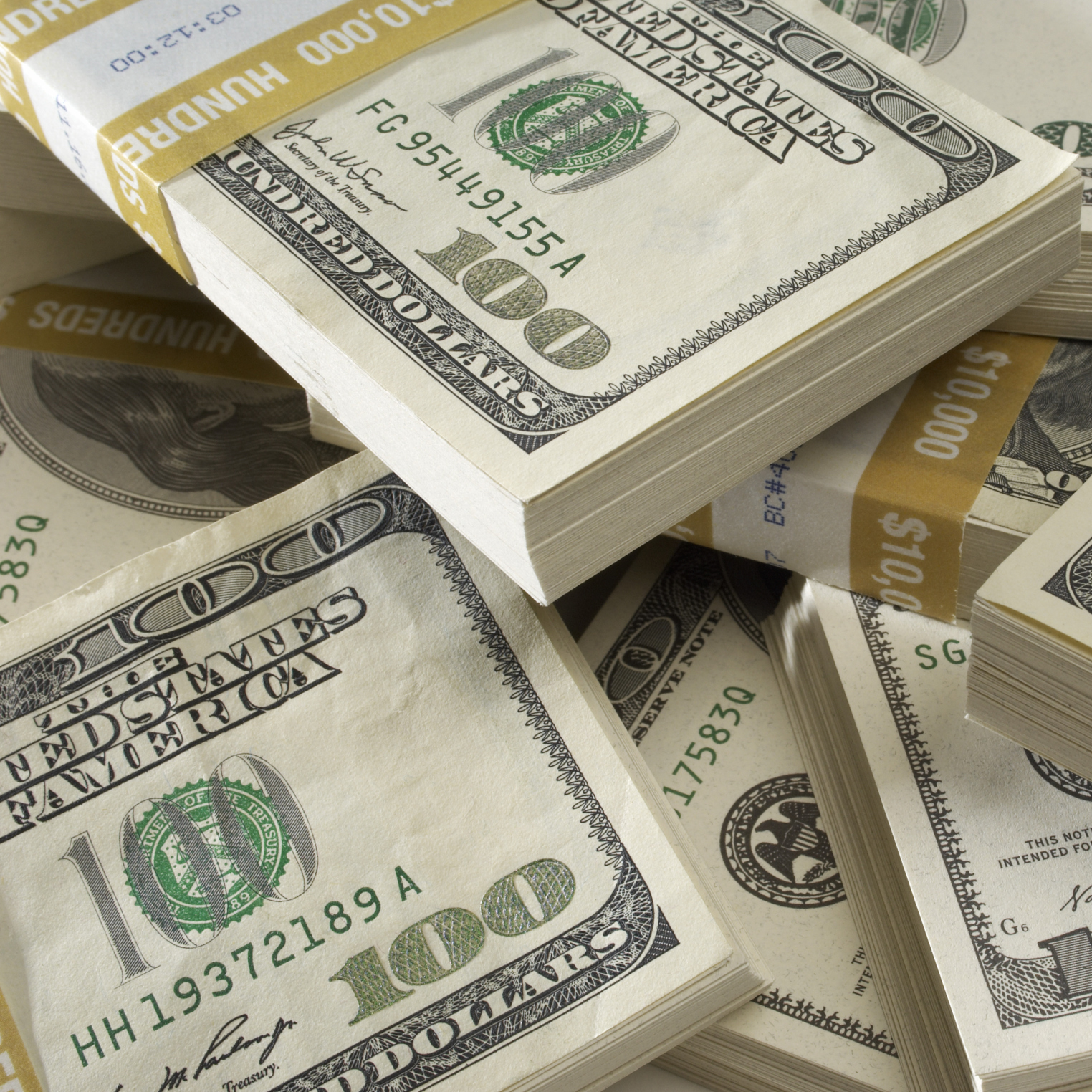
A $1 Million Portfolio That Quietly Pays You $67,500 a Year, No Job Required
A $1 million portfolio generating $67,500 a year requires a blended yield of 6.75%. That figure sits at the crossover between moderate and aggressive income tiers, involving real tradeoffs most income calculators never explain. At a 3.5% yield, $67,500 annually…

This post may contain links from our sponsors and affiliates, and Flywheel Publishing may receive compensation for actions taken through them.

A $1 million portfolio generating $67,500 a year requires a blended yield of 6.75%. That figure sits at the crossover between moderate and aggressive income tiers, and the tradeoffs involved are real ones that most income calculators never address.
Why a 3.5% Yield Now Pays Less Than a Treasury Bond
At a 3.5% yield, producing $67,500 annually requires approximately $1,929,000 in invested capital. Dividend growth portfolios in this range tend to raise payouts each year, compounding income over time while principal appreciates alongside it.
The 10-year Treasury has climbed to approximately 5% as of mid-September 2026, propelled by a fresh Fed rate hike and persistent inflation concerns. That move alone reframes the income calculus for every equity investor: a 3.5% dividend yield from stocks now pays a full 150 basis points less than a risk-free government bond. The case for accepting that gap rests entirely on dividend growth, not on current income. An investor who can wait a decade for dividend income to catch up may find that bet worthwhile. One who needs income today faces a harder argument to make.
REITs, Telecoms, and Tobacco: Where 6.75% Actually Lives
At 6.75% yield, $67,500 requires exactly $1,000,000. That target is achievable by blending REITs, high-yield telecoms, and tobacco dividend stocks, though each brings a distinct set of risks.
- Realty Income (NYSE:O) pays a monthly dividend and has now raised its payout for 32 consecutive years, earning it a permanent seat in the S&P 500 Dividend Aristocrats index. The company recently bumped its monthly payment to $0.2715 per share, pushing the annualized dividend to approximately $3.26 per share and the current yield to roughly 5.5%. In September 2026, Realty Income also announced a euro-denominated joint venture with KKR, extending its private capital platform into European markets. Rising interest expense stays a meaningful risk as the rate environment tightens further.
- Altria Group (NYSE:MO | MO Price Prediction) raised its quarterly dividend 4.7% in late August 2026, lifting the payout to $1.11 per share and the annualized rate to $4.44. At current prices, that translates to a yield of approximately 6.4%. The company recorded $2.2 billion in NJOY-related impairments in the second quarter and subsequently pulled its NJOY Ace vapor product from U.S. stores after FDA complications, shifting the smoke-free strategy toward oral nicotine. Domestic cigarette volumes continue to decline by roughly 10% annually, and Altria carries negative stockholders’ equity, so the payout remains dependent on sustained pricing power rather than volume recovery.
- Verizon Communications (NYSE:VZ) yields approximately 5.6% at current prices, with an annualized dividend of $2.83 per share. The company has raised its payout for 20 consecutive years, including a 2.5% hike in January 2026 that CFO Tony Skiadas described as marking “the 20th consecutive year of dividend increases.” CEO Dan Schulman, the former PayPal chief who took the helm in October 2025, has been reshuffling leadership as part of a broader turnaround. The January 2026 close of the Frontier Communications acquisition added fiber access to over 30 million homes and businesses, and first-half 2026 free cash flow hit $10.2 billion, up 16% from a year earlier. Total debt of roughly $172 billion remains the central risk for long-term holders.
The core tradeoff at this yield tier is that dividend growth tends to slow or stall, meaning income is unlikely to keep pace with inflation over a decade. When nominal income does not grow, purchasing power erodes quietly and steadily in real terms.
What a 10% Yield Actually Costs You
At 10% yield, $67,500 requires only $675,000 in capital. That sounds like an obvious advantage until you look at what actually generates a 10% yield in today’s market.
Ares Capital Corporation (NASDAQ:ARCC) is the largest publicly traded business development company, with a portfolio spanning more than 600 companies and approximately 80% allocated to first-lien senior secured loans. Its annualized dividend stands at $1.92 per share, paid quarterly at $0.48 per quarter, yielding close to 10% at current prices near $19. The Q3 2026 dividend was declared at the same $0.48 rate, keeping the payout steady. UBS raised its price target to $21 from $19 in September 2026, reflecting improving sentiment toward the BDC sector.
The risks, however, are concrete. Ares Capital reported $183 million in unrealized losses in its most recent quarter, and Q2 core earnings per share of $0.47 came in just a cent below the $0.48 quarterly payout, compressing the coverage cushion. Non-accruals rose to 1.4% of fair value from 1.2% at year-end. At this yield tier, an investor drawing income is often spending down the asset base rather than building it.
The Compounding Trap
A portfolio yielding 3.5% with 7% annual dividend growth doubles its income in roughly 10 years. The same $67,500 grows to $135,000 without adding new capital. A 10% yield with no growth stays flat in nominal terms and shrinks in real terms as inflation erodes purchasing power year after year.
Consider the long-run comparison. The investor chasing 10% today to avoid needing $1.9 million may find that in 15 years, their $675,000 portfolio has paid well but is worth considerably less in both nominal and real terms. The more conservative investor’s larger portfolio, by contrast, will have grown in both income and value. Compounding rewards patience and capital, not the highest starting yield.
How to Size Your Portfolio Before Choosing a Yield Tier
- Calculate your actual annual spending, not your salary. Many people need to replace 70% to 80% of pre-retirement income, which changes the capital requirement at every yield tier.
- Model the tax impact by tier. High-yield BDC distributions are often taxed as ordinary income, while qualified dividends may receive preferential treatment depending on your bracket and account type.
- Compare the 10-year total return of a moderate-yield dividend growth position against a high-yield aggressive position. The 10-year Treasury now yields approximately 5%, which sets a more demanding baseline than income investors faced even six months ago. Any equity yield tier needs to clear that bar on a total return basis to justify the additional risk.
Editor’s note: This pass updates the 10-year Treasury yield to approximately 5% following the September 2026 Fed rate hike. Realty Income’s consecutive dividend raise streak is corrected to 32 years and its annualized dividend is refreshed to $3.26 per share, reflecting the new $0.2715 monthly rate; the article also adds context on the KKR joint venture announced in September 2026. Altria’s annualized dividend is updated to $4.44 per share following the 4.7% raise announced in August 2026, and the article adds context on the $2.2 billion NJOY impairment and NJOY Ace product withdrawal. Verizon’s consecutive raise streak is corrected to 20 years, total debt is updated to roughly $172 billion post-Frontier close, and first-half 2026 free cash flow of $10.2 billion is added. Ares Capital’s price is updated to roughly $19 and yield to approximately 10%, and the UBS target raise to $21 replaces the stale Keefe Bruyette cut.
Contact [email protected] for any questions or corrections.
Drew Wood has edited or ghostwritten nine books and published more than 1,500 articles on investing, business, politics, travel, world cultures, wildlife, and earth science. He holds a doctorate and four master's degrees and has nearly 30 years of college teaching experience. His travels have taken him to 25 countries, including three years living in Ukraine.