The IRA and 401(k) Tax Trap That Catches Retirees off Guard
Traditional 401(k) and IRA accounts come with a hidden cost that surprises many retirees: Required Minimum Distributions that force taxable withdrawals at age 73 or 75, potentially pushing income into a higher bracket, triggering tax on Social Security benefits, and…

This post may contain links from our sponsors and affiliates, and Flywheel Publishing may receive compensation for actions taken through them.

You’ve heard the advice over and over: put money into your 401(k) or IRA. On the surface, this is genuinely good guidance. A generous nest egg is the foundation of a comfortable retirement.
The problem is that some hidden rules can make overloading these accounts work against you. Once you dig a little deeper, you may find you want to stop funding them sooner than you’d think. Here’s why.
The big problem with over-funding a traditional IRA or 401(k)
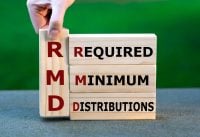
The core issue with traditional 401(k) and IRA accounts is that both are subject to Required Minimum Distribution (RMD) rules. The IRS sets a mandatory withdrawal schedule that kicks in at age 73 for those born between 1951 and 1959, and at age 75 for those born in 1960 or later, when that cohort reaches the applicable age in 2033 under the SECURE 2.0 Act.
Those RMDs can be substantial. The IRS requires you to use its Uniform Lifetime Table to calculate the minimum annual withdrawal. Based on that table, a 73-year-old with a $1 million balance could owe an RMD of roughly $37,700 in the first year alone. That amount grows as a percentage of the balance as you age: roughly 3.7% at 73, around 5% by 80, and above 8% by 90.
Withdrawals from traditional 401(k) and IRA accounts are taxable as ordinary income, and a large forced withdrawal can push you into a higher bracket. Beyond the bracket effect, elevated income can also trigger two compounding problems:
- Tax on Social Security benefits: Up to 50% of your Social Security becomes taxable if your provisional income exceeds $25,000 for single filers or $32,000 for married joint filers. That share jumps to as much as 85% for single filers above $34,000 and joint filers above $44,000. Provisional income is calculated as half of all Social Security benefits, plus all taxable income, plus certain non-taxable income such as municipal bond interest. IRA and 401(k) distributions count in full. These thresholds have not been adjusted for inflation since 1993, so more retirees cross them every year as Social Security cost-of-living adjustments accumulate. One partial offset: the One Big Beautiful Bill Act, signed in July 2025, created a new $6,000 per-person deduction for taxpayers 65 and older (available for tax years 2025 through 2028), which can reduce provisional income and lower the taxable share of benefits for lower- and middle-income retirees.
- Higher Medicare premiums: Medicare applies an Income-Related Monthly Adjustment Amount (IRMAA) when your modified adjusted gross income exceeds $109,000 for single filers or $218,000 for married joint filers in 2026. IRMAA is a cliff-style surcharge, meaning crossing a threshold by a single dollar triggers the full premium increase for that tier. For 2026, total monthly Part B premiums with IRMAA range from $284.10 to $689.90, compared with the standard $202.90. Because IRMAA uses a two-year lookback, your 2026 Medicare costs are based on your 2024 tax return, making income planning two years ahead essential.
When you combine the income tax on withdrawals with a potential Social Security tax hit and IRMAA surcharges, the effective tax cost of large RMDs can be far steeper than the headline rate suggests. Keeping traditional account balances lower means smaller required withdrawals, which gives you more control over your income and can hold all three costs in check.
What to do with your money instead

Limiting traditional 401(k) or IRA contributions is not the right call for everyone. Your specific tax situation, income sources, and retirement timeline all matter. That said, if you expect large RMDs to create tax problems, two account types deserve a serious look: Roth accounts and Health Savings Accounts (HSAs).
Roth IRAs carry no RMD requirement during the account owner’s lifetime. Roth 401(k) accounts shed their RMD obligation as well, starting in 2024, under changes in the SECURE 2.0 Act. You do give up the front-end tax deduction with both account types, but qualified withdrawals are tax-free, and those withdrawals do not count toward the provisional income calculation that determines Social Security taxability or the MAGI figure that triggers IRMAA surcharges. For retirees already facing RMD pressure from traditional accounts, a Roth conversion strategy in the years before RMDs begin can reduce long-term tax exposure significantly.
HSAs offer another compelling option. For retirees who use the funds on qualifying medical expenses, the tax treatment is hard to beat: contributions are deductible, growth is tax-free, and qualified withdrawals are also tax-free, a genuine triple benefit. After age 65, you can withdraw HSA funds for any purpose and simply pay ordinary income tax on amounts used for non-medical costs, with no penalty. There is also no RMD requirement for HSAs, so the balance can compound untouched as long as you choose.
For retirees who expect to itemize charitable deductions, a Qualified Charitable Distribution (QCD) is worth noting as well. Account holders 70 and a half or older can direct up to $108,000 per year directly from a traditional IRA to a qualified charity. That transfer counts toward the annual RMD but is excluded from adjusted gross income entirely, which means it does not push provisional income higher or trigger IRMAA tiers.
The right mix depends on your income picture and how far away RMDs are. A financial advisor can help you model the trade-offs between Roth conversions, HSA funding, QCDs, and taxable brokerage accounts, particularly if your traditional accounts are already large enough to generate a serious tax burden in retirement.
Editor’s note: This article was updated to reflect the 2026 IRMAA thresholds ($109,000 single/$218,000 married filing jointly) and the standard Medicare Part B premium of $202.90 per month, as well as the One Big Beautiful Bill Act’s new $6,000 senior deduction for taxpayers 65 and older and the strategy of Qualified Charitable Distributions as a tool for managing RMD-related taxable income.
Contact [email protected] for any questions or corrections.
Christy Bieber has been a personal finance and legal writer since 2008. She has a JD from UCLA School of Law and a BA in English, Media and Communications with a certification in business from the University of Rochester.
Christy has been published by a wide variety of sites, including WSJ Buy Side, Forbes, Kiplinger, Fox Business, Credit Karma, Insurify, and Annuity.org. In addition to writing for the web, she has also ghostwritten textbooks on business and law and served as a subject matter expert for course design.