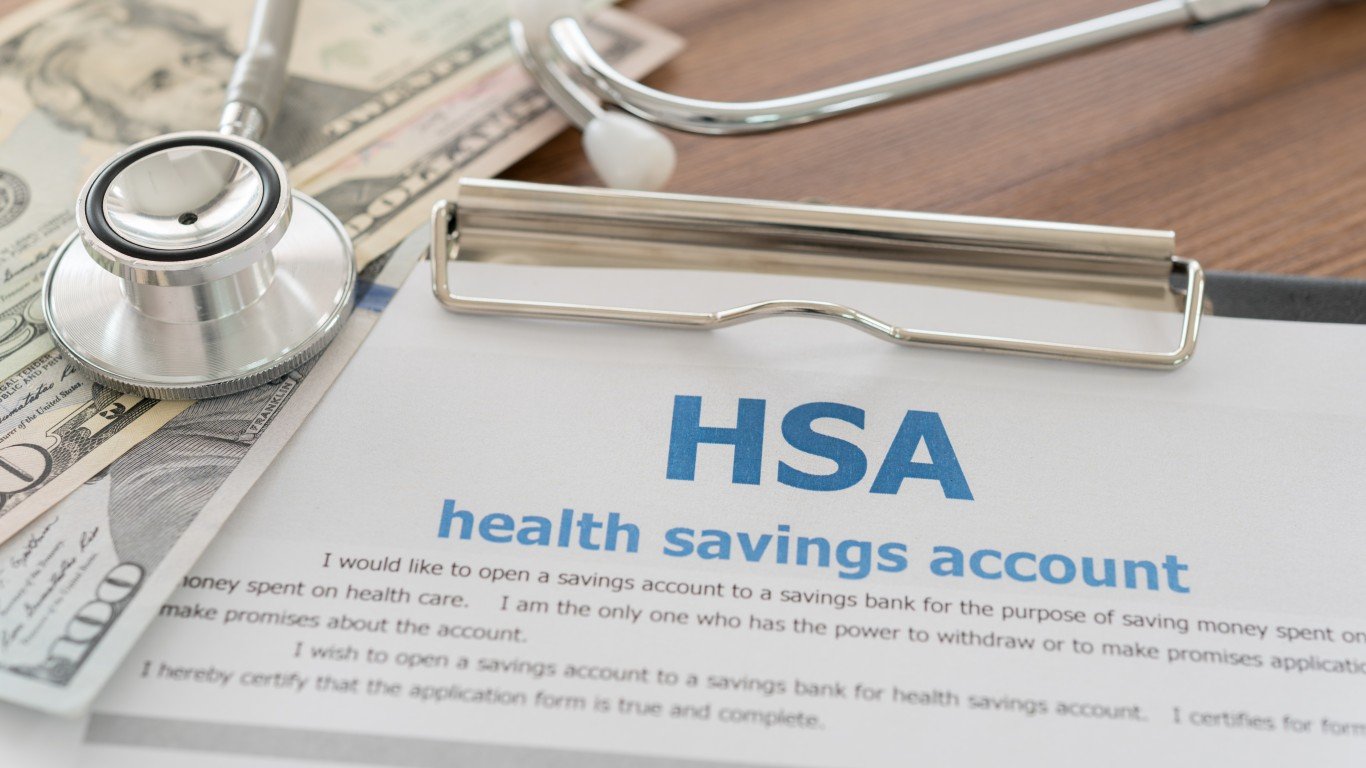
A $410,000 Retirement Account Most 401(k) Savers Completely Ignore
A 48-year-old engineer earning $400,000 with his spouse posted a question on a personal finance forum last month: with the 401(k) already maxed and a backdoor Roth in place, where should the next tax-advantaged dollar go? The answer most readers…

This post may contain links from our sponsors and affiliates, and Flywheel Publishing may receive compensation for actions taken through them.

A 48-year-old engineer earning $400,000 with his spouse posted a question on a personal finance forum last month: with the 401(k) already maxed and a backdoor Roth in place, where should the next tax-advantaged dollar go? The answer most readers missed is sitting inside his high-deductible health plan.
The strategy is simple to describe and almost no one executes it. Max the family HSA every year, pay current medical bills out of pocket from cash flow, and scan every receipt to cloud storage. Years later, those receipts become a permanent license to pull money out of the HSA tax-free, at any age, for any reason.
Why the HSA Outranks Every Other Vehicle After 50
For a married couple on family HDHP coverage, the 2026 HSA contribution limit is $8,750. Contributions are pre-tax, growth is untaxed, and qualified medical withdrawals are tax-free. No other account stacks all three benefits.
For a high earner in the 32% federal bracket plus state tax, the upfront deduction alone is worth roughly a third of every dollar contributed. The structural advantage is what IRS Publication 969 quietly allows: there is no deadline to reimburse yourself for a qualified medical expense, as long as the expense occurred after the HSA was opened and was never reimbursed by another source.
The Math at 7%
Funding the family limit from age 48 through 65 means 17 years of $8,750 contributions. Invested in low-cost index funds at a 7% annual return, the balance compounds to roughly $269,800 at age 65.
A 7% assumption holds up in the current environment. The 10-year Treasury yield sits near 4.5%, and a 3% equity risk premium on top of that lines up with long-run equity returns. If the couple lets the account ride untouched another 15 years, the balance grows to about $744,000 by age 80.
The receipt stockpile builds in parallel. A household paying out of pocket for orthodontia, vision, fertility, physical therapy, prescriptions, and the family deductible easily accumulates $20,000 to $50,000 of unreimbursed receipts over 17 years. Every one of those dollars is a tax-free withdrawal waiting to be claimed.
The $410,000 Stealth Account
Combine the compounding balance with the receipt buffer and the practical retirement value approaches $410,000 of tax-free spending power by the early 70s, sitting outside the 401(k), outside RMD rules, and outside the income calculations that trigger IRMAA Medicare surcharges and Social Security taxation.
That last point matters more than the headline number. A traditional 401(k) withdrawal counts as ordinary income and feeds the combined-income formula that makes up to 85% of Social Security benefits taxable. HSA reimbursements against stockpiled receipts stay off that calculation entirely. For a couple already brushing the first IRMAA threshold, swapping $20,000 of 401(k) draws for $20,000 of HSA receipt reimbursements can erase a Medicare premium surcharge.
What Changes at 65
After age 65, the 20% penalty on non-medical HSA withdrawals disappears. Non-medical withdrawals are then taxed as ordinary income, the same treatment a traditional 401(k) receives. The HSA effectively becomes a second traditional retirement account, with the bonus that any future medical bill, and Fidelity’s annual estimate pegs lifetime healthcare costs for a retired couple well into six figures, can still be paid tax-free.
The inflation backdrop reinforces the case. CPI reached 332.4 in April 2026, up from 320.6 a year earlier, and medical inflation typically runs ahead of headline CPI. Tax-free dollars earmarked for future medical bills compound in value every year the index climbs.
Three Actions to Take This Quarter
- Move the HSA off cash. With the federal funds rate at 3.75% and trending lower, HSA cash sweeps yield far less than a diversified index fund inside the same account. Most major custodians allow self-directed investing above a small cash minimum.
- Build the receipt vault now. Create a dedicated cloud folder, scan every explanation of benefits and pharmacy receipt, and log the date, provider, amount, and payment source in one spreadsheet. The IRS requires proof in any organized format.
- Pay current medical bills from taxable cash so the HSA can compound. A dollar left inside the HSA to compound for 20 or more years at 7% is worth roughly four dollars at withdrawal, and the receipt saved today unlocks that growth tax-free decades later.
Contact [email protected] for any questions or corrections.
Austin Smith is a financial publisher with over two decades of experience as an investor, analyst, and advisor. He covers stocks, ETFs, Artificial intelligence and personal finance for 24/7 Wall St. Previously, he spent over a decade at The Motley Fool as a senior editor for Fool.com, portfolio advisor for Millionacres, and launched The Ascent to help reader take control of their personal finances.
His work has been featured on Fool.com, NPR, CNBC, USA Today, Yahoo Finance, MSN, AOL, Marketwatch, and many other publications. He is as an advisor to private companies, and co-hosts The AI Investor Podcast with Eric Bleeker.
When not looking for investment opportunities, he can be found skiing, running, or playing soccer with his children. Learn more about Austin's investment approach here.