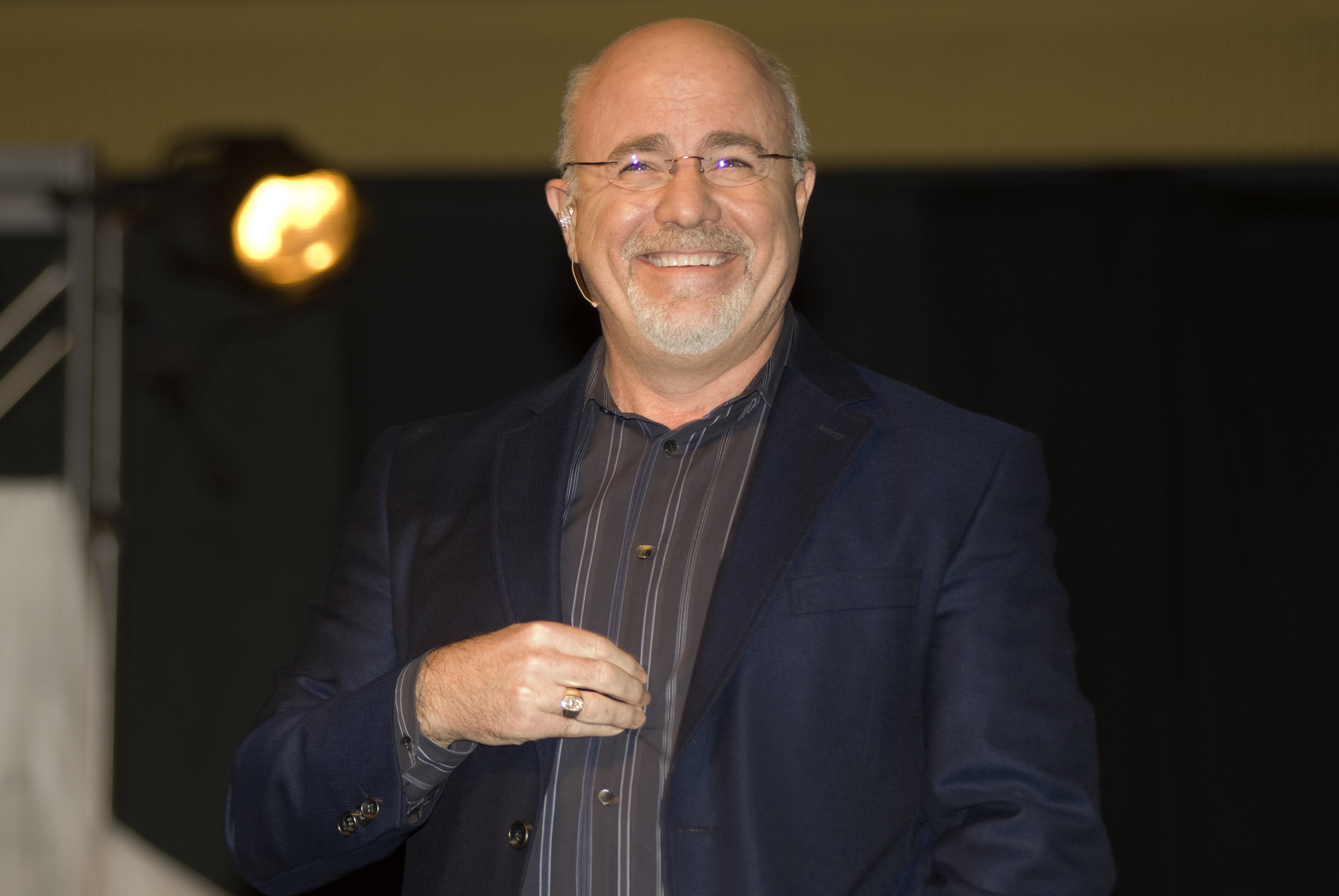
George Kamel: The Consumer Debt Cycle Is ‘Exactly Like Drug Addiction’
Can’t afford it? No problem: Just borrow money. At the popular (and pricey) Coachella music festival, about 60% of attendees borrowed money to buy their tickets, according to Billboard. It’s a perfect illustration of how the modern consumer debt cycle…


Can’t afford it? No problem: Just borrow money.
At the popular (and pricey) Coachella music festival, about 60% of attendees borrowed money to buy their tickets, according to Billboard. It’s a perfect illustration of how the modern consumer debt cycle behaves like a drug addiction, said George Kamel of Ramsey Solutions.
On a recent episode of The Iced Coffee Hour, Kamel described interviewing visitors at Disneyland and finding theme park bills running “$5,000 to $8,000 for a couple of people” and averaging “about $1,000 a day per person.” Most of these visitors weren’t paying in cash. He blamed “frictionless payment plans” from companies like Affirm, Klarna, and Afterpay that let people “get the thing now” while telling themselves “future me will deal with that problem.”
One visitor with $180,000 in consumer debt was spending $1,000 per day on a week-long Disney trip — using a payment plan. “It’s interesting because that actually sounds exactly like someone who’s addicted to drugs because their life is falling apart and it’s because of the drugs that they take,” said co-host Graham Stephan.” But then they take the drugs to escape that life.”
The doom loop
Kamel talked about Dr. Arthur Brooks’ concept of the “doom loop.” He said many consumers have an “add it to my tab mentality” where people reason, “I’m $180 grand in debt. What’s another $10,000 onto the pile?” He noted medical students with $350,000 in debt treating a new car payment as “a drop in the bucket.” Retail therapy gives a dopamine hit. The next hit has to be bigger.
“U.S. household debt, including mortgages, credit cards, auto loans and student loans, reached an all-time high of $18.8 trillion in the first three months of the year, according to new data from the Federal Reserve Bank of New York,” ABC News reported.
Right now, initial jobless claims sit at 200,000, in the healthy range. As long as paychecks arrive, the minimum payments get made and the tab grows quietly. Kamel warned that the real danger appears with layoffs, firings, or family changes, when “the whole house of cards crumbles” into foreclosures and repossessions. A household with $40,000 in revolving balances and a steady $9,000 monthly income looks fine. The same household after 90 days of unemployment is in default.
Kamel placed “100% responsibility” on the individual consumer who’s going into debt. The “No. 1 villain in this story is the person doing these dumb things. The No. 2 villain is the predatory companies that have normalized this and made it so easy.” Most young people he meets carry $2,000 to $5,000 in credit card debt.
Kamel’s billion-dollar refusal
Stephan asked Kamel if he would borrow $1 billion at 0% interest for 10 years. In this hypothetical, the borrower could put the money in risk-free treasuries and pocket around 4%. Still, Kamel said no. “I live by a set of values and principles, and I have found that living debt-free is simply a better life for me,” he said.
His conviction against debt culture is strong. “We just took a call on the Ramsey Show this week where they made a $340,000 household income and they were broke,” he said. He noted half of people making over $100,000 are living paycheck to paycheck. Real millionaires, Kamel added, “are buying 4-year-old used Toyotas and Hondas” rather than signing 84-month auto loans.
Tips for breaking the debt cycle
- Open a budgeting app (Ramsey’s EveryDollar is one option) and list every debt by total balance, not monthly payment. Seeing the full tab can be illuminating.
- Consider canceling saved cards on accounts such as Affirm, Klarna, and Afterpay.
- Stop using credit to buy things you can’t afford today.
Contact [email protected] for any questions or corrections.
Carl Sullivan has been a Flywheel Publishing contributor since 2020, focusing mostly on personal finance, investing and technology. He started his journalism career covering mutual funds, banking and financial regulation in Washington.Carl is a contributing editor at Financial Advisor Magazine and previously served as managing editor at Financial Planning Magazine. He is a long-time manager of editorial teams covering a variety of topics including news, business and politics. He’s currently the North America Managing Editor for Flipboard and worked previously for Microsoft News and Newsweek.Carl loves exploring the world and lived in India for several years. Today, he resides in New York City’s Queens borough, where you can hear hundreds of different languages just by riding the subway.