I’m 60 with $4 million net worth and want a $400,000 boat. Should I use income or net worth to decide?
A 60-year-old caller phoned Ramsey Everyday Millionaires with a clean setup: $4 million net worth, $250,000 in annual income, and a $400,000 Great Harbor 40-foot trawler in his sights. Under the traditional income-based yardstick this purchase fails on contact. The…

This post may contain links from our sponsors and affiliates, and Flywheel Publishing may receive compensation for actions taken through them.
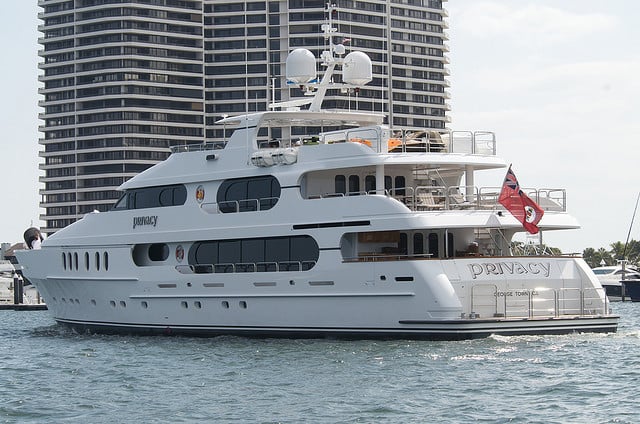
A 60-year-old caller phoned Ramsey Everyday Millionaires with a clean setup: $4 million net worth, $250,000 in annual income, and a $400,000 Great Harbor 40-foot trawler in his sights. Under the traditional income-based yardstick this purchase fails on contact. The boat costs 160% of his annual income, well past the 50%-of-income ceiling most personal finance guides apply to depreciating toys.
The host approved the purchase anyway. “Yes, I would buy that boat,” he said, citing “the ratio into your net worth” as the deciding metric. At 10% of total wealth, the trawler clears a different bar entirely.
The rule shift is right, but the math still has to work
The advice is sound for this specific caller, and the underlying principle holds up. Income-based purchase rules exist because most buyers fund big-ticket items from cash flow. If the payment, insurance, fuel, and storage eat your paycheck, the boat owns you. A near-retiree with substantial assets is playing a different game. The relevant question moves from can my income absorb this? to can my balance sheet absorb this without changing my future?
The host’s behavioral test captures it cleanly: “If I burn that much money in the middle of the floor, would my life change? And the answer is no.” For someone with $4 million in assets, removing $400,000 still leaves the bulk of the portfolio compounding. That residual funds a comfortable retirement under almost any reasonable withdrawal assumption.
The host was honest about what the boat actually is. “Trawlers go down in value too, just like cars,” he said, adding that “100% of boats go down in value.” Treat the purchase as consumption rather than an asset acquisition.
The number affluent buyers underestimate
Sticker price is the easy part. The recurring cost is what sinks well-off buyers who skipped the spreadsheet. A widely used industry rule of thumb pegs annual boat ownership at roughly 10% of purchase price once you stack docking fees, insurance, fuel, haul-outs, bottom paint, mechanical service, and depreciation. Apply that to a $400,000 trawler and the true annual carrying cost runs into the tens of thousands, every year, regardless of how often you leave the slip.
Run that figure against income. The recurring cost is the line item to stress-test, because it comes out of cash flow forever, while the purchase price comes out of the balance sheet once. The co-host raised exactly this concern, pointing to “docking fees and the insurance and the gas” as the ongoing drag the wealth ratio does not capture.
Opportunity cost is the other half. With the federal funds rate at 3.75% as of May 27, 2026, Treasury bills and money market funds are paying meaningful yields on safe cash. The $400,000 going into the boat is $400,000 no longer earning that yield. Layer the lost income on top of carrying costs to see the honest annual price of ownership.
The variable that flips the answer
The factor that most determines whether this purchase works is whether annual carrying costs fit inside the $250,000 income without forcing portfolio withdrawals in bad markets. If they do, the boat is fine. If covering them requires selling assets in a down year, the math turns hostile, because forced selling locks in portfolio losses while the boat itself keeps depreciating.
The host’s counterexample makes the point. “If your net worth was $40 million and you made $250,000, you know, you still could not buy the boat if we only use the 50% of your income,” he said. Wealth changes the purchase decision. The carrying-cost decision still lives in the income column.
What to do before writing the check
- Build a real carrying-cost line item. Get written quotes for dockage at your intended marina, hull insurance, annual haul-out and bottom paint, engine service intervals for twin diesels, and a fuel budget at your expected hours of use. Add 20% for surprises.
- Run the cash flow stress test. Subtract total annual boat costs from after-tax income. If the remainder still funds your normal spending and savings rate, you pass. If it does not, the income side fails even though the net worth side cleared.
- Price the opportunity cost. Compare the yield you would earn on $400,000 in Treasuries or a money market fund at today’s 3.75% policy rate against the enjoyment value of the boat. That is the honest annual hurdle the purchase has to clear.
- Plan an exit price. Boats depreciate. Decide today what resale value and timeline you are budgeting for, so the inevitable haircut shows up in your plan rather than as a surprise.
Net worth tells you whether you can afford to lose the money. Income tells you whether you can afford to own the thing. Both tests have to pass.
Contact [email protected] for any questions or corrections.
I've spent more than 15 years inside enterprise software, working alongside the finance, sales operations, and HR leaders who run the revenue engines at some of the largest tech companies in the country.
My day job is helping enterprise executives make smarter decisions about retention, compensation, and growth. These are the same operational levers that show up in every earnings report investors actually read. That perspective shapes my writing for 24/7 Wall St.
The headline numbers are easy. The interesting stuff is underneath: how companies make money, what executives are worried about, and what any of it means for the person checking their 401(k) on a Sunday afternoon. I write about personal finance and business as someone who has spent her career inside the rooms where these decisions get made.