How 2% Financial Advisor Fees Could Cost You $3.3 Million Over 40 Years
Brad Barrett, co-host of the ChooseFI podcast, recently laid out one of the most uncomfortable numbers in personal finance. During the show’s “FI 101: Teaching Financial Independence to Your Community” episode, Barrett walked through a simple 40-year investing scenario and…

This post may contain links from our sponsors and affiliates, and Flywheel Publishing may receive compensation for actions taken through them.
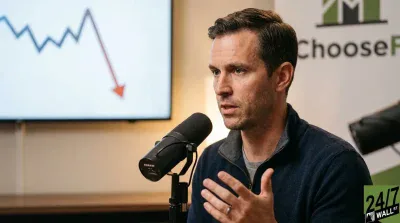
Brad Barrett, co-host of the ChooseFI podcast, recently laid out one of the most uncomfortable numbers in personal finance.
During the show’s “FI 101: Teaching Financial Independence to Your Community” episode, Barrett walked through a simple 40-year investing scenario and arrived at a staggering conclusion. Paying 2% per year in combined advisor and fund fees could cost an investor roughly $3.3 million over a working lifetime.
The Difference Between 7% and 9% Returns Is Massive
Barrett found that fees are the most reliable predictor of long-term net returns, and a 1% advisor fee stacked on top of a 1% active management fee mathematically destroys outcomes over multi-decade horizons. Here is his scenario, exactly as he presented it:
An investor begins with $100,000, contributes $1,000 per month for 40 years, and earns a 9% annual gross return, roughly in line with long-term U.S. stock market averages.
Here’s what your nest egg would look like depending on fees paid along the way:
- No fees, just the market. At a 9% compounded return, you finish with $7.2 million. This is the index-fund path, with an expense ratio so small it barely registers.
- A 1% advisor fee. Your net return drops to 8%. You finish with $5.3 million. The advisor’s seemingly modest 1% slice cost you $1.9 million.
- A 1% advisor fee plus 1% in actively managed fund fees. Net return falls to 7%. You finish with $3.9 million. Total damage: $3.3 million.
Read those numbers slowly. Two percentage points of annual fees, compounded across four decades, turn a $7.2 million retirement into a $3.9 million retirement. That is roughly half the eventual portfolio, vaporized by a charge most clients accept as the normal price of doing business.
Why Paying for Active Management Rarely Pays You Back
Barrett’s framing on active management is blunt: “Over a 40-year period, almost nobody is going to be able to beat the market.” You are paying a premium fee for an outcome the historical record says you are very unlikely to receive.
The structure of the wealth management industry can amplify the problem. Many advisors charge a fee that’s a percentage of assets under management while also investing client money into actively managed mutual funds that carry separate expense ratios. Investors effectively pay two layers of fees tied to the same portfolio.
The drag also eats your dividends. Vanguard Total Stock Market Index Fund ETF Shares (NYSEARCA:VTI) paid roughly $0.90 to $1.00 per share each quarter through 2025 and into 2026. Reinvested across 40 years, those distributions are a meaningful slice of total return, and fee drag erodes the reinvestment, not just the price appreciation.
Barrett’s Advice Is Surprisingly Simple
Barrett’s solution is not complicated. He argues that most investors should avoid expensive advisors, skip high-fee actively managed funds, and instead buy diversified, low-cost index funds through brokerages such as Vanguard, Fidelity Investments, or Charles Schwab.
Three practical filters make this easier than ever:
- Expense ratio under 0.10%. Barrett flags 0.10% as the fee threshold. Anything materially higher needs to justify itself, and most index funds tracking the total market or the S&P 500 sit well below it.
- No commissions, no minimums, and fractional shares. As Barrett put it: “There are going to be no commissions. You can buy this for basically just the cost of the ETF… You can buy fractional shares just about everywhere.” The old $10,000 or $3,000 fund minimums that locked out smaller investors are mostly gone.
- Reinvest automatically. Turn on dividend reinvestment so the quarterly payouts buy more shares automatically.
Barrett’s closing thesis is honest: “In our estimation, the best you can do is to match the market.” Match it, pay as little in fees as possible, and let four decades of compounding do the work that fees would otherwise quietly take.
Contact [email protected] for any questions or corrections.
Thomas Richmond is a financial writer and content strategist with 5+ years of experience covering stocks and financial markets. He has published over 500 articles focused on individual stock analysis, helping investors better understand business fundamentals, stock valuations, and long-term opportunities.
Thomas previously served as a Content Lead at TIKR, a stock research platform, where he helped scale the company’s blog to hundreds of articles per month and contributed to a weekly newsletter reaching more than 100,000 investors.
Outside of work, Thomas enjoys weight lifting and soccer.