Here’s How You Can Afford To Retire in Portugal On a Middle Management Salary
A reader in their fifties spent decades climbing the corporate ladder, accumulated a respectable nest egg, and now wonders whether Portugal offers a path to a lower-cost retirement without sacrificing quality of life. The appeal is obvious: mild weather, modern…

This post may contain links from our sponsors and affiliates, and Flywheel Publishing may receive compensation for actions taken through them.
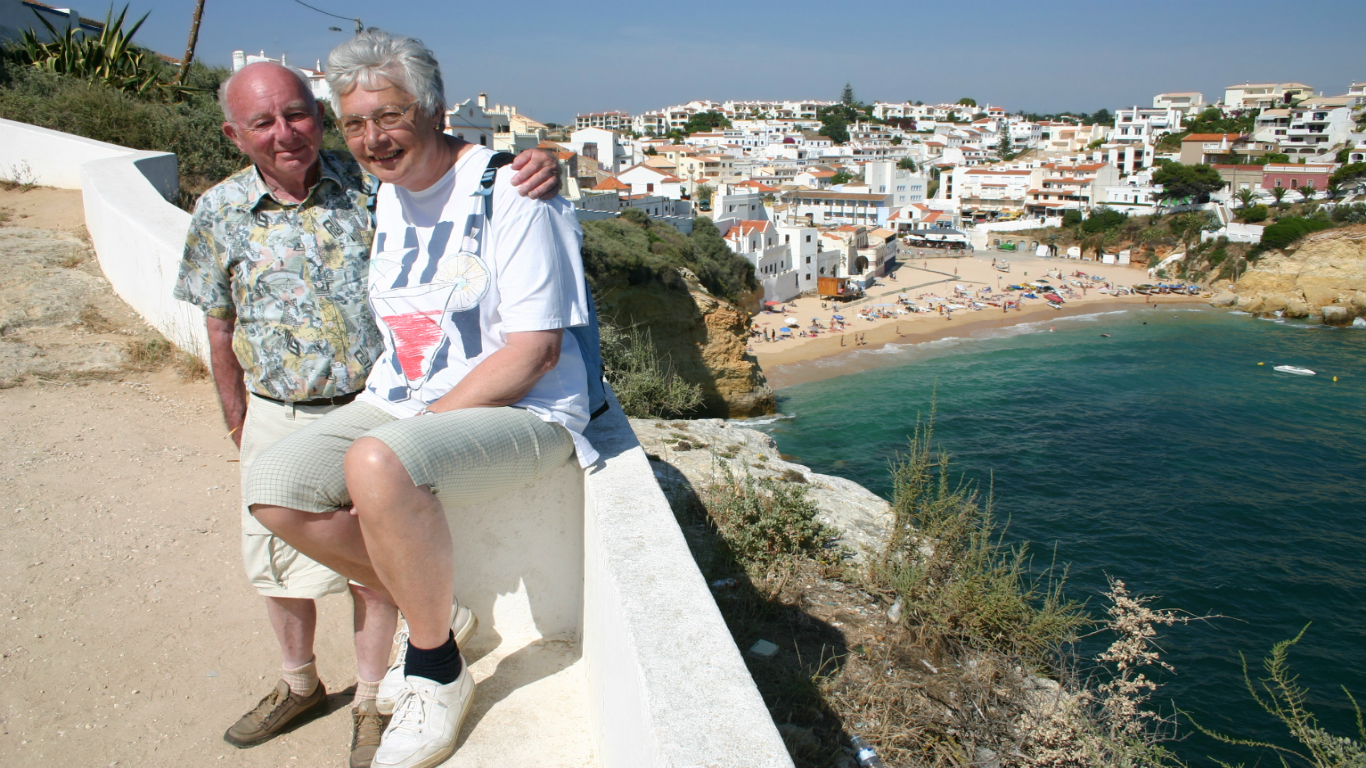
A reader in their fifties spent decades climbing the corporate ladder, accumulated a respectable nest egg, and now wonders whether Portugal offers a path to a lower-cost retirement without sacrificing quality of life. The appeal is obvious: mild weather, modern infrastructure, excellent healthcare, and living costs that remain below those of many U.S. metropolitan areas. The harder question is whether the numbers still work now that Portugal’s famous tax incentives for retirees have largely disappeared.
The answer depends less on dream-like expat marketing and more on a handful of practical variables: housing, healthcare, taxes, and the gap between guaranteed income and annual spending. For many middle-income Americans, Portugal remains affordable, but the calculation looks different than it did a few years ago.
What a middle management salary buys you in Portugal
The BLS pegs median pay for management occupations at $122,090 a year, and middle-management roles specifically average closer to $108,000. Net of payroll taxes and retirement contributions, that can translate into roughly $75,000 of spendable income for a single earner. Throughout this article, euro-denominated costs are converted using an exchange rate of €1 = $1.17 (equivalent to $1 = €0.8581).
In Portugal, that level of income supports an upper-middle-class lifestyle. Popular retiree guides estimate a comfortable budget for a couple in Lisbon at roughly $2,900 to $3,500 per month, while a single retiree may spend about $1,630 to $2,210. That works out to approximately $35,000 to $42,000 annually for a couple living comfortably in Lisbon or Porto, with lower costs available in the Algarve interior, the Silver Coast, Braga, Coimbra, and other smaller cities. The target is to create an after-tax income stream of roughly $45,000 to $55,000 a year and let Portugal’s lower cost structure do the rest.
The cost picture, line by line
Housing is the swing variable. A one-bedroom apartment in central Lisbon or Porto typically rents for about $1,050 to $1,280 per month, while a two-bedroom often costs around $1,515. Move thirty minutes outside the city center and rents can fall substantially. Utilities, internet, and mobile service generally total about $210 per month. Groceries for a couple cooking primarily at home average roughly $525 monthly, while a sit-down dinner with wine often comes in around $47 for two.
Healthcare is one of Portugal’s strongest advantages for retirees. Legal residents can use the public SNS healthcare system, but many Americans supplement it with private insurance for faster access and broader provider choice. Depending on age, coverage level, and insurer, private coverage often ranges from roughly $500 to $1,500 per person annually. A private specialist visit typically costs about $70 to $140. Medicare generally does not cover routine healthcare received in Portugal, so most retirees replace part of their U.S. healthcare spending with local private coverage rather than maintaining a full Medicare-plus-supplement structure.
A working annual budget for a couple in metro Lisbon might include approximately $16,300 for housing, $2,900 for utilities and connectivity, $7,600 for groceries, $4,700 for dining and entertainment, $3,500 for private health insurance, $2,900 for transportation, $4,700 for travel within Europe, and $5,800 reserved for home maintenance, appliance replacement, gifts, and U.S. tax obligations. Using an exchange rate of €1 = $1.17, the total comes to roughly $48,400 annually.
Funding it with Social Security and a portfolio
A middle-income worker claiming Social Security at full retirement age may receive a benefit in the neighborhood of $2,800 to $3,400 per month, while a spouse’s benefit or a second worker’s earnings record can add meaningful additional income. As an illustrative scenario, a dual-earner couple could generate roughly $55,000 annually in combined Social Security benefits, while a single retiree might receive closer to $38,000. Actual benefits depend on earnings history and claiming age.
For the dual-earner couple, Social Security covers the entire $48,400 budget at full retirement age, and the portfolio becomes a buffer for inflation and lumpy expenses. For a single retiree, the gap is roughly $20,000 to $25,000 a year. At a 4% withdrawal rate, that implies a portfolio of $500,000 to $625,000. Retire early at 60 and target a 3.3% rate, pushing closer to $700,000 to $750,000, with the first five years bridged from a treasury ladder or short-duration bond fund.
That bridge matters right now. Core PCE is running at 3.29% year over year and headline PCE at 3.77%, so a euro-denominated budget funded by dollar-denominated assets carries real currency risk. Holding twelve to twenty-four months of spending in euros, refilled opportunistically, is the standard mitigation.
Plug your own numbers in. The portfolio target moves quickly with the assumed withdrawal rate and the gap your guaranteed income leaves behind.
The tax detail that quietly rewrites the answer
Portugal’s famous Non-Habitual Resident regime, which gave new arrivals a 10% flat tax on foreign pensions for ten years, closed to new applicants in April 2025. The replacement, IFICI or “NHR 2.0,” is targeted at scientific and high-value professional activity. Ordinary retirees living on Social Security, IRA distributions, and dividends do not qualify.
Once you become a Portuguese tax resident (generally by spending more than 183 days a year there), Portugal taxes your worldwide income at progressive rates that reach into the high 40s. The US-Portugal tax treaty assigns private pensions and IRA withdrawals to the country of residence. Social Security is the exception: under the treaty, US Social Security is taxable only in the US, which for most middle-income retirees means a very modest US tax bill and no Portuguese tax on that slice. Roth distributions are a gray area that Portugal has not consistently honored as tax-free, so many advisors recommend completing Roth conversions before establishing residency.
The practical retiree response is to understand how each income source will be treated under both U.S. and Portuguese tax rules before moving. Social Security retains unique treaty treatment, while IRA withdrawals, pensions, dividends, and capital gains can be taxed differently once Portuguese residency begins. Careful planning before relocation can materially reduce tax friction and help preserve more retirement income for spending.
The number that actually makes this work
For a dual-earner couple claiming Social Security at full retirement age, Portugal is genuinely affordable on the savings a middle management career produces: a portfolio of $300,000 to $500,000 alongside roughly $55,000 in combined benefits supports a comfortable Lisbon-or-Porto lifestyle with travel built in. For a single retiree, plan on $600,000 to $750,000 and a 3.3% to 4% withdrawal rate. For an early retiree leaving at 58 to 62, add a five-to-seven-year cash and treasury bridge for the pre-Social-Security gap, and budget private health insurance from day one.
The novel consideration is the tax one. The Portugal retirement math people quote online still assumes the old NHR regime. It is gone for new arrivals, and the answer changes meaningfully without it. Structure the income stack around Social Security and qualified-dividend equity holdings, finish Roth conversions before you move, and the middle-management retirement to Portugal works at a number most American calculators would call modest.
Contact [email protected] for any questions or corrections.
Drew Wood has edited or ghostwritten nine books and published more than 1,500 articles on investing, business, politics, travel, world cultures, wildlife, and earth science. He holds a doctorate and four master's degrees and has nearly 30 years of college teaching experience. His travels have taken him to 25 countries, including three years living in Ukraine.