Shark Tank’s Kevin O’Leary: You Need “A Minimum of $1.5 Million By the Time You’re 65.”
Kevin O’Leary, the Shark Tank angel investor known for blunt money talk, recently drew a hard line on retirement savings during a Money News Network appearance shared on X by CreativeDude (@creativeburne). His message to viewers: pick a number, build…

This post may contain links from our sponsors and affiliates, and Flywheel Publishing may receive compensation for actions taken through them.
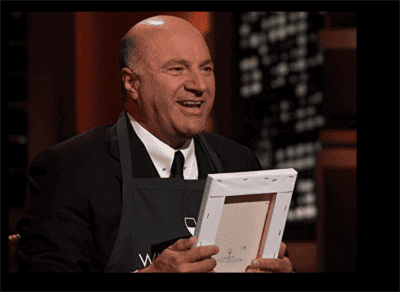
Kevin O’Leary, the Shark Tank angel investor known for blunt money talk, recently drew a hard line on retirement savings during a Money News Network appearance shared on X by CreativeDude (@creativeburne). His message to viewers: pick a number, build toward it, and don’t pretend Social Security alone will carry you.
O’Leary stated, “I tell people a minimum of $1.5 million by the time you’re 65. That’s the minimum you have to have saved up.” He anchors the figure to the classic 4% withdrawal idea, telling viewers you can survive off that “for the rest of your life if you have $1.5 million… in a very conservative portfolio living off 4%.”
The stakes here are high for any reader within a decade of retirement. Falling short of $1.5 million by even a few hundred thousand dollars can mean working past 65, downsizing, or leaning harder on Social Security than the plan assumes.
A Floor Backed by Mainstream Estimates
O’Leary’s number isn’t far from the mainstream consensus. His $1.5 million sits squarely inside the range of expert estimates, including Schwab 2025 at $1.6 million, Northwestern Mutual 2025 at $1.26 million, and a PLANSPONSOR participant-belief figure of $1.57 million.
The math behind it is the 4% rule. Drawing 4% from $1.5 million produces $60,000 a year before Social Security. That’s a workable replacement income for many households, though not all.
O’Leary’s macro read also seems to agree with the data. The Consumer Price Index (CPI) sat at 332.4 in April, the 10-year Treasury yield is 4.6%, and the Fed funds upper bound has held at 3.75% since December 2025. With the CPI still running above the Fed’s 2% target, O’Leary’s skepticism about aggressive rate cuts looks consistent with that backdrop.
How Many Americans Actually Reach $1.5 Million
Most Americans don’t come close to holding $1.5 million. Fidelity’s Q3 2025 analysis counted 654,000 401(k) millionaires and 559,181 IRA millionaires across 24.8 million participants. A small slice clears even the seven-figure mark, let alone $1.5 million.
The averages tell the same story. The average 401(k) balance for ages 60-64 is $246,500, and for ages 65-69 it’s $251,400. The overall average 401(k) balance is $144,400.
Household-level data confirms the gap. The median U.S. household net worth sits near $192,700, with the average of around $1.06 million being skewed by high earners. Reaching O’Leary’s floor by 65 puts a saver in a clear minority.
Your Starting Age Makes a Huge Difference
Compounding does the heavy lifting, and your starting age is a variable that potentially decides outcomes just as much as your income. Northwestern Mutual’s illustrative monthly savings to reach $1.26 million at a 7% return are as follows:
- Age 20: $330/month, the cheapest path because four decades of compounding carries the load.
- Age 30: $695/month, still manageable for many dual-income households.
- Age 40: $1,547/month, where it starts to crowd other goals.
- Age 50: $3,958/month, the brutal price of late starts.
That table targets $1.26 million, slightly under O’Leary’s $1.5 million floor, so his number requires somewhat higher monthly contributions at every starting age. O’Leary himself urges a plan in your “mid to late 20s,” citing long-run market returns he pegs at “8 to 10% a year” over 20 to 30 years.
You can run your own numbers against your current age. If you’re 40 with $100,000 saved and want $1.5 million by 65, the required monthly contribution can be tested directly against your budget.
What to Actually Do
Specific actions tied to the mechanics above follow a clear hierarchy. Each step builds on the previous one to maximize the compounding window.
- Capture the full employer 401(k) match. Fidelity’s suggested total savings rate is 15% (employee plus employer), and the match is the closest thing to free money in the system.
- Use 2026 contribution headroom: $24,500 standard, $32,500 with the age 50-plus catch-up, and $35,750 for the age 60-63 super catch-up.
- Anchor to Fidelity’s salary benchmarks: 10x salary saved by 67 to maintain lifestyle, 8x to downsize, 12x to travel extensively.
- Follow O’Leary’s debt point. Pay off the mortgage before 65 so withdrawals fund living expenses rather than lenders.
The $1.5 million figure works as a rule-of-thumb minimum that shifts with individual circumstances. Real needs shift with location, health, pensions, and Social Security claiming age. The household savings rate has slid from 6.2% in Q1 2024 to 3.7% in Q1 2026, making O’Leary’s floor harder to clear in the current environment.
The core takeaway is straightforward: pick a target early, run the compounding math against your starting age, and adjust the savings rate until the numbers meet in the middle. Anything less risks leaving the plan to chance.
Contact [email protected] for any questions or corrections.
David Moadel is financial writer specializing in stocks, ETFs, options, precious metals, and Bitcoin. David has written well over 1,000 articles for leading online publications, helping investors understand markets, income strategies, and risk.His work has appeared in The Motley Fool, InvestorPlace, U.S. News & World Report, TipRanks, ValueWalk, Benzinga, Market Realist, TalkMarkets, Finmasters, 24/7 Wall St., and others.With a master’s degree in education, David has taught at the elementary, high school, and college levels. That teaching background shapes his writing style: clear, educational, and practical. David has also built a loyal social-media audience by providing trustworthy financial content on YouTube, X/Twitter, and StockTwits.