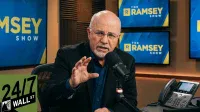
“That’s a Pregnant Woman Talking That She Wants a New Car for a New Baby”: Dave Ramsey to a Veteran With $16K in Debt Eyeing a Vehicle Upgrade
A veteran called in to a recent episode of The Ramsey Show with a question most growing families face. He carries $16,000 in consumer debt, split between a personal loan of just over $8,000 and credit card balances. His wife is…

This post may contain links from our sponsors and affiliates, and Flywheel Publishing may receive compensation for actions taken through them.
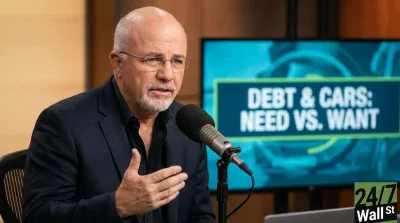
A veteran called in to a recent episode of The Ramsey Show with a question most growing families face. He carries $16,000 in consumer debt, split between a personal loan of just over $8,000 and credit card balances. His wife is pregnant with their third child, due in January, and she wants to spend $10,000 to $12,000 on something newer with lower mileage. The current family vehicle, a 2015 Volkswagen SUV worth about $7,000, was inherited from his mother. His question to Dave Ramsey was simple: can I pause the debt snowball to upgrade?
Ramsey’s answer was direct: “That’s a pregnant woman talking that she wants a new car for a new baby. You need to get yourself out of debt. You have a $7,000 car. If you want to trade for a different $7,000 car that has third-row seating, you have now addressed the need, not the want. The other is a want.”
The verdict: Ramsey is right, and the math is not close
The distinction is between solving a problem and indulging a preference. The need is real. A third baby will not fit in a two-row vehicle with two existing car seats. The resale value of the current SUV can fix the seating problem. Trading a $7,000 SUV for a $7,000 minivan with a third row is a lateral move that costs nothing but a Saturday afternoon. It does not require pausing debt payoff.
The want costs roughly $3,000 to $5,000 in extra principal, plus interest on whatever portion gets financed. While that decision is being made, the credit card portion of the $16,000 balance compounds at 21%, the current average APR and near a post-2023 record. A $5,000 balance left sitting at that rate stacks more than $1,000 in interest in a single year before any principal moves.
Ramsey’s broader point is that vehicles are wealth destroyers in the early years. The $5,000 difference between need and want is the most expensive part of any used-car purchase because it buys newness rather than added utility.
The variable that actually decides this: business cash discipline
The caller earns $4,100 monthly in VA and GI benefits, plus anywhere from $2,000 to $8,000 a month in variable business income from an HVAC, electrical, and plumbing company he co-owns with his wife. That swing is the real lever. If business income gets commingled with personal cash, every strong month feels like spending money and every weak month feels like a crisis.
Ramsey told him to fix the plumbing on his finances first: “Your business needs to be running on its own budget, separate checking account. All of the revenue from your business goes into that account. Only expenses for the business, materials, come out of that, and then whatever’s left in that account by definition is profit.” Co-host Jade Warshaw added a buffer rule for variable income: “You need to make sure that at all times you have $4,000 set aside. So on the months that you do really well and make $8,000, that’s the time to fund that account.”
Once the business runs on its own books, profit becomes a clean number. That number, on top of the $4,100 in benefits, attacks the $16,000 in two stages: smallest balance first, credit cards next. With a paid-off mortgage already in hand, the path to zero consumer debt can be measured in months.
The marriage piece Ramsey wouldn’t ignore
The caller admitted he had “only been listening for about a month and I love it, and y’all seriously lit a fire under me to get debt-free.” Ramsey warned him about the cost of converting too fast: “You’re gonna turn my name into a cuss word in your house if you’re not careful.” A pregnant spouse who has been on the plan for zero days does not owe her husband instant agreement on a $5,000 sacrifice.
That context matters because consumer sentiment is near 50, in pessimistic territory and approaching recessionary levels. People under economic stress make emotional vehicle purchases. Naming the purchase as emotional, instead of arguing about the dollar amount, is often the only way the conversation moves.
What to do this week
- List every consumer debt smallest to largest, ignoring interest rate, and write down the minimum payment on each. The personal loan and each card balance get their own line.
- Open a separate business checking account this week. Every invoice gets deposited there. Only materials, fuel, and business expenses come out. Transfer profit to personal in a single monthly draw.
- Build a $4,000 floor in the business account so a $2,000 month does not bankrupt the next payroll cycle.
- Shop the private market for a $7,000 three-row vehicle before listing the 2015 SUV. A swap closed in the same week avoids being stuck between two cars.
- Run the actual payoff math on the $16,000 balance using your minimum monthly surplus. At 21% APR, every month of delay on the card balances costs real money.
The need is third-row seating. The want is a newer dashboard. Solve the need for what the old car is worth, keep attacking the debt, and the next vehicle decision gets made with cash instead of stress.
Contact [email protected] for any questions or corrections.
I am a long time investor and student of business, and believe finding good companies that can become great investments is the best game on earth. After 20 years of writing and researching the public markets it is clear that individuals have never had more tools and information to take control of their financial lives. From ETFs and $0 commissions to cryptos and prediction markets there has never been a greater democratization of access to investing.
I write to help people understand the investments available to them so they can make the best choice for their portfolio, whether they're starting out or looking for income in retirement.