Uber and DoorDash Drivers Think They Have No 401(k). The IRS Lets Them Build a $72,000 One but Almost Nobody Does
If you drive for Uber (NYSE:UBER | UBER Price Prediction), deliver for DoorDash (NASDAQ:DASH), or shop for Instacart (NASDAQ:CART), you almost certainly get a 1099-NEC at year-end and no benefits package. That is exactly why the IRS treats you as…

This post may contain links from our sponsors and affiliates, and Flywheel Publishing may receive compensation for actions taken through them.
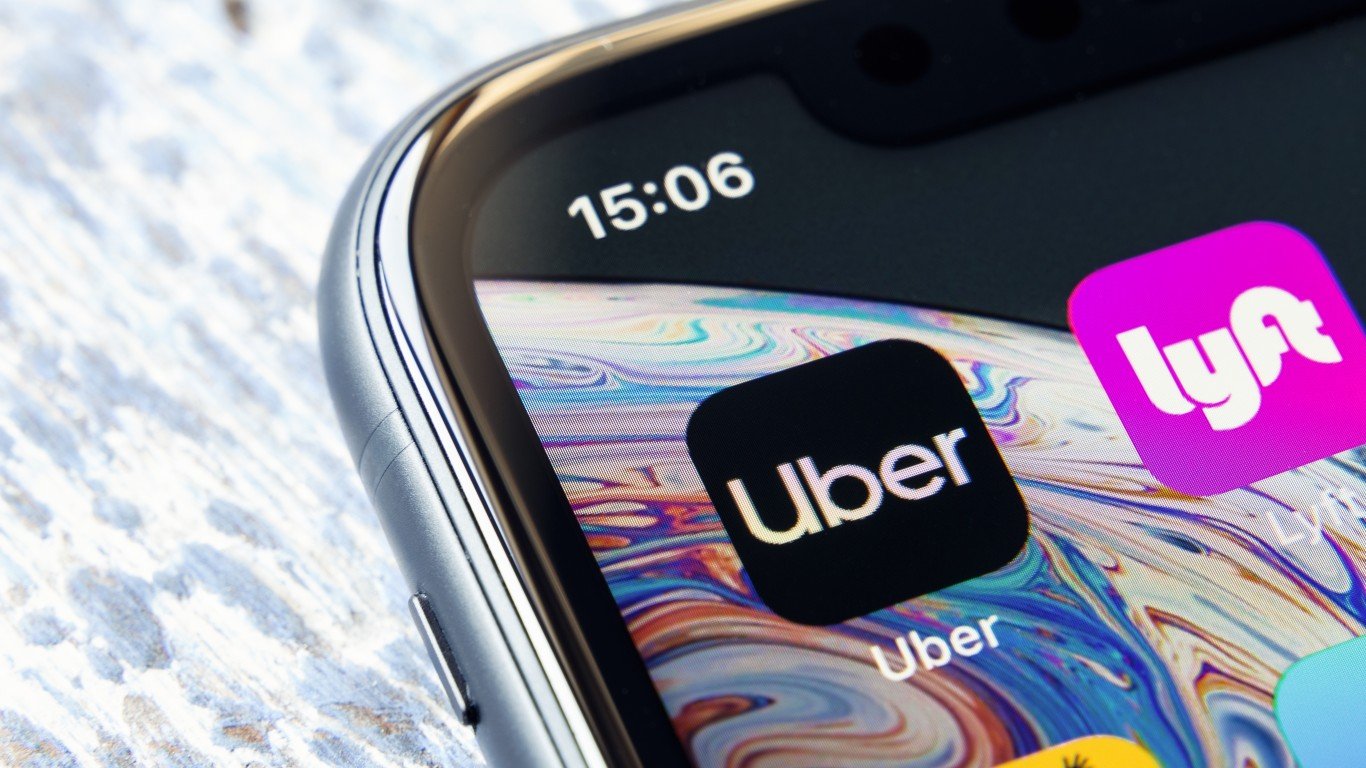
If you drive for Uber (NYSE:UBER | UBER Price Prediction), deliver for DoorDash (NASDAQ:DASH), or shop for Instacart (NASDAQ:CART), you almost certainly get a 1099-NEC at year-end and no benefits package. That is exactly why the IRS treats you as both the employer and the employee of your own one-person business, and why a Solo 401(k) lets you shovel far more into retirement than any W-2 coworker with a corporate plan. The combined limit for 2026 (verify the current figure at IRS.gov before you fund) is the ceiling almost no rideshare or delivery driver actually uses.
Why Gig Drivers Are Actually Self-Employed Business Owners
Uber, Lyft (NASDAQ:LYFT), DoorDash, Instacart, and Grubhub classify drivers as independent contractors. That means no employer 401(k) match, no payroll tax split, and the full 15.3% self-employment tax lands on you. The upside: the IRS lets sole proprietors open a Solo 401(k), a plan built for owner-only businesses with no employees other than a spouse.
The plan has two contribution buckets, and you fill both:
- Employee deferral: up to the standard 401(k) elective limit ($23,000 in 2024, indexed higher for 2026; verify the current figure).
- Employer profit-sharing: roughly 20% of net self-employment earnings, stacked on top of the deferral.
Combined, those two buckets are what push the ceiling into the range the headline names. If you are 50 or older, a catch-up contribution goes on top of that.
The Math a Full-Time Rideshare Driver Can Actually Hit
You do not need six figures of profit to make this meaningful. Say a full-time driver nets $55,000 after mileage deductions. The employee bucket alone lets that driver defer most of a year’s savings capacity, and the profit-sharing side layers on roughly another 20% of net earnings. Even a part-time weekend driver netting $12,000 can route the entire amount into the employee bucket, because there is no minimum.
Context matters here. The U.S. personal savings rate sat at 3.9% in Q1 2026, down from 6.2% in Q1 2024, and personal consumption absorbed 92.3% of disposable income. Gig income is lumpy on top of that. The Solo 401(k) fits because you can fund it in bursts, not on a payroll schedule, and you have until your tax filing deadline (plus extensions for the employer portion) to make the prior-year contribution.
Roth or Traditional, Your Choice, on Both Sides
Most low-cost providers now offer a Roth Solo 401(k). As one financial commentator put it, the solo 401(k) “gives you more of the flexibility of contribution limits significantly beyond what you can do just in a Roth” IRA. Under recent rule changes, employer profit-sharing contributions can also be designated Roth. If you expect higher tax rates later, or you are in a low bracket now because of heavy mileage deductions, the Roth side is worth serious consideration.
SEP-IRA vs. Solo 401(k)
The SEP-IRA is simpler and better known, and it is what most CPAs default to for gig workers. But it only has the employer bucket, capped near 20% of net earnings. A driver clearing $40,000 can put far more into a Solo 401(k) than a SEP because the employee deferral bucket does not depend on profit. The SEP also complicates any future backdoor Roth IRA because of pro-rata rules. The Solo 401(k) avoids that trap.
Why Almost Nobody Uses It
- Awareness: platforms do not tell drivers they qualify. Compare that to W-2 workers, where Vanguard’s plan-weighted 401(k) participation rate hit 85% in 2024, largely because of auto-enrollment.
- Paperwork friction: you need an EIN and a plan document. Fidelity, Schwab (NYSE:SCHW), and E*TRADE offer no-fee Solo 401(k)s, but you have to open them yourself.
- Cash flow: average annual household expenditures reached $78,535 in 2024, and median full-time weekly earnings ran $1,235 in Q1 2026. Gig income often lands below that median, so “save it later” wins.
- Form 5500-EZ: once plan assets exceed $250,000, you owe an annual filing. Skippable at first, but real.
The Move
Get an EIN from IRS.gov (free, five minutes). Open a Solo 401(k) with a no-fee brokerage. Fund the employee bucket first because it is not profit-limited, then add profit-sharing when you file.
Contact [email protected] for any questions or corrections.
I am a long time investor and student of business, and believe finding good companies that can become great investments is the best game on earth. After 20 years of writing and researching the public markets it is clear that individuals have never had more tools and information to take control of their financial lives. From ETFs and $0 commissions to cryptos and prediction markets there has never been a greater democratization of access to investing.
I write to help people understand the investments available to them so they can make the best choice for their portfolio, whether they're starting out or looking for income in retirement.