The 20% Tax Credit Developers Use to Flip Historic Buildings and How You Can Claim It
If you own or are eyeing a beat-up old building with good bones, the federal government will hand you back 20% of what you spend fixing it up. This is the Federal Historic Rehabilitation Tax Credit, one of the most…

This post may contain links from our sponsors and affiliates, and Flywheel Publishing may receive compensation for actions taken through them.
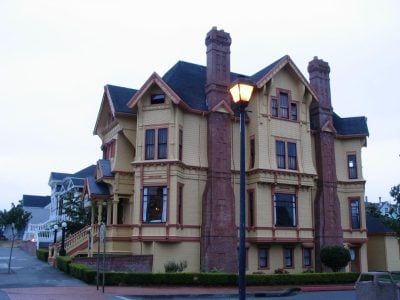
If you own or are eyeing a beat-up old building with good bones, the federal government will hand you back 20% of what you spend fixing it up. This is the Federal Historic Rehabilitation Tax Credit, one of the most generous, least-marketed real estate incentives in the tax code. If you have been searching for how developers restore crumbling downtown storefronts and turn a profit, this is the answer.
The Buried Benefit
Spend a dollar rehabilitating a certified historic structure, and the IRS credits 20 cents against your federal tax bill as a dollar-for-dollar credit. On a $500,000 rehab, that is $100,000 back. On a $2 million project, $400,000. The credit applies to “qualified rehabilitation expenditures” (QREs): hard costs of restoring the building itself, architect and engineering fees, and construction-period interest and taxes. Acquisition cost and new additions do not count.
The Proof
This is codified at 26 U.S. Code §47, the Rehabilitation Credit, administered jointly by the IRS, the National Park Service (NPS), and your State Historic Preservation Office (SHPO). The Tax Cuts and Jobs Act of 2017 changed one important mechanic: the credit is no longer taken all at once. You now claim it ratably over five years, 4% of QREs per year, starting the year the building is placed in service. That five-year rule remains in effect in 2026.
Who Qualifies, and Who Doesn’t
The building must be a “certified historic structure”: individually listed on the National Register of Historic Places, or a contributing building in a registered historic district. The property must be income-producing. Rentals, offices, retail, hotels, mixed-use, short-term lodging all qualify. Your own primary residence does not qualify for the 20% federal credit. If you want to restore a Victorian and live in it, you are looking at state credits only (many states stack their own 10% to 25% credits on top, and some cover owner-occupied homes). The old 10% federal credit for pre-1936 non-historic buildings was repealed in 2017.
How to Actually Use It
- Confirm the building is certified. Search the National Register, or ask your SHPO whether the property sits in a registered historic district and contributes to it.
- File the three-part Historic Preservation Certification Application with the NPS through your SHPO. Part 1 certifies the building. Part 2 gets your rehab plans pre-approved against the Secretary of the Interior’s Standards for Rehabilitation. Part 3 certifies the finished work. Skip Part 2 at your peril: unapproved work will not qualify.
- Meet the “substantial rehabilitation” test. Your QREs during a 24-month period (or 60 months for phased projects) must exceed the greater of $5,000 or the building’s adjusted basis (roughly, what you paid minus the land value and prior depreciation).
- Place the building in service, then claim the credit on IRS Form 3468, 4% of QREs per year for five years.
The math matters now. The Case-Shiller National Home Price Index sits at 332.7 as of April 2026, in the 90th percentile historically, while housing starts have dropped to 1.18 million annualized units in May 2026, down 15.4% from April. Existing structures are cheaper to build. Meanwhile, the 10-year Treasury yield sits at 4.49% as of July 2, 2026, near a 93rd percentile 12-month reading, so financing is not cheap. A 20% federal credit (plus any state credit) does real work in the pro forma.
The Catch
Three traps exist. First, the five-year recapture period: sell the building, convert it to personal use, or let certification lapse within five years of placing it in service, and the IRS claws back a sliding portion of the credit (100% in year one, decreasing 20% each year after). Second, the passive activity rules: if you are not a real estate professional, the credit may only offset tax on passive income, though §469 carves out up to $25,000 of the credit against ordinary income for active participants with adjusted gross income under $200,000, phasing out completely at $250,000. Third, the rehab must meet the Secretary of the Interior’s Standards. Rip out original windows for vinyl replacements and the NPS can deny Part 3 certification after the money is spent, killing the credit entirely.
Consumer sentiment sits at 44.8 in May 2026, a 12-month low, and the personal savings rate has fallen to 3.9% in Q1 2026 from 6.2% two years earlier. When capital is tight, a credit that refunds a fifth of your hard costs can make the deal.
Contact [email protected] for any questions or corrections.
I am a long time investor and student of business, and believe finding good companies that can become great investments is the best game on earth. After 20 years of writing and researching the public markets it is clear that individuals have never had more tools and information to take control of their financial lives. From ETFs and $0 commissions to cryptos and prediction markets there has never been a greater democratization of access to investing.
I write to help people understand the investments available to them so they can make the best choice for their portfolio, whether they're starting out or looking for income in retirement.