The Safest Retirement Portfolio Isn’t the One Most Financial Advisors Recommend
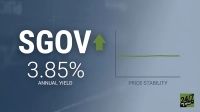
A retiree who built a portfolio entirely in short-term Treasuries last year is now collecting far less income than in 2024. The monthly distribution on iShares 0-3 Month Treasury Bond ETF (NYSEARCA:SGOV) fell from $0.4435 in September 2024 to $0.2995…


A retiree who built a portfolio entirely in short-term Treasuries last year is now collecting far less income than in 2024. The monthly distribution on iShares 0-3 Month Treasury Bond ETF (NYSEARCA:SGOV) fell from $0.4435 in September 2024 to $0.2995 in June 2026, a decline of about 32.5%. The share price barely moved. The income did.
That is the quiet problem with a portfolio that looks safe on the principal line. Capital preservation and income preservation are not the same thing, and a retirement plan built around the first can quietly fail at the second.
The $60,000 Income Problem at Four Yield Levels
Take a common target: $60,000 in pretax annual income. Here is what it costs to generate that income using recent market yields rather than textbook assumptions.
Cash anchor (about 3.7%). The 4-week T-bill yields 3.69%, and SGOV tracks it closely after a 0.09% expense ratio. Required capital: about $1,626,000. No credit risk. No growth either, and the income resets every time the Fed moves, which it has done three times in the past year, cutting the upper bound to 3.75%.
Conservative dividend growth (about 3.1%). Southern Company (NYSE:SO | SO Price Prediction) yields 3.1% at $96.75. Required capital: about $1,935,000. The headline yield is the lowest of the four, which understates what the position delivers. Southern’s quarterly dividend rose from $0.72 in 2024 to $0.76 by Q2 2026, and the rate base growth driving those increases is now tied to Georgia and Alabama data-center demand. Q1 2026 adjusted EPS came in at $1.32 versus $1.23 a year earlier.
Moderate net-lease REIT (about 5.2%). Realty Income (NYSE:O) yields 5.2% at $63.04. Required capital: roughly $1,154,000. Monthly payer. 114 consecutive quarterly increases, with management guiding 2026 AFFO to $4.41 to $4.44 per share. Portfolio occupancy of 99%. The growth is slower than Southern’s, but the starting yield is higher.
Aggressive BDC (about 6.1%). Main Street Capital (NYSE:MAIN) yields 6.1%, paying a $0.26 monthly base plus a $0.30 supplemental roughly each quarter. Required capital: about $984,000. The smallest check upfront, but MAIN trades at $51.56, down 11% year to date, and supplementals are explicitly variable. A recession that pressures lower middle-market borrowers will pressure both the price and the supplemental.
Where The Advice Breaks Down
Core PCE inflation sat at an index level of 130.082 in May 2026, up 3.4% from a year earlier. A retiree drawing $60,000 today needs more income over time just to preserve purchasing power. SGOV cannot guarantee that. T-bills pay whatever short-term rates allow, and those rates are lower than they were during the 2024 peak.
Southern’s dividend grew about 5.6% from $0.72 in 2024 to $0.76 in 2026. Realty Income’s annualized dividend grew from $3.186 in early 2025 to $3.252 in June 2026, a gain of about 2.1%. Both can compound. A 3.1% starting yield that grows 5% a year takes about four years to produce more annual income than a 3.7% starting yield with no growth.
That is the assumption to question: that the “safe” portfolio is always the one with the least principal volatility. For a 65-year-old planning for a 30-year retirement, the riskier portfolio may be the one whose income cannot grow.
How to Test Whether “Safe” Income Can Last
-
Pull your last 12 months of actual spending, not your salary. Many retirees need less portfolio income than their old paycheck because payroll taxes, retirement contributions, and work costs disappear. The useful number is the gap left after Social Security, pensions, cash reserves, and taxes.
-
Compare long-term total returns on a regulated utility and a short-Treasury fund, but use matching time periods. SGOV launched in 2020, so it does not have a 10-year record. Since inception, SGOV’s nominal total return has been about 19%, while Southern’s longer record shows why dividend growth and capital appreciation can matter over multi-decade retirements.
-
Set a cash floor, not a cash portfolio. One to two years of spending in a short-Treasury fund such as SGOV can cover a bad market without forcing stock sales. Anything beyond that may still be useful for liquidity, but it is also money whose income will reset with short-term rates rather than compound through dividend growth.
The advisor’s instinct to use bonds has its place. The mistake is treating principal stability as the only definition of safety. Retirees do not just need assets that hold their value on a statement. They need income that can survive lower rates, higher prices, and a retirement that may last longer than the bond ladder.
Contact [email protected] for any questions or corrections.
Drew Wood has edited or ghostwritten nine books and published more than 1,500 articles on investing, business, politics, travel, world cultures, wildlife, and earth science. He holds a doctorate and four master's degrees and has nearly 30 years of college teaching experience. His travels have taken him to 25 countries, including three years living in Ukraine.