‘Who Cares About a FICO Score When You Are 94?’: Suze Orman’s Blunt Advice to a Family Drowning in Debt
When a 94-year-old on a fixed income carries credit card debt, the instinct to protect her credit score could cost her children far more than the balance itself. Suze Orman heard one family's situation and told them to stop thinking…

This post may contain links from our sponsors and affiliates, and Flywheel Publishing may receive compensation for actions taken through them.
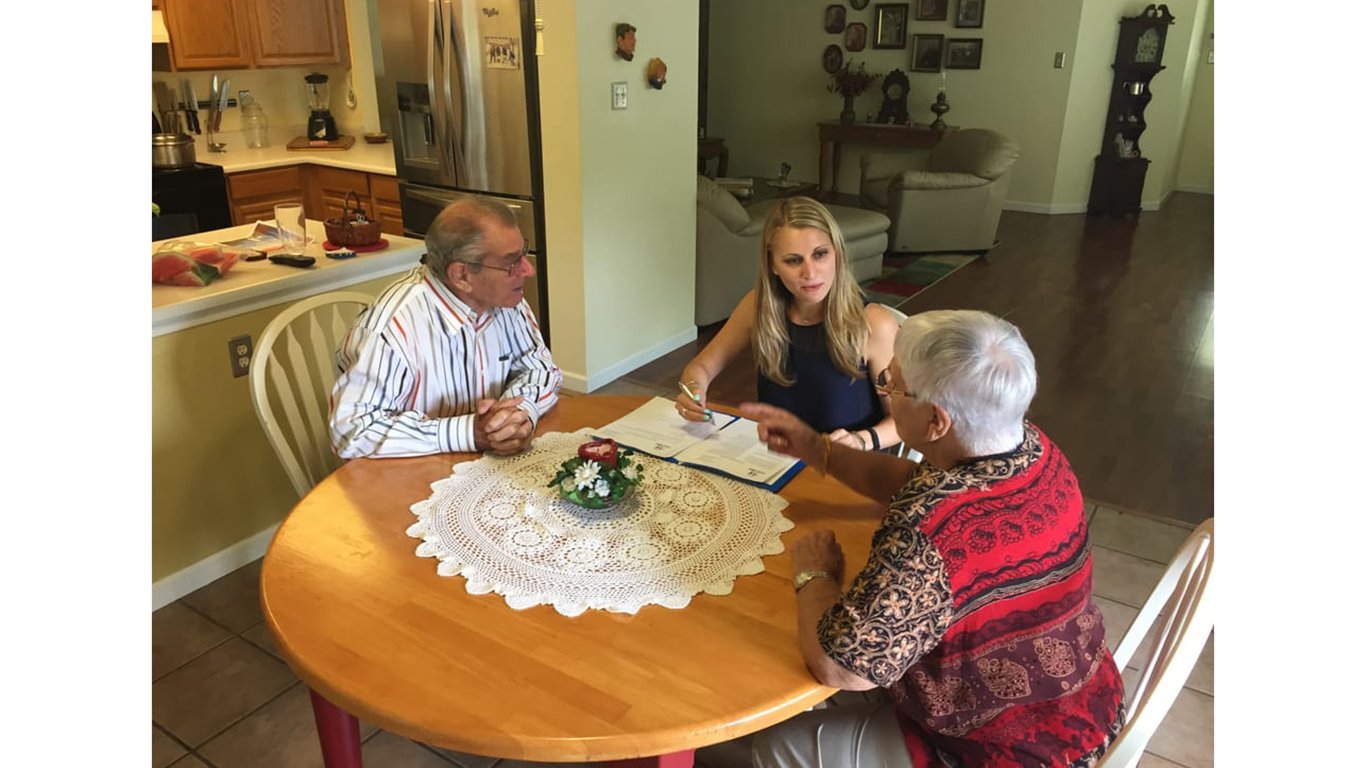
On a recent Women & Money podcast segment, Suze Orman took a call from a listener named Mary about her 94-year-old mother, who is carrying roughly $10,000 in credit card debt on a fixed income of Social Security and a teacher’s pension. Mary said the account was current but the minimum payments had become a burden. Orman’s blunt reply: “Who cares about a FICO score when you are 94 years of age?”
If Mary and her four siblings follow the wrong instinct, protecting Mom’s credit score or draining their own retirement savings to pay a card issuer, they risk burning years of accumulated savings on a debt the law does not require anyone but their mother to repay.
The Verdict: Orman Is Right
Orman’s advice is sound. Late in life, on a fixed income, with no assets legally tied to the credit card balance, the family’s job is to protect the mother’s housing and care, not her credit report.
Orman told Mary that a $10,000 balance would carry roughly a $200 to $300 monthly minimum payment, and if that is truly crushing the household budget, “something is radically wrong and the 5 kids should each come up with $2,000 and pay off that debt.” Split five ways, a genuine $10,000 balance is a one-time write-a-check problem, not a monthly bleed.
The reason a minimum payment feels so heavy is the interest rate compounding behind it. The average credit card APR across all accounts stands at 20.94% for Q2 2026, according to Federal Reserve data, near but still below the August 2024 peak of 21.76%. For cardholders who actually carry a balance month to month, the average is higher: 22.15% in Q2 2026. The Federal Reserve has held its benchmark rate steady at every meeting in 2026, meaning no meaningful relief is on the horizon. At those rates, paying only the minimum on a five-figure balance means most of each payment services interest while principal barely moves. A 94-year-old on Social Security cannot outrun that math.
Unsecured Debt Explained
Credit card debt is unsecured. No specific asset backs it. A mortgage is secured by the house; an auto loan is secured by the car. If you stop paying a credit card, the issuer can call you, report the delinquency, sell the debt to a collector, and eventually sue for a judgment. What the issuer cannot do is seize a home that was never pledged as collateral.
That is why Orman told Mary: “That debt is not going to pass down to the 5 kids. You could very easily, believe it or not, just stop paying it.” Credit card debt dies with the borrower unless a co-signer or joint account holder exists. The children are not on the hook simply because they are heirs.
A reverse mortgage adds a wrinkle worth understanding. It lets a homeowner 62 or older draw against home equity while living in the property; the loan comes due when the borrower dies, sells, or moves out permanently. It is secured by the house. A credit card issuer cannot force a sale of a home that already has a reverse mortgage lien on it to satisfy an unsecured balance. That protection is why Orman added, “If that was my mother, I would consider claiming bankruptcy. Only if they can’t take the house away from her.” Bankruptcy exemptions vary by state, and that homestead question is exactly what a bankruptcy attorney gets paid to answer before anything is filed.
Why FICO Stops Mattering
A FICO score is a tool for borrowing. It determines the rate on a mortgage, a car loan, or a new card. A 94-year-old with a reverse mortgage already in place and no plan to finance another purchase gets no meaningful benefit from a 780 score. Letting that score drop to preserve $200 a month of cash flow is a rational trade. Orman’s line lands because it is literally true: the score exists to price future credit, and future credit is not the point at this stage of life.
The Numbers That Change Everything
Before anyone stops paying or files anything, Orman pushed Mary on two figures the family has not yet run. What is the current equity in the home if the reverse mortgage were paid off? And how much does memory care actually cost in their area?
Those two figures decide the strategy. If equity is meaningful and memory care in their region runs several thousand dollars a month, the home may eventually need to be sold to fund care, and protecting it from unsecured creditors matters less than many families assume. If equity is thin and the mother can stay in place with family help, the calculus shifts toward simply letting the card go unpaid and accepting the credit hit.
Orman also raised the harder truth Mary sidestepped: “She has been living far beyond her means for a long time. Long time.” The U.S. personal savings rate slid to 3.9% in Q1 2026, according to Bureau of Economic Analysis data, and consumer sentiment hit a record low of 44.8 in May 2026 per the University of Michigan’s survey. By August 2026 that reading had partially recovered to 51.7, but it still sat roughly 11% below year-ago levels. Meanwhile, Americans collectively carry $1.26 trillion in credit card balances as of Q2 2026, per Federal Reserve Bank of New York data. The backdrop facing Mary’s family is one the country is navigating broadly: thinner cushions, elevated borrowing costs, and rising care expenses converging at once.
What Mary Should Actually Do
- Get the real debt number in writing. Pull statements for every card. Orman suspected the true balance could be closer to $100,000 than $10,000.
- Value the house and confirm the reverse mortgage payoff. Order a current appraisal and request a payoff quote from the reverse mortgage servicer.
- Price memory care locally. Call two or three facilities and ask for monthly all-in costs.
- Talk to a bankruptcy attorney licensed in her state. Ask specifically about the homestead exemption and whether a reverse-mortgaged home is protected in a Chapter 7 filing.
- Get legal and medical paperwork in order. Durable power of attorney, healthcare proxy, and a HIPAA release, signed while she still has legal capacity.
- Stop subsidizing the debt from the kids’ retirement accounts. If the balance is unsecured and the mother has no meaningful assets a creditor can reach, paying it down from the children’s savings converts a non-transferable liability into a permanent loss for the next generation.
Credit card debt still matters across the board. But late in life, on a fixed income, with unsecured debt and a home protected by a reverse mortgage, the priority shifts from credit score maintenance to care planning and asset protection. Get the numbers, get the paperwork in order, and stop paying the card only after a lawyer has reviewed the full picture.
Editor’s note: This article was updated to reflect that the average credit card APR across all accounts stood at 20.94% and the rate for interest-bearing accounts averaged 22.15% in Q2 2026 per Federal Reserve data, that the August 2024 peak was 21.76%, that the Federal Reserve held rates steady throughout 2026, and that total U.S. credit card balances reached $1.26 trillion in Q2 2026 per the Federal Reserve Bank of New York. The May 2026 University of Michigan consumer sentiment reading of 44.8, noted as a record low at the time, had partially recovered to 51.7 by August 2026.
Contact [email protected] for any questions or corrections.
I am a long time investor and student of business, and believe finding good companies that can become great investments is the best game on earth. After 20 years of writing and researching the public markets it is clear that individuals have never had more tools and information to take control of their financial lives. From ETFs and $0 commissions to cryptos and prediction markets there has never been a greater democratization of access to investing.
I write to help people understand the investments available to them so they can make the best choice for their portfolio, whether they're starting out or looking for income in retirement.