Retired UPS Driver Discovers Union Pension Skyrocketed His Medicare Premium
A Teamsters retiree who never earned six figures in any working year just received a Medicare bill that classifies him alongside corporate executives, and the income that triggered it came from a source most union workers never think to watch.

This post may contain links from our sponsors and affiliates, and Flywheel Publishing may receive compensation for actions taken through them.
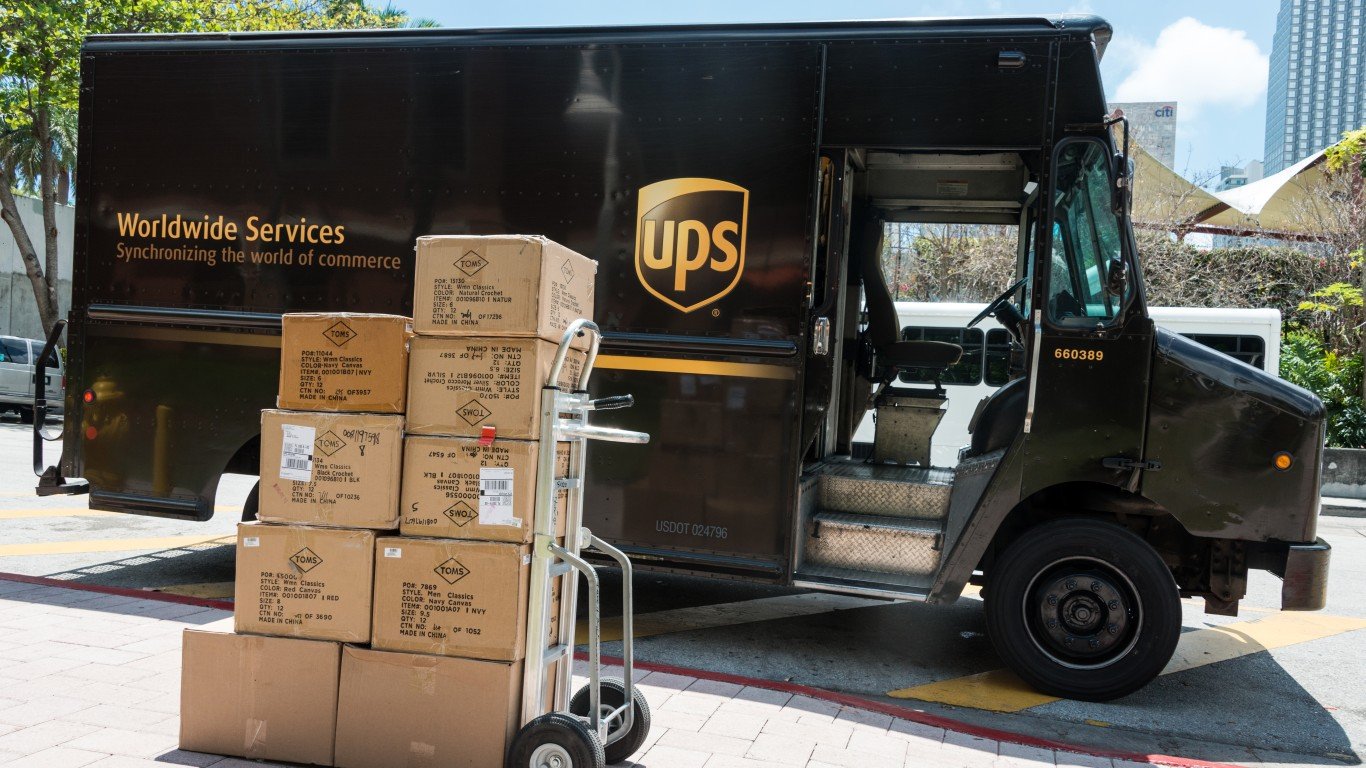
A retired UPS driver who spent 35 years behind the wheel of a brown truck just opened a Medicare notice showing he owes the same income-related surcharge as a corporate executive. He never once earned a six-figure salary in any single year. Yet at 67, with a paid-off house and a Teamsters pension, the federal government now classifies him as a high-income beneficiary.
This is happening to more union retirees than most people realize, and it is almost always a surprise.
Our driver retired at 66 with $1.1 million in a Teamsters 401(k) and a union pension of roughly $50,000 a year. Add Social Security, boosted by the 2.8% cost-of-living adjustment for 2026, and a modest 401(k) draw to cover a new roof and a granddaughter’s tuition help, and his modified adjusted gross income (MAGI) crossed a line he had never heard of.
That line is IRMAA, the Income-Related Monthly Adjustment Amount. For a single filer in 2026, IRMAA begins the moment MAGI exceeds $109,000. That first tier runs from $109,000 to $137,000 and adds $81.20 per month to the standard Part B premium of $202.90. Cross into Tier 2 (above $137,000) and the surcharge climbs further, with Part D surcharges layered on top ranging from $14.50 to $91.00 per month depending on the tier. Combined, a retiree who lands in Tier 1 or Tier 2 can easily face $1,000 to $2,400 or more in extra annual premiums, depending on income level and Part D plan.
IRMAA is structured as a cliff, not a slope. Earn one dollar over a tier boundary and the full surcharge for that tier applies for the entire year. The retiree who lands at $109,500 pays the same Tier 1 premium as one at $136,900. The threshold is also set on a two-year lookback: your 2026 premium is based on your 2024 tax return. Income decisions made two years ago are already locked in.
There is an appeal form, SSA-44, but it only helps if you experienced a qualifying life-changing event: work stoppage or retirement, marriage, divorce, or death of a spouse. A large 401(k) withdrawal does not qualify. A one-time capital gain from selling a rental property does not qualify. When the surcharge is triggered by voluntary withdrawals, the appeal will be denied.
The core financial problem is that a Teamsters pension is fixed and non-negotiable. So is Social Security once claimed. The only lever left is the 401(k). Every incremental dollar pulled from that account is taxed as ordinary income, and if it pushes MAGI past a tier boundary, it also triggers a full-year premium hike. In effect, marginal withdrawals near the cliff carry the 24% federal rate that applies to single filers with taxable income above $105,700 in 2026, plus the IRMAA surcharge penalty on top.
Two Strategies to Consider
The right move for most people in this position is a combination of the following:
- Roth conversions before Medicare enrollment, and in low-income years after. Converting portions of the 401(k) to a Roth IRA in the years between retirement and age 73 (when RMDs begin) reduces the future taxable balance. The ideal window is when pension and Social Security are the only fixed income and you can fill up the 22% or 24% bracket without spiking MAGI two years later.
- Sequence withdrawals from taxable accounts first in high-MAGI years. Selling appreciated shares from a brokerage account only creates income on the gain, not the entire withdrawal. Spending down taxable savings before touching the 401(k) can keep MAGI under the $109,000 Tier 1 line in years when a large purchase is unavoidable.
- Split large 401(k) withdrawals across two tax years. A $40,000 kitchen remodel taken as $20,000 in December and $20,000 in January can be the difference between triggering a tier surcharge and staying in the standard band. The IRS treats each calendar year separately, and IRMAA follows the same logic.
What to Do This Week
Pull last year’s tax return and check the MAGI figure that will drive next year’s premium. If you are already committed to a surcharge tier for the current year, focus on keeping the following year clean. Model a Roth conversion in November, not December, so you have time to correct course if year-end income runs hot.
The common mistake is treating the 401(k) like a checking account in retirement. Every withdrawal is a taxable event with a two-year echo on Medicare premiums. A union pension is a genuine asset, but it uses up the low-tax runway that most retirees rely on for flexibility. Plan withdrawals around the IRMAA tiers, because once you cross one, no retroactive fix exists.
Editor’s note: This article was updated to correct the 2026 IRMAA threshold for single filers, which begins at $109,000 in MAGI (not $137,000 as previously stated), and to clarify that the Tier 1 Part B surcharge is $81.20 per month added on top of the standard $202.90 premium, with Part D surcharges ranging from $14.50 to $91.00 per month depending on income tier.
Contact [email protected] for any questions or corrections.
Carl Sullivan has been a Flywheel Publishing contributor since 2020, focusing mostly on personal finance, investing and technology. He started his journalism career covering mutual funds, banking and financial regulation in Washington.Carl is a contributing editor at Financial Advisor Magazine and previously served as managing editor at Financial Planning Magazine. He is a long-time manager of editorial teams covering a variety of topics including news, business and politics. He’s currently the North America Managing Editor for Flipboard and worked previously for Microsoft News and Newsweek.Carl loves exploring the world and lived in India for several years. Today, he resides in New York City’s Queens borough, where you can hear hundreds of different languages just by riding the subway.