Here’s What a $500,000 Budget Actually Buys You in Naples, Florida
Naples ranks among the wealthiest zip codes in the country, and half a million dollars lands you somewhere very specific in that market. Where exactly depends on a few decisions that most retirement calculators never ask you to make.

This post may contain links from our sponsors and affiliates, and Flywheel Publishing may receive compensation for actions taken through them.

People ask whether a $500,000 nest egg supports retirement in Naples. The short answer: it can, but only if you understand what Naples actually costs and where $500,000 realistically sits in that market.
What $500,000 Really Represents Here
Naples sits well outside the average Florida town profile. Collier County consistently ranks among the wealthiest counties in the country, and the housing market reflects it. The Case-Shiller index sits at 335.1 as of May 2026, in the 90th percentile historically. Naples runs well above that national baseline. A $500,000 portfolio drawn down at a sustainable rate buys a retirement funded partly by Social Security and lived in a modest condo or rental unit inland from the beach, well short of the golf-course single-family home most people picture.
Florida’s cost of living index is 103.414, roughly 3.4% above the national average. The real prize: Florida now ranks 5th overall on the 2026 State Tax Competitiveness Index, with no state income tax on Social Security, pensions, or portfolio withdrawals. That structural advantage makes this scenario workable at all.
The Working Budget in Current Dollars
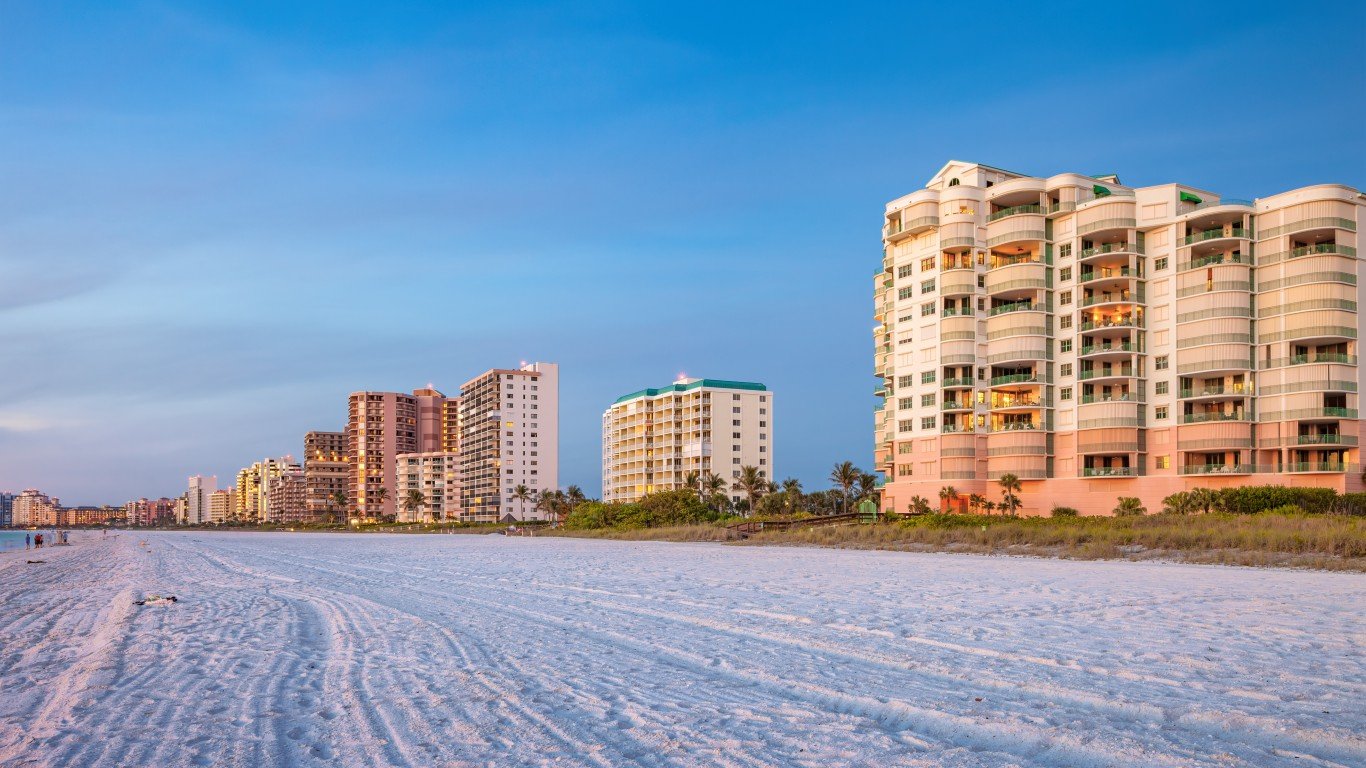
Assume a single retiree age 65, buying a modest older condo inland (East Naples or Golden Gate) for around $325,000 in cash, or renting for roughly $2,600 a month. The condo end of the Naples market has actually softened considerably: the median condo list price fell to around $349,900 by late 2026, down from roughly $407,000 a year earlier, giving buyers real negotiating power that was absent just a few years ago. Annual budget for ownership:
- Property taxes and CDD assessments: about $3,800
- HOA and condo fees: $7,200 to $10,800
- Windstorm and homeowners insurance: $3,500 to $6,000
- Utilities, internet, water: $3,600
- Food and dining: $7,200
- Healthcare (Medicare Part B, Part D, Medigap, dental, out of pocket): $6,600
- Transportation and vehicle reserve: $5,500
- Miscellaneous, gifts, travel, maintenance: $6,500
That totals roughly $44,000 to $50,000 a year. The Bureau of Labor Statistics puts average annual household expenditures at $78,535 in 2024. A retiree running this budget in Naples is spending well under the national average household while living in one of the country’s most expensive coastal enclaves.
Where the Income Comes From
Social Security at the SSA’s current average retired-worker benefit runs close to $25,000 a year at full retirement age, after the 2.8% cost-of-living adjustment that took effect in January 2026 lifted the average monthly check to roughly $2,083. Claiming at 67 rather than 62 is close to non-negotiable in this scenario. Subtract $25,000 from a $46,000 budget and the portfolio needs to cover about $21,000 annually.
On $500,000, that is a 4.2% withdrawal rate. Still above the classic 4% benchmark, and at age 65 with a 25 to 30 year horizon that margin is thin. It holds only if two conditions are met: you bought the condo in cash (so housing becomes a fixed carrying cost), and you are willing to flex spending downward in bad market years. If you rent instead, rent of $2,600 a month replaces the HOA-plus-insurance-plus-tax bundle, pushing the annual budget past $52,000 and the withdrawal rate well above 5%. At that level, the plan resembles a countdown rather than a retirement.
Treasury yields give the income picture meaningful support. The 10-year sits at approximately 4.79% in early September 2026, well above where it was at the start of the decade. A laddered treasury or CD sleeve can now carry a significant portion of the annual income need without taking on equity risk. The right portfolio shape here is a blend of dividend-focused index funds, a treasury ladder, and a modest growth allocation.
The Cost Everyone Underprices: Insurance and Assessments
Southwest Florida is now a post-Hurricane Ian insurance market, and the numbers are punishing. Windstorm premiums on coastal and near-coastal condos have doubled and tripled since 2022. Older buildings have faced special assessments running $10,000 to $80,000 per unit to fund reserve studies mandated by Florida’s post-Surfside condo safety law. Full reserve funding became required as of January 1, 2026, meaning many associations have already issued or are actively planning one-time levies to comply. A single $25,000 assessment is 5% of the entire nest egg wiped out in one letter from the association.
On the positive side, the compliance wave has made older buildings more transparent about their financial condition than ever before. Mitigation is specific: target a newer building (2005 or later, constructed to post-Andrew codes), read the reserve study before closing, and collect insurance quotes before signing the contract. Inland zip codes in Collier County carry materially lower wind premiums than anywhere west of I-75.
The Number That Actually Makes This Work
The math for Naples on $500,000 points toward a specific profile: age 67 with Social Security already claimed, a paid-off older condo inland, an annual budget around $45,000, and a portfolio built around a treasury ladder and dividend index funds drawing roughly 4% a year. Push the portfolio to $650,000 and the same lifestyle drops to about a 3.5% withdrawal rate, the version that actually survives a bad first decade of returns.
Below $500,000, renting becomes the default, and the plan needs either part-time income or a later claim age to stay solvent. Naples is achievable at this number. It is just achievable in a smaller condo, further from the beach, than the brochure suggested. The softening condo market is genuinely useful news for buyers in this price range: less competition, more room to negotiate, and improved visibility into the true cost of ownership before you sign.
Editor’s note: This article was updated to reflect Florida’s revised ranking of 5th (not 4th) on the 2026 State Tax Competitiveness Index, the current SSA average retired-worker benefit of approximately $25,000 annually (up from the previously cited $23,000), the 10-year Treasury yield of approximately 4.79% as of early September 2026 (up from 4.63%), and the notable softening in Naples condo list prices, which fell to around $349,900 by late 2026 from roughly $407,000 a year earlier.
Contact [email protected] for any questions or corrections.
I am a long time investor and student of business, and believe finding good companies that can become great investments is the best game on earth. After 20 years of writing and researching the public markets it is clear that individuals have never had more tools and information to take control of their financial lives. From ETFs and $0 commissions to cryptos and prediction markets there has never been a greater democratization of access to investing.
I write to help people understand the investments available to them so they can make the best choice for their portfolio, whether they're starting out or looking for income in retirement.