Her Partnership Policy Paid $180,000 to the Nursing Home. When It Ran Out, the State Let Her Keep an Extra $180,000 and Still Paid the Bill
Most people assume a long-term care policy protects assets only while it is paying out. What happens to those savings after the policy runs dry turns out to be a different question entirely, and the answer depends on two words…

This post may contain links from our sponsors and affiliates, and Flywheel Publishing may receive compensation for actions taken through them.

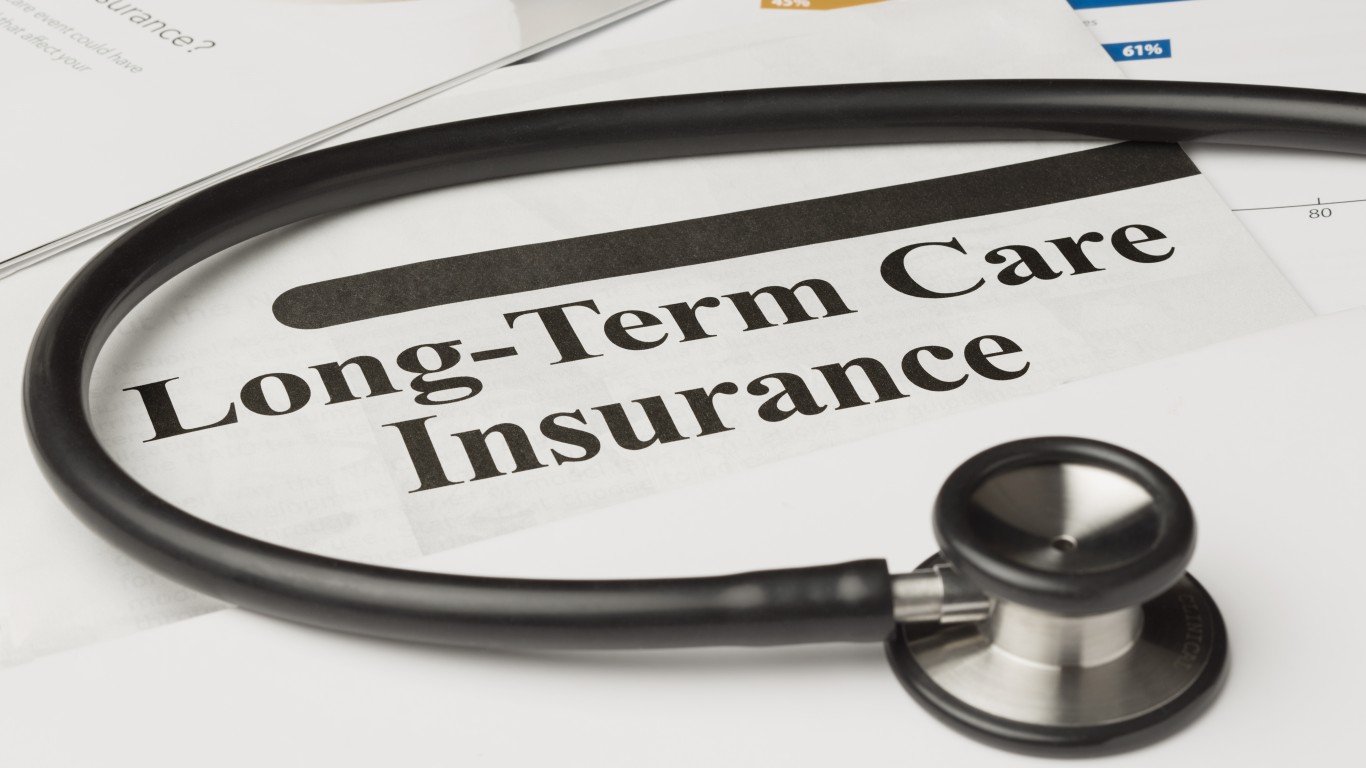
Her state-certified Long-Term Care Partnership (LTC) policy paid $180,000 to the nursing home, then ran dry, a reversal that catches most families off guard. A single applicant normally has to spend down to roughly $2,000 in countable assets before Medicaid picks up the bill. She had $182,000 sitting in savings. The state approved her anyway and let her keep it.
The mechanism is a dollar-for-dollar asset disregard. Under her state’s LTC Partnership program, every dollar the insurer paid in qualifying benefits gets subtracted from what Medicaid counts as her resources. The insurer paid $180,000. The state disregards the amount. Her $182,000 nest egg fits inside the combined allowance with little room to spare, and Medicaid starts covering the nursing home. The insurance checks stopped. The protection those checks bought stayed put.
Why Partnership Isn’t a Marketing Word
Only policies formally designated under a state’s Partnership program trigger this benefit. Congress created the framework nationally through the Deficit Reduction Act of 2005, and each state administers it. To qualify, a policy has to be approved under the state’s Partnership rules and meet tax-qualification, consumer-protection, and age-based inflation-protection standards.
An ordinary LTC policy that pays out the exact same $180,000 creates zero special Medicaid protection. It comes down to paperwork. Policyholders should have a Partnership disclosure or certification from the insurer in a file somewhere. Without proof of that designation, the application can stall during the verification process. The policy’s certified status, not possession of the original paper, determines whether the disregard exists.
The disregard tracks benefits actually paid, not premiums, face value, unused benefits, or cash value. Someone whose policy has paid $75,000 so far gets a $75,000 disregard today. If the policy ultimately pays $180,000, the disregard grows alongside it. The insurer’s benefits-paid record sets the number.
What Medicaid Still Checks
Partnership status changes the asset test. It doesn’t hand out automatic approval. The applicant still has to clear the nursing-home level-of-care standard, income rules, residency and citizenship requirements, and every other resource rule on the books. Medicaid remains the payer of last resort.
Once approved, she generally hands over most of her monthly income (Social Security, pension, etc.) to the nursing home, minus a small personal-needs allowance and a few approved deductions. The state pays the gap. And coverage begins only after a formal application clears, which can take weeks. Families that wait until the insurance benefit is already exhausted often end up covering private-pay bills that easily run north of $10,000 a month.
One distinction this audience deserves up front: Medicare and Medicaid do different jobs. Medicare covers up to 100 days of skilled nursing after a qualifying hospital stay, then stops. Medicaid covers long-term custodial care indefinitely, but only after the applicant meets its poverty-level asset rules. The Partnership disregard is strictly a Medicaid feature.
Estate Recovery Protection Has a Ceiling
The second half of the Partnership benefit shows up after death. Every state runs a Medicaid Estate Recovery Program that tries to claw back what it spent on long-term care, usually out of the house. Partnership assets are generally shielded from that recovery, up to the amount of qualifying benefits paid.
The math is clean. Policy paid $180,000. Estate contains $220,000. Partnership protection covers $180,000. The remaining $40,000 may still be exposed, depending on state law and other protections like the homestead. Heirs who assume “Mom’s Partnership policy shields everything” sometimes discover that ceiling the hard way, as a recent case involving a $143,000 nursing home bill collected out of a farmhouse sale showed. (Titling, beneficiary forms, and the rest of the paperwork that decides where the remainder goes are all in our free estate checklist: here.)
State Lines Matter
Most states run Partnership programs, but details vary. Members should verify four things before betting the house on this strategy: whether their state participates, whether the specific policy is Partnership-qualified, whether a policy bought in another state gets reciprocity, and whether relocating after purchase preserves the protection.
California, Connecticut, Indiana, and New York were the original Robert Wood Johnson demonstration states. Their programs predate the 2005 federal expansion and can work differently. Indiana and New York historically offered total-asset-protection designs that go beyond the standard dollar-for-dollar model. Applying one of those features in Ohio or Florida is a waste of time.
Documents to pull before applying: the original Partnership disclosure, the current policy schedule, an insurer statement showing cumulative qualifying benefits paid, and a written reciprocity determination if the policy was issued elsewhere. Bring them to the Medicaid interview. The first $180,000 paid for her care. The second $180,000 changed what the state was allowed to count.
Contact [email protected] for any questions or corrections.
Gerelyn Terzo is the author of dividend investing handbook "Dividend Investing Strategies: How to Have Your Cake & Eat It Too." A veteran financial journalist, she covers agri-finance for outlets like Global AgInvesting and the broader stock market and personal finance for 24/7 Wall Street. She began at CNBC and later helped launch Fox Business in New York. Gerelyn currently resides in Woodland Park, Colorado and dabbles in nature photography as a hobby.