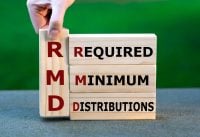
Emptying a $900,000 401(k) Into a Roth by 70 Can Eliminate Future RMDs. It Won’t Guarantee $3,900 a Month in Tax-Free Income
Converting a $900,000 traditional 401(k) to a Roth promises three retirement wins at once, but each promise runs on different rules, and chasing all three without a plan can quietly raise your tax bill, inflate your Medicare premiums, and shrink…

This post may contain links from our sponsors and affiliates, and Flywheel Publishing may receive compensation for actions taken through them.

Picture a retiree with $900,000 in a traditional 401(k). He hears about an appealing retirement shortcut: empty the account by 72, say goodbye to required minimum distributions (RMDs), collect a bigger Social Security check and pay less for Medicare. Three wins from one move. It’s an enticing prospect, except the three promises don’t follow the same rules.
And his $900,000 has to go somewhere. He could convert it to a Roth IRA, roll it into a traditional IRA, withdraw it for a taxable brokerage account or spend it. Each choice leaves his 401(k) empty, but the tax consequences are very different.
Where the Money Lands Decides Whether RMDs Disappear
A rollover to a traditional IRA closes the plan, but the dollars stay pretax. IRS Publication 590-B, the agency’s guide to IRA distributions, applies required minimum distributions to traditional IRAs. The rollover just hands the RMD obligation to a new custodian.
Roth conversions work differently. Pretax money converted to a Roth counts as taxable income in the year of conversion. In exchange, IRS Publication 17, the agency’s general guide to individual income tax, says the original owner of a Roth IRA never has to take distributions while alive. A Roth conversion eliminates future RMDs while keeping the money in a tax-advantaged retirement account. Moving it to a taxable brokerage account also eliminates RMDs, but without the Roth’s tax-free treatment of qualified withdrawals.
Moving the balance to a taxable account takes a fully taxable withdrawal first. Interest and dividends can generate annual taxes, while investment gains generally aren’t taxed until assets are sold. Spending the money ends RMDs only because it shrinks what’s left for the later decades of retirement.
The deadline itself may be off. IRS Notice 2026-13, which discusses changes to retirement distribution rules, reflects the later RMD starting age. People born in 1960 or later generally don’t face RMDs until age 75.
Emptying the account by 72 shortens the conversion window and could push more taxable income into fewer years.
Social Security Rewards Patience Over a Smaller Balance
Your Social Security check depends on your work history and the age you claim. The size of your investment accounts plays no part in the formula. The Social Security Administration’s guidance on delayed retirement credits says a worker born in 1960 or later who holds off until 70 gets 124% of the full retirement benefit.
The 401(k) can still help here. Withdrawals can cover living costs during the gap between retiring and a delayed claim. The bigger check comes from waiting to claim.
Timing also affects how your benefits are taxed. Under Internal Revenue Code Section 86, the federal rule on taxing Social Security, taxable retirement distributions raise the income figure that sets the taxable portion of your benefit. Taking taxable withdrawals before the year you start Social Security can keep that income from overlapping with your benefits.
Medicare Premiums Can Rise Before They Fall
Medicare’s income-related surcharge, known as IRMAA, is based on modified adjusted gross income (MAGI), meaning adjusted gross income plus tax-exempt interest. The Centers for Medicare & Medicaid Services (CMS), which releases the yearly premium tables, links higher Part B and Part D premiums to that income measure. Social Security generally uses tax returns from two years earlier to determine each year’s surcharge.
That delay works against the empty-by-72 plan. A large conversion or withdrawal raises MAGI in the year it happens, and the higher premium shows up in a later year. Converting a large share of a $900,000 balance in a short window tends to push MAGI up year after year, and it hurts most once the retiree is already paying Medicare premiums.
Later on, qualified Roth withdrawals stay out of MAGI. That gives the retiree more control over future premium years, but it takes careful planning, and no premium cut happens on its own. (Shrinking that first-year RMD bill is the whole point of starting conversions early, and the mechanics are explained in a free guide here.)
Build the Plan Around After-Tax Wealth Instead of a Zero Balance
- Pick a destination for every dollar before you move any. Label each portion as Roth conversion, IRA rollover, taxable investment or spending. Both Roth and taxable accounts eliminate RMDs, but qualified Roth withdrawals come with the added advantage of being tax-free.
- Check your birth year against the RMD rules. If you were born in 1960 or later, your RMDs generally start at 75. That gives you more years to spread conversions out and potentially keep each year’s taxable income lower.
- Set conversion amounts with Medicare’s lookback and your claiming age in mind. Plan each conversion against the premium year it will affect and the year you intend to start Social Security, so the three decisions support each other instead of clashing.
What counts is how much you have left to spend after taxes and healthcare costs, and an empty 401(k) doesn’t guarantee that. A retiree who still has some pretax money at 75 may come out ahead of one who emptied the account too fast and paid for it in higher tax brackets and bigger Medicare premiums.
Contact [email protected] for any questions or corrections.
Gerelyn Terzo is the author of dividend investing handbook "Dividend Investing Strategies: How to Have Your Cake & Eat It Too." A veteran financial journalist, she covers agri-finance for outlets like Global AgInvesting and the broader stock market and personal finance for 24/7 Wall Street. She began at CNBC and later helped launch Fox Business in New York. Gerelyn currently resides in Woodland Park, Colorado and dabbles in nature photography as a hobby.