She Will Qualify Financially for Nursing Home Medicaid With $1,900 Left. Then the State’s Nurse Will Decide She Doesn’t Need a Nursing Home, and the $10,800 Bill Will Stay Private
She did everything right on paper. A widow spends down to $1,900, falls within her state’s income limits for Medicaid and has a nursing home bed waiting at $10,800 a month. Her daughter arrives with the Medicaid application tabbed, stapled and…

This post may contain links from our sponsors and affiliates, and Flywheel Publishing may receive compensation for actions taken through them.

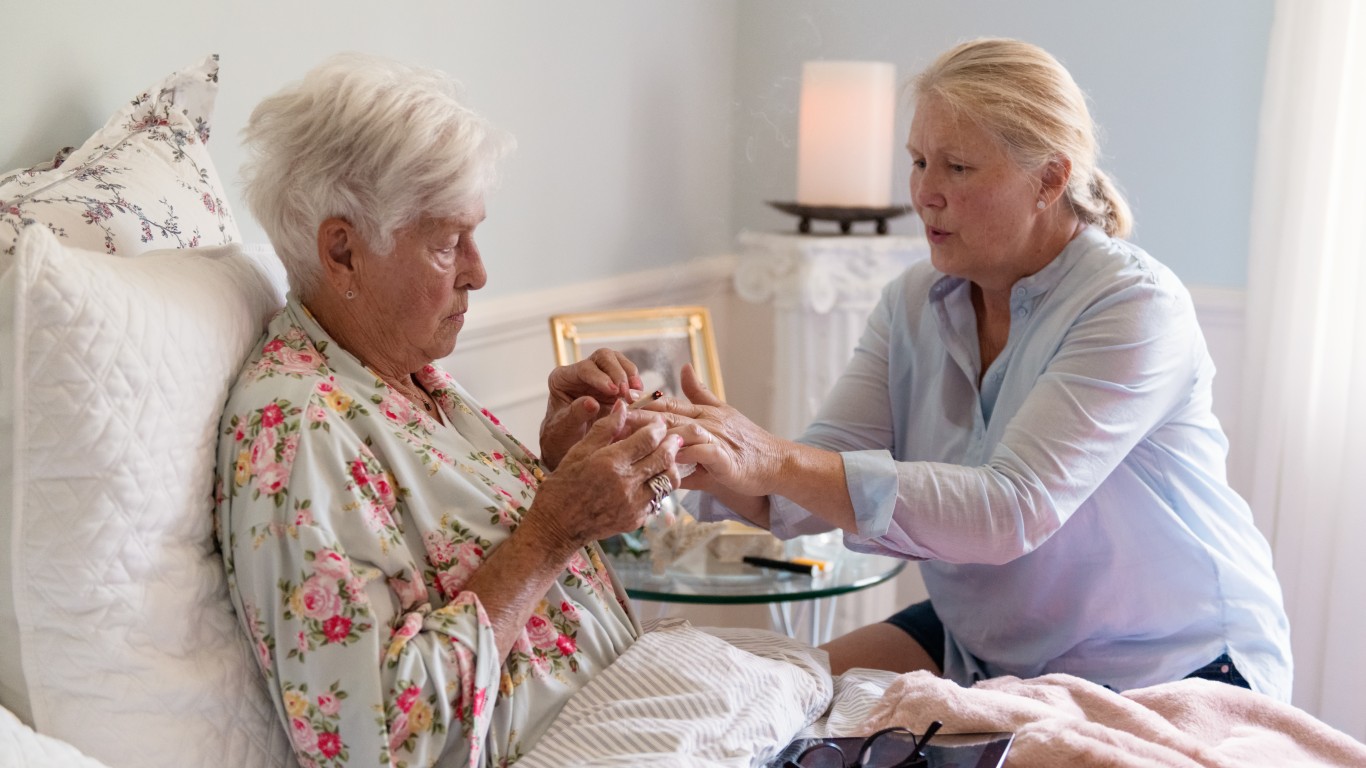
She did everything right on paper. A widow spends down to $1,900, falls within her state’s income limits for Medicaid and has a nursing home bed waiting at $10,800 a month. Her daughter arrives with the Medicaid application tabbed, stapled and color-coded. The financial gate looks open.
Then the state’s nurse watches her rise from a chair, runs through the assessment and reaches a different conclusion: she doesn’t need nursing-facility level care. Medicaid can approve the finances and still refuse to pay for the bed. Suddenly a woman with $1,900 left is staring at a $10,800 monthly bill.
Nursing Home Medicaid Has Two Gates, and Money Opens Only One
Long nursing home stays are covered by Medicaid, the joint federal and state program for people with limited income and assets. Short skilled rehab stays after a hospitalization are covered by Medicare, the federal health program for people 65 and older, and long-term custodial care falls to families and Medicaid. That split explains why so many families end up in Medicaid’s line.
Medicaid coverage of nursing facility care requires two separate approvals. The financial test asks whether she’s poor enough. The medical test, usually called the nursing facility level of care (NFLOC), asks whether she’s frail enough to need the kind of care such facilities actually provide: skilled nursing or medical care, rehabilitation, and long-term health-related care.
States write the medical definition themselves. Each state and the District of Columbia sets its own level-of-care criteria, so someone who qualifies in one state can fall short across the border. Adding to the uncertainty, even the name changes, as some states use other terms for the same test.
A separate federal screening called Preadmission Screening and Resident Review, or PASRR, applies to everyone seeking admission to a Medicaid-certified nursing facility. It screens for serious mental illness and intellectual disability, with further evaluation required when the screening raises either issue.
What the State’s Nurse Scores on Level of Care
The state nurse considers how much help she needs day to day, what medical care she requires and whether memory or judgment problems create safety risks. These factors typically include:
- How much help she needs with activities of daily living, such as bathing, dressing, eating, moving and toileting
- Frequent medical care, such as help with medications, shots or IVs
- Cognitive impairment from Alzheimer’s or another dementia, or trouble making decisions
- Behaviors that create safety risks, such as wandering or aggression
A doctor’s letter recommending nursing home placement helps. It rarely decides the question alone. The state’s assessor applies the state’s criteria, and a physician’s preference can lose to a tidy score sheet.
Here’s where the widow stumbles. She bathes with a grab bar, dresses slowly but on her own, and answers the orientation questions correctly on a good morning. The assessor concludes she can be served safely at a lower level of care. Her finances still qualify. The facility still bills $10,800 a month, and now nobody but the family pays it.
Building an Appeal File That Can Reverse a Level-of-Care Denial
A level-of-care denial arrives as a written notice, and applicants can request a fair hearing. The notice states the appeal deadline, which varies by state. Families who read it the day the envelope lands keep their options open. Families who let it sit on the counter can lose the right to challenge the decision.
Strong appeals swap the assessor’s snapshot for the full picture. The file typically includes:
- Hospital records, discharge summaries and diagnoses
- Physical and occupational therapy notes showing what she can’t do without help
- Logs of hands-on help with bathing, dressing, eating and toileting, kept by family or aides
- Every fall, near miss and episode of confusion, with dates
- Medication lists, plus who actually manages them
- The nursing facility’s own care plan and nursing notes
One assessment can’t capture every bad night or bathroom fall. A daughter who documents the wandering, confusion and hands-on help the nurse never saw gives the hearing officer a fuller picture than the assessment alone. Doctors help most when they spell out specific functional limits and safety risks instead of simply recommending nursing home care.
Ask the Level-of-Care Question Before the Last Dollar Goes
Spend-down planning obsesses over the financial gate: which assets count, what to spend, how to prepay a funeral. The medical gate gets ignored until the state’s nurse knocks. By then, the savings that could have bought months of home care or a lower-cost setting are gone.
Families who ask one question early change the math. Will she meet her state’s nursing home level of care when the money is gone? Answering it means talking with her doctor, the facility’s admissions nurse and a lawyer specializing in elder law while there’s still a buffer left. If the honest read on her condition is uncertain, the remaining dollars may work harder outside a $10,800 bed. If her needs clearly meet the standard, the family can spend down knowing the medical gate is less likely to become the surprise after the money is gone.
Contact [email protected] for any questions or corrections.
Gerelyn Terzo is the author of dividend investing handbook "Dividend Investing Strategies: How to Have Your Cake & Eat It Too." A veteran financial journalist, she covers agri-finance for outlets like Global AgInvesting and the broader stock market and personal finance for 24/7 Wall Street. She began at CNBC and later helped launch Fox Business in New York. Gerelyn currently resides in Woodland Park, Colorado and dabbles in nature photography as a hobby.