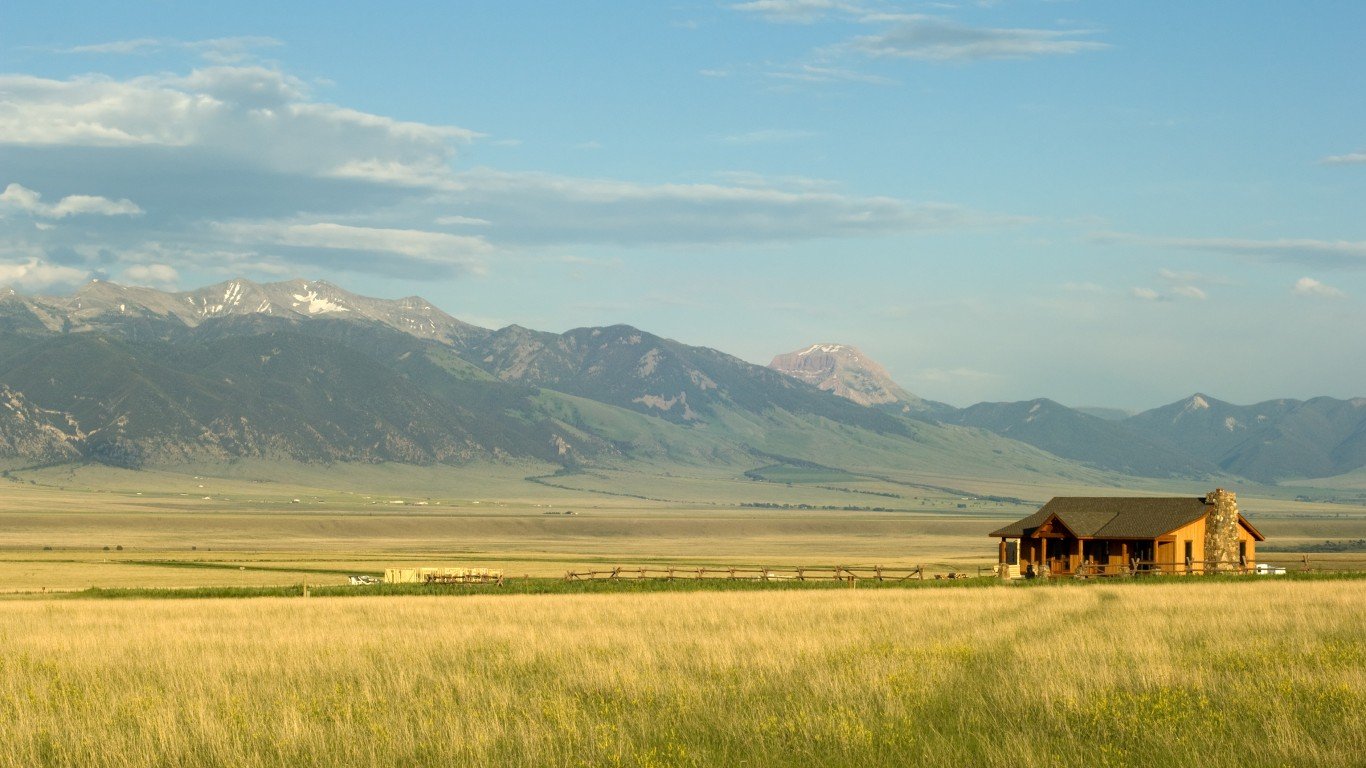
Montana’s Second-Home Tax Rate Is 1.90%. A Retiree Facing Nursing-Home Care May Have a Bigger Problem With the Property Itself
Montana cabin owners fixated on the higher second-home tax rate often miss a far costlier threat hiding in the fine print of nursing-home Medicaid, where a beloved family retreat can become the one asset that blocks benefits entirely.

This post may contain links from our sponsors and affiliates, and Flywheel Publishing may receive compensation for actions taken through them.
Montana’s Department of Revenue taxes second homes and short-term rentals at a flat 1.90% in 2026. A primary residence gets tiered rates that start at 0.76% on the first $378,000 of market value. Cabin owners noticed the gap right away.
For an owner who later needs institutional care, the bigger risk is Medicaid’s home exclusion. That rule shields the house you live in, and a cabin you only visit usually falls outside it. When the owner applies for nursing-home Medicaid, the cabin can count as a resource, and the resource limits are small enough to fit in a checking account.
A Cabin Owner Fixated on the 1.90% Bill
Picture a widow who lives in her paid-off house and keeps a family cabin in the mountains. In 2026 she complains about the higher rate and thinks about renting the place out. The property tax feels like her biggest problem.
Years later a stroke lands her in a care facility. The federal health insurance she’s carried since 65, Medicare, covers skilled nursing care for a limited stretch: days 21 to 100 cost $217 each day in 2026, and from day 101 she pays all costs. Medicaid is a separate program run jointly by the states and the federal government, and it pays for ongoing custodial care only after an applicant’s countable assets fall below a limit.
Her cabin has also grown in value. FHFA’s House Price Index shows prices in the Bozeman metro up 42.32% and Great Falls up 54.45% over the five years through the second quarter of 2026.
Why the Cabin Fails the $2,000 Resource Test
Montana sets a $2,000 resource limit for an unmarried nursing-home Medicaid applicant. The home she actually lives in can receive special protection, but the state excludes only one principal residence.
Her mountain cabin doesn’t get that treatment simply because she owns it. Unless another exemption applies, its equity can count toward the $2,000 ceiling. A second home worth a few hundred thousand dollars can therefore block an application almost by itself.
That creates an odd contrast. The cabin may be difficult to sell and produce little or no income, yet Medicaid can still see a valuable asset sitting outside the protected home.
No Buyer Yet? The Cabin Still Counts
An unsold cabin doesn’t automatically become harmless, but Montana does give some applicants breathing room when they’re genuinely trying to sell excess real estate.
Someone who otherwise qualifies and keeps liquid resources under the Medicaid limit can sign an agreement to sell the property at its current market value. Montana can provide conditional Medicaid for up to 12 months while the property is on the market, with repayment due from the sale proceeds.
The family has to show that the property is really for sale, not merely waiting for the perfect offer. If the cabin still hasn’t sold after 12 months, continued reasonable efforts to find a buyer can matter to whether Medicaid keeps excluding it.
That makes documentation important. Listing agreements, price reductions, rejected offers and correspondence with a real estate agent can all show that the family is trying to turn the cabin into cash instead of simply holding onto it.
Giving the Cabin Triggers the 60-Month Look-Back
Families may see another possible escape route: turn the cabin into a rental and call it income-producing property.
Montana does treat property used in a genuine business differently, but simply listing a cabin on Airbnb for a few weekends doesn’t automatically make it exempt. The owner generally has to be actively involved in the business, while other income-producing property has to meet the state’s rules for how much return it generates compared with its value.
That means occasional rental income may not solve the Medicaid problem. The family still needs to know whether Montana sees the cabin as a business asset, qualifying income-producing property or simply a valuable second home that happens to bring in some rent.
The 1.90% tax bill shows up every year, and she can see it coming. No warning comes from the look-back period. Families who decide the cabin’s future well before a health crisis get to choose who ends up with it (titling, trusts, and beneficiary paperwork are the whole subject of our free estate checklist: Die With a Plan). Families who wait often watch the nursing home’s bills eat up its value one month at a time.
Contact [email protected] for any questions or corrections.
Gerelyn Terzo is the author of dividend investing handbook "Dividend Investing Strategies: How to Have Your Cake & Eat It Too." A veteran financial journalist, she covers agri-finance for outlets like Global AgInvesting and the broader stock market and personal finance for 24/7 Wall Street. She began at CNBC and later helped launch Fox Business in New York. Gerelyn currently resides in Woodland Park, Colorado and dabbles in nature photography as a hobby.