What Dave Ramsey Told a Caller Whose $1 Million in Student Loans Costs More Interest Than a Typical Paycheck

This post may contain links from our sponsors and affiliates, and Flywheel Publishing may receive compensation for actions taken through them.

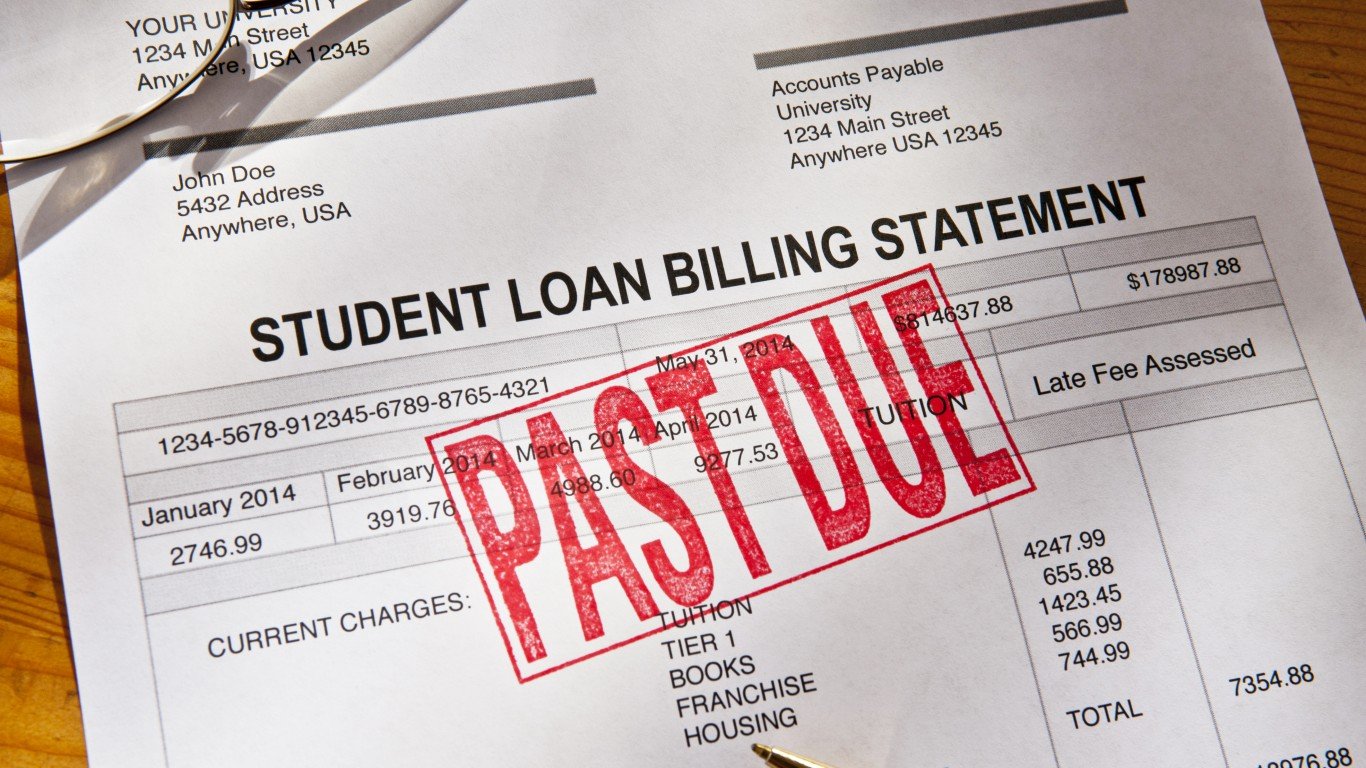
One caller on The Ramsey Show summed up a financial emergency in one sentence. Dave Ramsey, the debt-free radio host, posted it to his X account on November 18, 2026: “I have $1,000,000 in student loans and the interest alone is about $5,800 a month.”
The caller’s interest bill alone is larger than a typical American paycheck. The Bureau of Labor Statistics reports median usual weekly earnings for full-time workers at $1,232 in the third quarter of 2026. That works out to roughly $5,339 a month before taxes. The caller’s interest runs about $461 more than that every month, and none of it cuts what the caller owes.
The post came out as the national numbers got worse. Student loan serious delinquencies rose to 11% in the third quarter. That is the highest level since Q4 2019 and the fourth straight quarterly increase. CNBC’s Steve Liesman quoted the same figure when the New York Fed data came out. This caller is an extreme case of a problem that is spreading across borrowers.
Ramsey’s Hard Line on Student Loans Holds Up
The post’s text doesn’t give the caller’s profession, the loan type, or Ramsey’s reply. So the fair test is Ramsey’s standing position, which he repeats often. In September he told listeners: “Word of warning to the 30 million of you listening. That’s what a parent plus loan is. Don’t do student loans. Really don’t do parent plus loans.”
In June, he pressed a medical resident to stop making minimum payments: “If you tinker around with these student loans, you end up keeping them like you think they’re a pet. You look up 15 years later and your student loan needs a shave.”
For a balance this size, he’s right. Interest of $5,800 a month on $1,000,000 means a rate near 7%. That comes to about $69,600 a year. Each payment covers that month’s interest first, and only what’s left over reduces the balance. Lenders call this amortization, and it explains why small payments go nowhere.
The table below is an example. It assumes a fixed 7% rate and no new borrowing.
| Monthly Payment | Years to Pay Off | Total Paid |
|---|---|---|
| $6,000 | About 49 | About $3.5 million |
| $10,000 | 12.5 | $1.5 million |
| $15,000 | About 7 | About $1.3 million |
At $6,000 a month, only $200 of the first payment goes toward the loan itself. The borrower pays for roughly half a century and sends about $3.5 million to retire a $1 million debt. Next to that, Ramsey’s “pet” line sounds mild.
One Number Decides Whether the Balance Ever Shrinks
The variable that matters most is the gap between your payment and your monthly interest. Call the monthly interest your interest line. Pay below it and the balance grows. Pay just above it and the balance barely changes, as the $6,000 row shows.
Once you pay well above the line, the timeline shrinks fast. Moving from $10,000 to $15,000 a month cuts the payoff from 12.5 years to about seven. Every extra dollar above the line goes straight to principal. That reduces next month’s interest, so more of the following payment goes to principal too.
Whether your loans are federal or private sets how much room you have. The Consumer Financial Protection Bureau notes that federal loans generally offer more protections and more flexibility, including repayment based on income and certain discharges. Income-based plans can keep a payment affordable. But if that payment sits below your interest line, the balance keeps growing. Ramsey doubts forgiveness programs will save borrowers, telling a group of attorneys that “5% of the people get through that gauntlet, 95% don’t.”
Find Your Interest Line This Week
- Calculate your monthly interest. For each loan, multiply the balance by the interest rate and divide by 12. Add the results. That total is the amount you must pay each month just to keep the balance from growing.
- Compare it to what you actually pay. If your payment is at or below that total, your debt is standing still or growing. Log into your servicer account or StudentAid.gov to confirm each loan’s rate and whether it is federal or private.
- Price out a larger payment. Plug your balance and rate into the Loan Simulator on StudentAid.gov or any amortization calculator. Run your current payment, then a payment a few hundred dollars higher, and compare total interest paid.
- Stress-test any forgiveness plan. For any plan that depends on forgiveness, write down the exact program, how many qualifying payments you have made and what happens to your balance if you don’t qualify. Then decide whether it’s worth the risk.
Running those four steps takes about 10 minutes, and the result tells you whether your current payment will ever clear the debt.
Contact [email protected] for any questions or corrections.
Jake has been been working in financial media for almost 15 years. He focuses on all things personal finance for 24/7 Wall St. with high hopes to educate and entertain. Most recently, Jake spent 12 years working various roles at The Motley Fool. He started copy editing fool.com content, worked on premium and marketing campaigns, and helped launch The Ascent, a personal finance brand.
His work has been featured on platforms like MSN, Yahoo Finance, USA Today, and more. He's written about credit cards, social security, ETFs, savings accounts, and just about anything else you can imagine when thinking about money. Jake love to cook, play golf, and tell people he's never had a cavity. (It's true!)