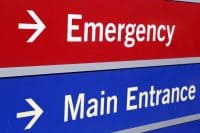
She Tastes Chemicals in the Thanksgiving Whipped Cream and Spends 3 Nights in the Hospital Under “Observation,” Leaving Her Without Medicare Rehab Coverage and Facing a $9,450 Bill

This post may contain links from our sponsors and affiliates, and Flywheel Publishing may receive compensation for actions taken through them.

One batch of Kirkland Signature Real Heavy Whipped Cream, made by Alamance Foods and sold at Costco (NASDAQ:COST | COST Price Prediction) from Oct. 11-31 in 12 states, was voluntarily recalled after members reported a chemical smell and taste. The company reports no serious adverse effects requiring medical care. But with the Thanksgiving holiday just around the corner, the timing couldn’t be worse.
Now take a hypothetical case. A 78-year-old widow tastes something off on her Thanksgiving pie, gets sick through the night, turns dizzy from dehydration and falls in her bathroom. The ER keeps her three nights: IV fluids, a wristband, meals on a tray. She goes home too weak to walk safely, and her doctor orders two to three weeks of rehab at a skilled nursing facility.
Then the facility’s billing office calls. She was never admitted. The hospital classified all three nights as “observation,” and Medicare will not pay for her rehab.
Under Original Medicare, with or without a Medigap policy, this rule reaches you every time you land in a hospital bed. With a Medicare Advantage plan, look up the skilled nursing section of your plan’s Evidence of Coverage, because many Advantage plans set their own admission rules.
Why Three Nights in a Hospital Bed Can Count as Zero Days
Part A pays for skilled nursing care only after three consecutive days as a formally admitted inpatient. Hospitals bill observation as outpatient care under Part B, even when you sleep there. That requirement counts only inpatient days, so a patient can spend three nights in the same bed, on the same floor, getting the same treatment, and leave with zero qualifying days.
Nothing on the wristband tells you which status you hold. The hospital decides, and most patients learn the answer from a rehab bill.
One Rehab Stay, Two Very Different Bills
With a qualifying inpatient stay, Medicare pays the full cost of days one through 20 in a skilled nursing facility. For days 21 through 100, you owe $217.00 per day in 2026. Without one, you owe the facility’s full daily rate. Using an example rate of $450 per day (actual rates vary by facility and region), here is a 21-day stay:
| Out-of-pocket cost, Original Medicare only | Days 1-20 | Day 21 | Total, 21 days |
|---|---|---|---|
| After 3 inpatient days | $0 | $217 | $217 |
| After 3 observation nights (example rate) | $450 per day | $450 | $9,450 |
Medigap does not rescue her. Plan G covers skilled nursing coinsurance only when Medicare covers the stay first. When Medicare denies, the supplement pays nothing. Her $217 would have dropped to $0 with Plan G, while the $9,450 stays exactly where it is.
Look at the other side of the threshold, too. Had the hospital admitted her, she would have owed the $1,736 Part A inpatient deductible for 2026. Under observation, she instead pays 20% coinsurance on each outpatient service after the $283 Part B deductible. The hospital portion can look cheaper under observation, and that is why patients rarely push back. The rehab bill that follows is where the real cost lands.
Costs rise again in January. For 2027, the Centers for Medicare & Medicaid Services (CMS) set skilled nursing coinsurance at $222[1] per day and the Part B deductible at $292.
Three Moves That Protect Your Rehab Coverage
- Ask about your status on day one, in writing. Ask the nurse and the attending physician: “Am I an inpatient, or an outpatient under observation?” The hospital must give observation patients a Medicare Outpatient Observation Notice (Form CMS-10611). If you get one, ask the physician whether your condition meets inpatient criteria and request a formal inpatient order. Write down names and times. A doctor’s order sets your status, and the first midnight is the time to raise it.
- Appeal before you leave if the hospital admitted you and then switched you. Since 11 October 2024, a patient reclassified from inpatient to observation can appeal if they stayed 3 or more days in a row but were an inpatient for fewer than 3 of those days. The hospital must deliver the Medicare Change of Status Notice (Form CMS-10868) no later than 4 hours before you are released. Call the Beneficiary and Family Centered Care Quality Improvement Organization listed on it before you walk out. Patients held under observation from the start have no appeal right under this rule, and the one-time window for older stays closed on January 2 2026, per CMS.
- Ask for home health care before signing a facility admission agreement. If you leave under observation and are homebound, Medicare home health coverage requires no prior hospital stay. Ask your doctor to order home physical therapy before you sign anything that makes you privately liable for a $450-a-day bed.
Washington has noticed the gap. A bill reported in June 2026 proposes counting observation stays toward skilled nursing eligibility. Until Congress passes it, the three-day inpatient rule stands, and one question at the bedside decides whether your rehab costs you $217 or $9,450. Observation status is part of a set of Medicare traps that catch retirees by surprise, and we covered the rest in a free guide to Medicare’s hidden bills.
Contact [email protected] for any questions or corrections.
Gerelyn Terzo is the author of dividend investing handbook "Dividend Investing Strategies: How to Have Your Cake & Eat It Too." A veteran financial journalist, she covers agri-finance for outlets like Global AgInvesting and the broader stock market and personal finance for 24/7 Wall Street. She began at CNBC and later helped launch Fox Business in New York. Gerelyn currently resides in Woodland Park, Colorado and dabbles in nature photography as a hobby.