The Fed Raised Rates Again. Here’s What That Actually Means for Your Savings Account
The Fed just handed savers a win, but most bank accounts will never see a dollar of it. Here is who actually captures a rate hike and who quietly funds everyone else's gain.

This post may contain links from our sponsors and affiliates, and Flywheel Publishing may receive compensation for actions taken through them.
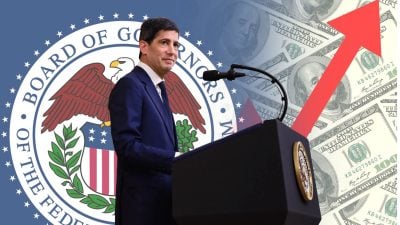
In September, the Fed raised its benchmark rate by a quarter point, lifting the upper bound of the federal funds target range to 4.00% from 3.75%. That was still the level as of September 28, 2026. For savers, and especially for retirees who live partly on cash, a rate hike works in your favor. Your bank still decides when you see any of it, and whether you see it at all.
What Changed at the September Fed Meeting
The Fed voted unanimously for a 25 basis point increase, its first hike in three years, according to Marketplace. The new upper bound took effect on September 17, 2026. Fed Chair Kevin Warsh indicated more work ahead to bring inflation down after more than five years above target. Heading into the meeting, the CPI reading was estimated at 3.4% annually, against the Fed’s 2% target.
Reporting since the meeting points toward possible further tightening. Marketplace reported that Fed bank presidents are indicated continued caution, with market expectations for at least one more rate increase before year-end. Bloomberg reported that key U.S. data this week is seen bolstering the case for an October rate hike. Those are expectations. The Fed decides meeting by meeting.
Most savings advice online was written for a falling-rate world. Over the past year, the upper bound sat as high as 4.25% in October 2025 before sliding to 3.75%. Guidance built for that cycle told savers to lock in yields before they disappeared, but with rates moving up, flexibility carries more value, because a variable savings rate can rise alongside the Fed.
Why Your Bank Didn’t Raise Your Rate the Next Morning
Banks set their own savings rates. The Fed moves the overnight rate banks charge each other, and every other rate in the economy responds on its own schedule. Economists measure that response with a term called deposit beta.
Deposit beta is the share of a Fed move a bank passes along to savers. A beta near 1 means the bank hands over almost the entire increase. A beta near zero means your rate barely budges. Banks tend to raise loan rates quickly and deposit rates slowly, because every increase in your savings rate comes out of their profit margin.
Here is an simple example. After a quarter-point hike, a low-beta bank might leave its savings rate unchanged for months, while a high-beta online bank might pass along most of the increase within a few weeks. Two savers with identical balances end up earning very different amounts from the same Fed decision, and the saver who never checks is the one who funds the difference.
Online Banks Move First for a Reason
Large branch networks compete on convenience. Customers keep checking and savings there because the ATM is on the corner and the mortgage is at the same bank. Those deposits rarely leave, so the bank has little reason to pay up for them.
Online-only banks lack that loyalty. They win deposits by paying more, and lower overhead lets them do it. That makes them faster to pass along increases, and also faster to trim rates when the Fed cuts.
Market benchmarks show how wide the gap can run. The FDIC national average for a 12-month CD was 1.73% APY as of September 1, 2026. That average is dragged down by banks paying little, and top online banks often pay 3-5x this. Treasury bills set another reference point.
On September 28, 2026, the 4-week bill yielded 3.96% and the 52-week bill yielded 4.54%, and yields rose across every listed tenor from the prior reading. A competitive high-yield savings account generally lands in the neighborhood of short-term Treasury yields. An account paying a small fraction of that is trailing the market.
Kate Ashford is the lead wealth writer at NerdWallet. She told CBS News Philadelphia, “If you are saving or you have savings, there’s a real opportunity to make more money on that now.”
Once you know what a competitive rate looks like, the next step is seeing which accounts pay one today.
Four Checks Worth Doing This Week
- Look up your current rate. Log in and find the APY on the account you already hold. Most people have never looked. If the figure starts with a zero and a decimal point, your bank is keeping most of this rate cycle.
- Compare it with competitive online accounts. Use Treasury bill yields and the current offers from online banks as your benchmark. A gap of several percentage points on a retirement cash reserve adds up to real money every year.
- Make sure to confirm. FDIC or NCUA insurance. Banks should carry FDIC coverage and credit unions NCUA coverage, which protects up to $250,000 per depositor, per institution, per ownership category. Retirees with larger balances can spread money across institutions or ownership types.
- Rule out monthly fees and balance traps. A maintenance fee or a minimum-balance requirement can erase the interest you gain. Complaints to the CFPB about checking or savings accounts rose in 2025, and the most common issue was managing an account. Read the fee schedule before you move money, and keep the old account open until the transfer clears.
Pay Down Card Debt Before Chasing Yield
The average credit card APR was 20.94% as of May 2026, according to the Federal Reserve’s G.19 release. That stands above the 20% level the data defines as record territory. Card rates track the prime rate and follow Fed policy with a lag, so a hiking cycle tends to push them higher.
Compare that with a 52-week Treasury bill at 4.54%. That gap is wide. Every dollar that pays off a card balance earns a guaranteed return at the card’s rate, which no insured savings account comes close to matching. Keep a modest emergency reserve, then point extra cash at the debt.
Frequently Asked Questions
Will my savings rate rise automatically after a Fed hike?
Variable savings rates can rise, but banks choose how much and how fast. Some pass along most of an increase within weeks. Others hold rates flat. Check your APY a month or two after each Fed decision.
Should I lock in a CD now or wait?
If more increases arrive, a CD opened today would miss them, while a savings account can adjust up. A CD makes sense for money you won’t need for a set term and when the offered rate is clearly competitive.
Are online-only banks safe for retirement cash?
An online bank with FDIC insurance carries the same federal deposit protection as a branch bank. Confirm the insurance on the FDIC or NCUA website before opening an account.
Are Treasury bills better than a high-yield savings account?
Treasury bills have different liquidity, tax, and access features than savings accounts. Bills lock money until maturity. Savings accounts allow withdrawals anytime. Many savers keep emergency money in savings and use bills for cash with a known timeline.
What happens to my rate if the Fed cuts later?
Variable savings rates tend to fall after cuts, and online banks usually move first in that direction too. Keep checking your rate on a schedule, whichever way the Fed moves.
Contact [email protected] for any questions or corrections.
Austin Smith is a financial publisher with over two decades of experience as an investor, analyst, and advisor. He covers stocks, ETFs, Artificial intelligence and personal finance for 24/7 Wall St. Previously, he spent over a decade at The Motley Fool as a senior editor for Fool.com, portfolio advisor for Millionacres, and launched The Ascent to help reader take control of their personal finances.
His work has been featured on Fool.com, NPR, CNBC, USA Today, Yahoo Finance, MSN, AOL, Marketwatch, and many other publications. He is as an advisor to private companies, and co-hosts The AI Investor Podcast with Eric Bleeker.
When not looking for investment opportunities, he can be found skiing, running, or playing soccer with his children. Learn more about Austin's investment approach here.