He Worked for Three Electrical Contractors and Paid Too Much Social Security Tax. The Refund Was Hiding on His 1040.
Three payroll departments all did their jobs correctly, and an electrician still ended up hundreds of dollars short by December. The reason has nothing to do with mistakes, and the fix is not where most workers think to look.

This post may contain links from our sponsors and affiliates, and Flywheel Publishing may receive compensation for actions taken through them.
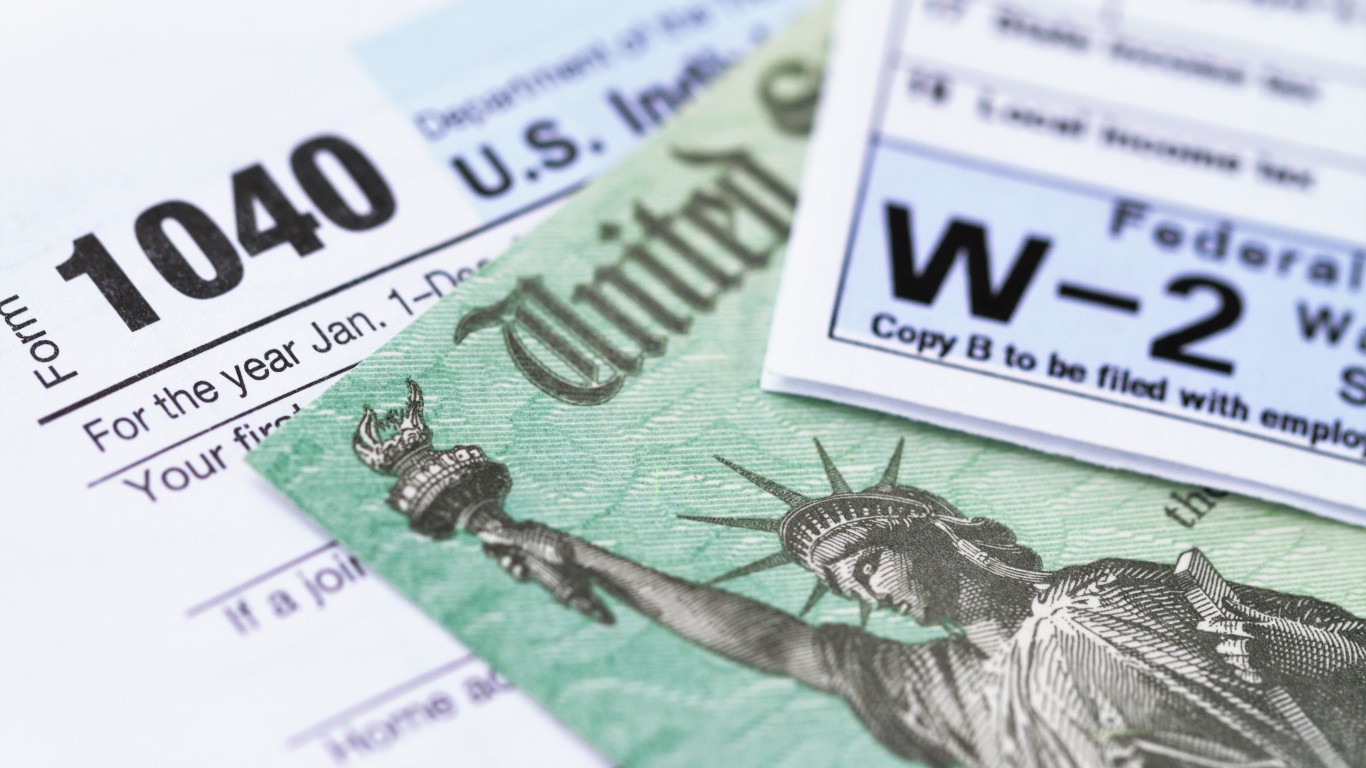
A journeyman electrician spent 2026 chasing work across state lines: three months on a data center build in Ohio, six months on a hospital retrofit in Texas, then a solar farm in Arizona. Three W-2s arrived in January, each showing Social Security tax withheld. Every payroll department got its calculation right. Added together, they still took $1,581 too much.
The skilled-trades shortage keeps experienced electricians moving between projects and contractors within a single year. That mobility can produce a tax overpayment hiding in plain sight, recoverable only if the worker claims it on the federal return.
How the Overpayment Happens
Social Security tax is collected at 6.2% on wages up to an annual maximum, called the wage base. For 2026, that maximum is $184,500, making the most an employee should pay $11,439. Once a worker crosses the threshold with one employer, that employer stops withholding Social Security tax for the remainder of the year. The process works cleanly with one job.
Multiple employers cannot coordinate their payroll records. Each starts its own withholding clock at zero because it does not know what the others paid. Contractor A withholds on its wages. Contractor B does the same. Contractor C does too. Combined earnings may cross the wage base months before the final project ends, but every payroll department continues withholding as if it were the worker’s only employer.
Suppose Contractor A paid $90,000, Contractor B paid $75,000, and Contractor C paid $45,000. Each amount sits below the $184,500 wage base, so every employer correctly withholds 6.2% on the full amount. Together, however, the wages reach $210,000. The three employers withhold $13,020 in Social Security tax, while the worker’s annual maximum is $11,439. The difference is a $1,581 credit waiting on his tax return.
The Refund Lives on the Tax Return
This is where workers often call the wrong place. Contractor A cannot refund excess tax created by wages Contractor B and Contractor C paid. No individual employer made an error. When excess withholding results from working for multiple employers, the worker claims it as a credit on the federal income tax return. Current IRS forms route the credit through Schedule 3 and onto Form 1040 as a payment, increasing the refund or reducing the balance due.
Tax software usually catches the overpayment after every W-2 has been entered. Usually is not always. The worker should still confirm that the excess Social Security tax appears on the completed return. A different rule applies if one employer alone withheld more than the annual maximum. In that case, the worker generally must ask that employer to correct the error and refund the excess.
Self-employment also changes the calculation. A worker with both W-2 wages and 1099 income cannot simply add the 1099 amount to the W-2 boxes. Social Security taxes on net self-employment earnings are calculated separately, with credit given for wages already subject to the tax.
What the Refund Does to His Future Benefit
Claiming the credit does not reduce his future Social Security check. The Social Security Administration credits earnings only up to the same annual wage base. Recovering tax withheld above that ceiling does not erase covered earnings or lower the benefit calculation.
Medicare tax is different. Its 1.45% employee tax has no annual wage ceiling, so the worker should not include Medicare tax from Box 6 when calculating this refund. The credit applies to excess Social Security tax in Box 4. For a tradesperson moving from project to project, $1,581 can refill emergency savings, cover an IRA contribution if eligible, or simply replace money that should never have left the paychecks.
What to Do Before Filing
Three checks can recover the money:
- Gather every W-2 and add the Social Security tax shown in Box 4. For 2026, compare the total with the $11,439 employee maximum.
- Enter every W-2 before reviewing the refund. Confirm that the excess appears as a credit on the completed federal return.
- Contact an employer only if that employer individually withheld more than the annual maximum. Overpayment created by multiple employers belongs on the tax return.
An amended return can recover a missed credit later, but catching it the first time is cleaner. The payroll departments may all have been right. The combined bill was still wrong, and the difference belongs to the worker.
Contact [email protected] for any questions or corrections.
Gerelyn Terzo is the author of dividend investing handbook "Dividend Investing Strategies: How to Have Your Cake & Eat It Too." A veteran financial journalist, she covers agri-finance for outlets like Global AgInvesting and the broader stock market and personal finance for 24/7 Wall Street. She began at CNBC and later helped launch Fox Business in New York. Gerelyn currently resides in Woodland Park, Colorado and dabbles in nature photography as a hobby.