He Was Paid $30,000 in Cattle. Social Security Counted $0 Toward His Benefit.
Taking part of your paycheck in livestock can shrink a retirement benefit that cash wages would have built, and most ranch workers never see it coming until they check a W-2 box that should not be empty.

This post may contain links from our sponsors and affiliates, and Flywheel Publishing may receive compensation for actions taken through them.
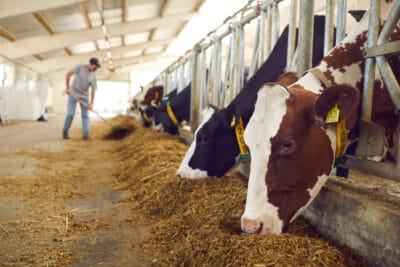
When Payday Comes With Hooves
A ranch hand agrees to receive part of his compensation in cattle. Along with his cash wages, the ranch transfers several identifiable animals worth $30,000. They are not a gift or a bonus he can ignore at tax time. They are taxable compensation. But the tax code treats that compensation differently depending on which tax is asking. The IRS counts the cattle as income. Social Security generally does not count them as covered wages.
The value appears in Box 1 of his W-2, where federal taxable wages are reported. It stays out of Box 3 and Box 5, the boxes used for Social Security and Medicare wages. He can owe income tax on $30,000 that adds nothing to the earnings record supporting his retirement benefit. Multiply that across a career and the missing wages become hard to ignore.
The Rule That Quietly Shrinks a Benefit
When an employee receives genuine noncash compensation for qualifying agricultural labor, its fair market value is taxable income but generally is not subject to Social Security or Medicare taxes. No FICA is withheld on that portion, and no covered earnings from it are added to the worker’s Social Security record. Social Security calculates a retirement benefit from the worker’s highest 35 years of indexed covered earnings. If someone spends 20 of those years taking a substantial share of pay in livestock, the benefit calculation reflects only the covered cash wages.
The distinction between earnings and credits matters. Cash wages may still be high enough to earn the worker’s four eligibility credits for the year. The cattle simply add nothing to the covered-earnings total used to calculate the eventual benefit. If the cash wages are too low, the exclusion can also slow the worker’s progress toward insured status.
The payroll-tax savings are immediate. On $30,000, the employee avoids $2,295 in Social Security and Medicare taxes, and the employer generally saves the same amount. But the worker may still owe federal income tax without having had income tax withheld from the cattle’s value. The first surprise can therefore arrive in April; the larger one can arrive at retirement. Lower covered earnings can affect more than a retirement check. They can also reduce disability and survivor protection tied to the worker’s record.
The Cattle Have to Become His Cattle
The exception depends on a real transfer, not livestock passing through the worker’s hands on the way to a buyer. The worker must receive identifiable cattle, exercise control over them, bear the risk of price changes, and decide when and how to sell. Documentation, ownership costs, and the time between transfer and sale all matter.
If the ranch immediately sells the cattle for the worker under a prearranged agreement, the transaction may be cash compensation dressed in boots. The IRS and SSA can treat it as ordinary wages subject to payroll taxes and creditable toward Social Security. The rule also applies to employees performing agricultural labor. A self-employed farmer, share farmer, contractor, or employee performing nonagricultural work may fall under different rules even when the payment itself comes from a farm.
The Trade Looks Different at 67
Commodity compensation can be valuable to someone who knows how to raise, hold, or sell livestock. It gives the ranch more room to preserve cash and gives the worker an asset that might appreciate. What it does not provide is Social Security insurance. The worker is accepting market risk, ownership costs, and an income-tax bill while surrendering the covered wages that cash compensation ordinarily produces.
Whether that trade is worthwhile depends on the worker’s full earnings history. Someone with 35 higher years already on the record may see little change. Someone with low-wage or zero years may give up far more. The same $30,000 can be nearly irrelevant to one retirement calculation and painfully visible in another.
What to Weigh Before You Say Yes to Cattle
Before counting the cattle as part of a fair paycheck, count what the arrangement leaves out.
- Confirm that the work qualifies as agricultural labor and that the cattle will be transferred under a genuine noncash arrangement. Ask the employer to explain in writing how the value will appear in Boxes 1, 3, and 5 of the W-2.
- Check the tax cash flow. Noncash agricultural wages generally are not subject to mandatory federal income tax withholding, even though they are taxable. The worker and employer can agree to withholding, or the worker may need estimated tax payments.
- Compare the W-2 with the Social Security earnings record every year. One excluded payment can matter if it replaces a zero year or affects insured status. Twenty years can reshape the benefit.
- Check federal and state wage laws separately. A favorable federal payroll-tax rule does not automatically mean an employer may satisfy every minimum-wage or wage-payment obligation with livestock.
Cattle can be legitimate compensation. But when Box 1 grows while Box 3 stands still, the worker is paying income tax today without buying Social Security protection for tomorrow. Payday came with hooves. The retirement record did not move.
Contact [email protected] for any questions or corrections.
Gerelyn Terzo is the author of dividend investing handbook "Dividend Investing Strategies: How to Have Your Cake & Eat It Too." A veteran financial journalist, she covers agri-finance for outlets like Global AgInvesting and the broader stock market and personal finance for 24/7 Wall Street. She began at CNBC and later helped launch Fox Business in New York. Gerelyn currently resides in Woodland Park, Colorado and dabbles in nature photography as a hobby.