She Taught for 30 Years Without Earning One Social Security Credit. Ten Years on the Bourbon Trail Got Her to 40
She spent thirty years in a classroom without earning a single Social Security credit, then took a part-time job pouring bourbon samples. What happened next rewrote her entire retirement picture.

This post may contain links from our sponsors and affiliates, and Flywheel Publishing may receive compensation for actions taken through them.
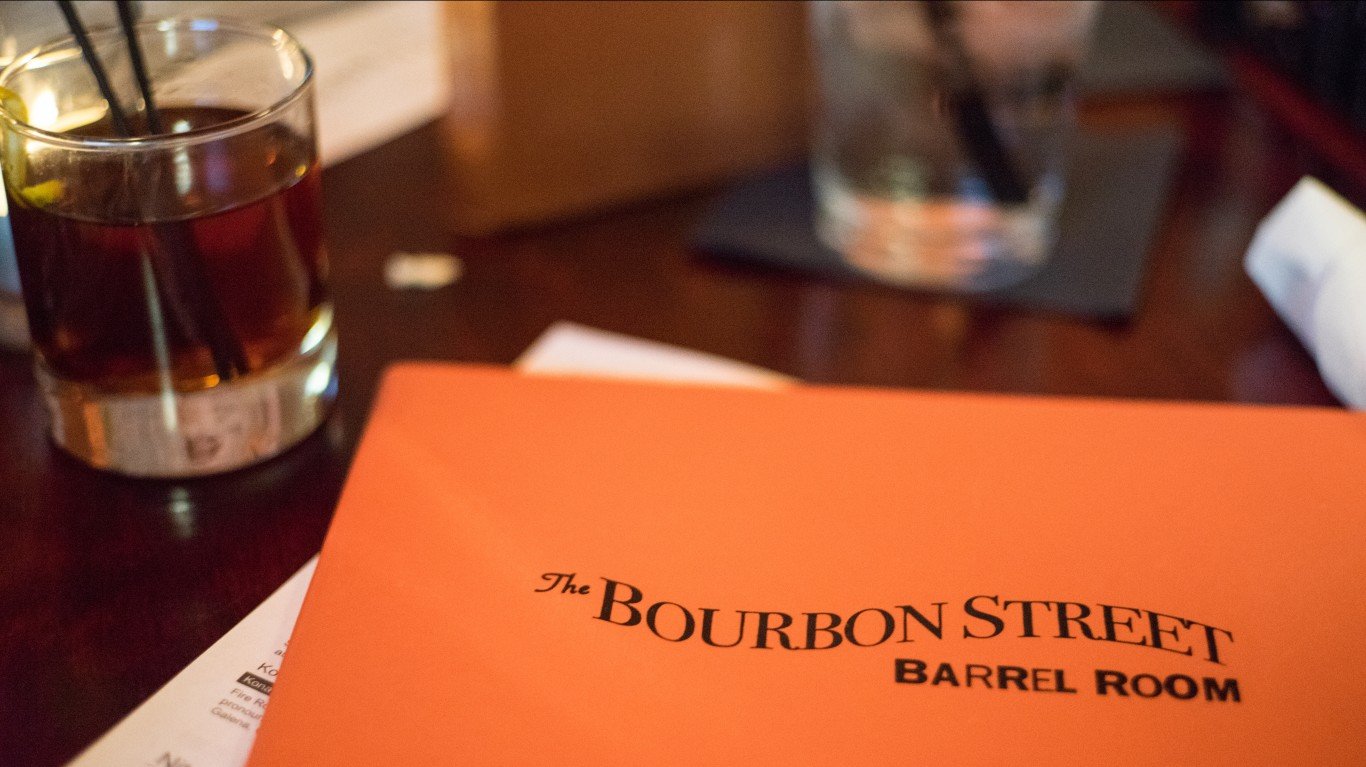
Picture a woman who spent more than three decades teaching in a state where public-school educators earn pensions outside the Social Security system. She retires in her early sixties, moves closer to family in Kentucky and takes a part-time job at a distillery along the bourbon tourism route. The Kentucky Bourbon Trail draws a large and growing crowd: more than 74% of its visitors travel from out of state, and distillers have a $3.55 billion capital investment underway across the commonwealth. For a retiree looking for steady, flexible work, the tasting room is a reasonable place to land.
Ten years later, she is still giving tours, running the tasting room and explaining what happens inside a charred oak barrel. Every one of those paychecks has Social Security tax withheld. Her classroom wages built a pension. Her distillery wages have been quietly building something separate. Once she reaches 40 credits, she qualifies for a Social Security retirement benefit of her own.
Four Credits at a Time
Workers generally need 40 credits to qualify for retirement benefits. In 2026, one credit requires $1,890 in covered earnings, and a worker can earn no more than four per year. Hitting that ceiling means earning $7,560 over the course of the year. Someone starting from zero therefore needs at least 10 years on a Social Security-covered payroll, with enough earnings each year to collect all four. For a part-time tasting-room worker, clearing $7,560 annually is achievable but worth tracking, because the credit threshold rises each year as average wages increase.
Her teaching career added nothing to that count because neither she nor the school system paid Social Security tax on her wages. The distillery job did. Credits determine whether she qualifies. They do not determine the size of her check. That amount comes from her covered earnings history, so a decade of part-time wages will produce a modest benefit. Modest, however, is not meaningless. It is a monthly payment of her own, adjusted for inflation, and 40 credits generally qualify her for premium-free Medicare Part A as well.
The Pension No Longer Takes a Cut
Under the old rules, the Windfall Elimination Provision could shrink the benefit she earned at the distillery because she also received a pension from work that Social Security did not cover. For someone with a small benefit to begin with, that reduction could take a painful bite. The Social Security Fairness Act of 2023 was signed into law on January 5, 2025. The repeal applies retroactively to benefits payable for months after December 2023, making January 2024 the effective start date. The Social Security Fairness Act repealed that rule, and her teacher pension no longer shrinks the retirement benefit she earned through covered work.
Implementation happened quickly after the signing. The SSA began adjusting monthly benefits on February 25, 2025, and completed distribution of retroactive lump-sum payments by July 2025. The repeal did not hand her a benefit. Ten years of distillery paychecks did that. The law simply stopped her pension from taking part of it away. Congress also repealed the Government Pension Offset, which had reduced or eliminated Social Security spousal and survivor benefits for many public workers with noncovered pensions. Under the old GPO formula, spousal or survivor benefits were reduced by $2 for every $3 of government pension income, wiping out benefits entirely for many teachers and other public employees whose pensions were substantial. If she is married or widowed, she should check whether that change opens another door.
The Tenth Year Changes the Conversation
Because she retired in her early sixties and then worked another decade, she may already be 70 or older when the 40th credit arrives. That changes the usual claiming advice. Social Security stops awarding delayed-retirement credits at 70. If she has reached that age and now qualifies, waiting longer will not earn her a larger check. Continuing at the distillery can still help if new wages raise her earnings average, but there is no advantage in leaving an eligible benefit unclaimed.
The benefit’s arrival also creates a tax question worth modeling in advance. The taxation of Social Security benefits depends on combined income, which includes adjusted gross income, nontaxable interest, and half of Social Security benefits. For 2026, the base amounts are unchanged from prior years: $25,000 and $34,000 for single filers, and $32,000 and $44,000 for married couples filing jointly. Pension income pushes her well into that calculation, so she should model the tax bill before counting the full new check as spendable. One piece of recent relief: the One Big Beautiful Budget Act did not repeal Social Security taxation, but it did add a temporary $6,000 senior deduction per person age 65 or older, available through 2028, which lowers taxable income and may soften the net impact.
Time to Check the Count
Two steps can turn a decade of pay stubs into the benefit she earned.
- Open her account at ssa.gov and confirm that every distillery year appears correctly and that the record shows 40 credits.
- If she is already 70, apply once eligibility is confirmed. If she is younger, compare the benefit available now with the larger amount she could receive by waiting.
The classroom built her pension. The tasting room built a second record, four credits at a time. Thanks to the repeal, one career no longer reaches across the bar to take from the other.
Editor’s note: This article was updated to reflect that the Social Security Fairness Act was signed on January 5, 2025, with the SSA completing retroactive lump-sum payments by July 2025; to add the $7,560 full-year earnings figure needed to capture all four annual credits; to include the 2026 federal combined-income thresholds ($25,000/$34,000 for single filers, $32,000/$44,000 for joint filers) that determine how much of a Social Security benefit may be taxable; and to note the temporary $6,000 senior deduction enacted through 2028 that can reduce taxable income for recipients age 65 and older.
Contact [email protected] for any questions or corrections.
Gerelyn Terzo is the author of dividend investing handbook "Dividend Investing Strategies: How to Have Your Cake & Eat It Too." A veteran financial journalist, she covers agri-finance for outlets like Global AgInvesting and the broader stock market and personal finance for 24/7 Wall Street. She began at CNBC and later helped launch Fox Business in New York. Gerelyn currently resides in Woodland Park, Colorado and dabbles in nature photography as a hobby.