He Took a $60,000 City Road Job With a Pension. Social Security Treated the Year Like He Never Worked.
A city road worker can spend a full year paving the same highways he always did, collect every paycheck and earn a pension credit every month, while Social Security records the entire year as if he never showed up for…

This post may contain links from our sponsors and affiliates, and Flywheel Publishing may receive compensation for actions taken through them.
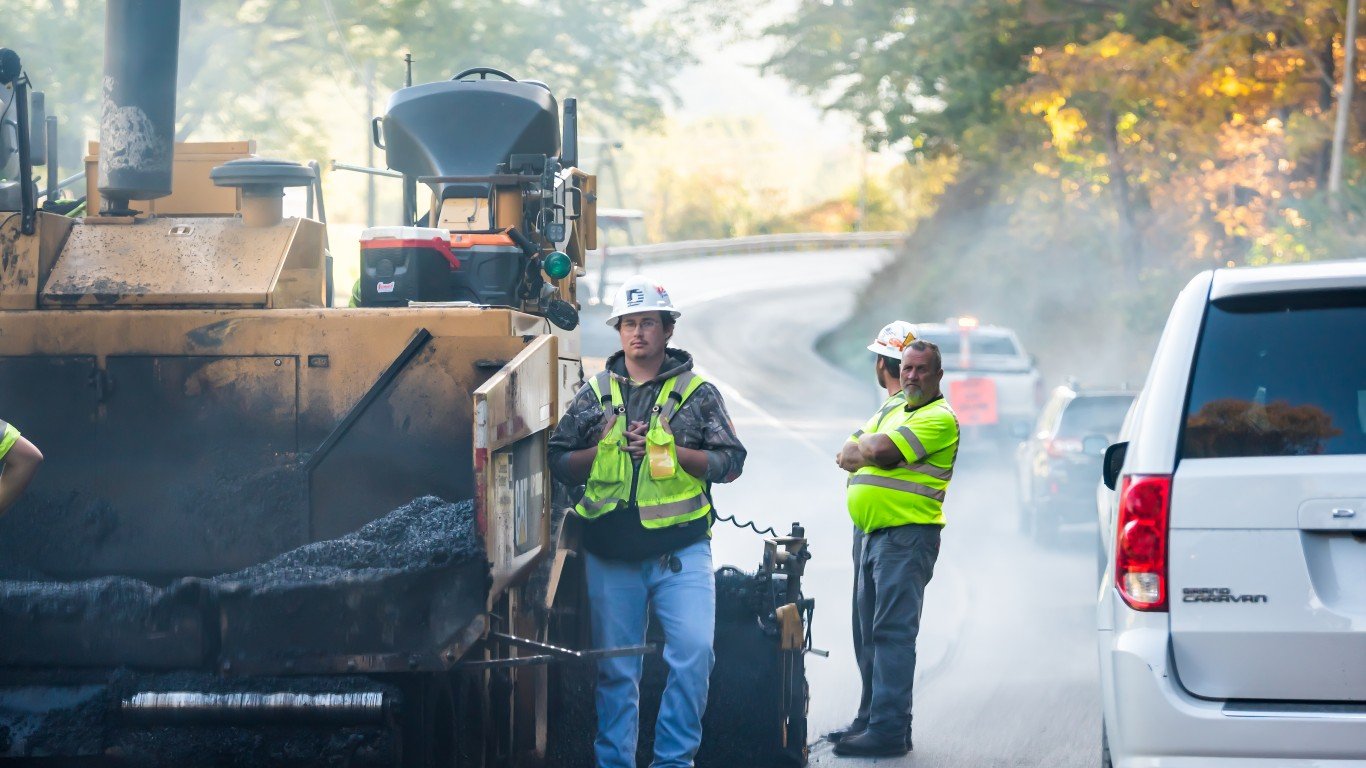
Same Asphalt, Different Paperwork
Picture a man who spent years running a paver for a private contractor on county highways. Then a city public works position opens with better hours, stable health coverage and a real pension. He takes it. The truck he climbs into looks almost identical. Some mornings he resurfaces the same road he paved two summers earlier. The work barely changes, but the first pay stub does. A pension contribution appears. The Social Security tax disappears.
At the end of the year, he earns $60,000 building city roads. His pension credits every month. His Social Security earnings record can show zero. Same asphalt, very different retirement math.
Who Gets Left Out
Most state and local government employees participate in Social Security, but a significant share do not. A 2023 Congressional Research Service analysis found roughly 22.9 million state and local government employees nationwide, with about 73% — or 16.7 million workers — holding Social Security coverage. That leaves nearly 6 million in positions outside the system. A worker cannot identify which category his job falls into from the title, uniform or equipment.
Coverage often turns on a legal arrangement called a Section 218 agreement. These voluntary federal-state contracts allow states to extend Social Security coverage to specific groups of state and local workers. They cover positions, not individual employees, and as of April 1983, they are irrevocable once signed. If a public works position falls within a Section 218 agreement, Social Security tax comes out of each paycheck and the wages enter the earnings record. If it does not, membership in a qualifying public retirement system can place the position outside Social Security entirely. Employees covered by neither arrangement generally must participate in Social Security. In this worker’s case, the pension is not sitting on top of Social Security. It is serving as the job’s entire retirement system.
What a Zero Does to the Record
A noncovered year does not earn Social Security credits or add wages to the retirement formula. In 2026, a worker earns one credit for each $1,890 of covered earnings, up to four credits for the year. The $60,000 city salary can earn none of them. That matters in two distinct ways.
First, a worker generally needs 40 credits to qualify for a retirement benefit on his own record. Someone who leaves private employment with 36 credits and spends the rest of his career in a noncovered city position can remain short despite working full time for years. Second, Social Security calculates the retirement benefit using the highest 35 years of indexed covered earnings. A long stretch of noncovered government work can insert zeros into that calculation if the worker does not have 35 covered years elsewhere in his history.
For someone who already has 40 credits and 35 strong covered years, one noncovered year may have little or no effect on the eventual benefit. For a worker with a shorter private-sector history, the same job change can reshape the benefit significantly.
Congress Removed the Penalty, Not the Blank Years
The Social Security Fairness Act, signed into law on January 5, 2025, eliminated the Windfall Elimination Provision and Government Pension Offset for monthly benefits payable after December 2023, applying the repeal retroactively to January 2024. Those two provisions had reduced Social Security benefits for millions of people receiving pensions from noncovered government work. According to the Congressional Research Service, about 3.2 million individuals had benefits reduced or eliminated by one or both provisions. The SSA began adjusting monthly payments in February 2025 and completed retroactive lump-sum payments to affected beneficiaries by July 2025.
The repeal was a meaningful win for those workers. A public pension no longer triggers those particular cuts to a worker’s own Social Security benefit or a spouse’s or survivor’s benefit. But Congress did not convert noncovered public wages into Social Security earnings. The $60,000 city salary still does not enter the worker’s record, earn credits or fill one of the 35 years used in the benefit calculation. The old rules could take away part of a benefit earned elsewhere. The new law stopped that. It did not give him credit for wages that were never covered in the first place.
Read the First Pay Stub, Not Just the Job Offer
Three quick checks can prevent a late-career surprise:
- Ask whether the specific position is covered by Social Security. “Benefits-eligible” and “includes a pension” do not answer that question.
- Read the first pay stub. Medicare tax without Social Security tax can signal a Medicare-only public position.
- Review the Social Security Statement each year. Investigate missing covered wages while payroll records are still easy to find.
If the position is properly noncovered, the zero is not an error Social Security can repair. The pension credited every month he spent on the road crew. The pavement was the same. The retirement record underneath it was not.
Editor’s note: This article was updated to include Congressional Research Service data showing approximately 73% of state and local government employees hold Social Security coverage, as well as details on the Social Security Fairness Act’s January 5, 2025 signing date, the roughly 3.2 million beneficiaries affected by WEP and GPO, and the SSA’s completion of retroactive lump-sum payments by July 2025.
Contact [email protected] for any questions or corrections.
Gerelyn Terzo is the author of dividend investing handbook "Dividend Investing Strategies: How to Have Your Cake & Eat It Too." A veteran financial journalist, she covers agri-finance for outlets like Global AgInvesting and the broader stock market and personal finance for 24/7 Wall Street. She began at CNBC and later helped launch Fox Business in New York. Gerelyn currently resides in Woodland Park, Colorado and dabbles in nature photography as a hobby.