Bond Yields Are Back Above 5%. “Tax-Free” Municipal Bond Interest Can Still Make More of Social Security Taxable
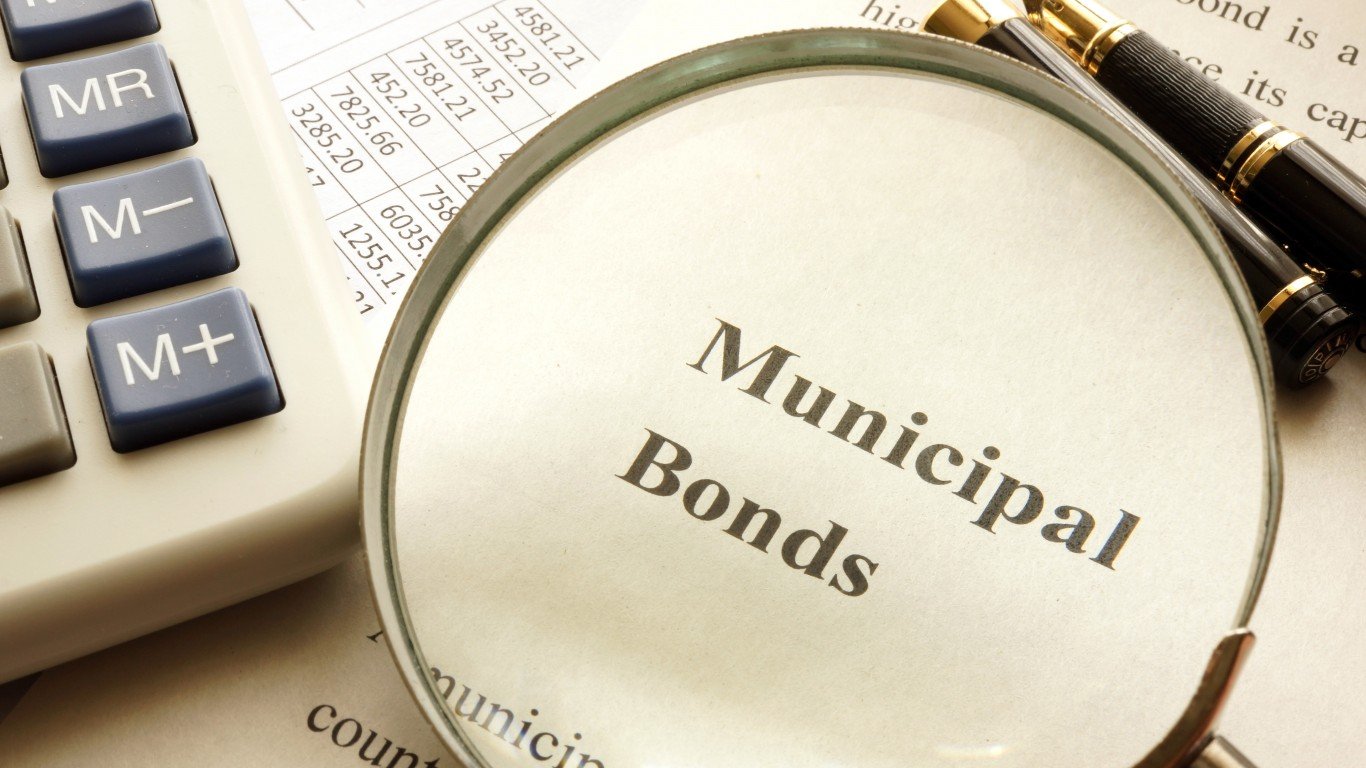
Municipal bond interest escapes federal income tax, but the IRS has a separate formula that pulls it back into Social Security calculations in a way most retirees never see coming.

This post may contain links from our sponsors and affiliates, and Flywheel Publishing may receive compensation for actions taken through them.

The 10-year Treasury yield has risen to about 5.2%, and the 20-year pays close to 5.6%. Retirees spent years making almost nothing on safe money, so this looks like a gift. The national average 12-month CD still pays only about 1.7%, making today’s long-term bond yields look especially attractive.
A single retiree named Linda moves part of her savings into municipal bonds because the interest is promoted as free of federal tax. She assumes the IRS will ignore it when calculating the taxable portion of her benefit.
That presumption is the problem. Municipal bond interest can stay free of federal income tax and still get added back into the formula that sets the taxable portion of her benefit.
Your Muni Interest Gets Its Own Line on the IRS Worksheet
The tax on benefits uses a special number called combined income: your adjusted gross income (AGI) plus your tax-exempt interest plus half your benefit.
A single filer starts owing tax on benefits once combined income goes above $25,000. Above $34,000, up to 85% in benefits becomes taxable. For married couples filing jointly, the two lines are $32,000 and $44,000. These thresholds don’t rise with inflation, so more retirees cross them every year.
Publication 915 has you enter taxable income on one line and tax-exempt interest on another, and the IRS names municipal bonds as an example. You add them together before comparing the total with the thresholds.
How $20,000 of Muni Interest Takes Linda From Zero to $13,850
Linda gets $30,000 a year from Social Security, so half of it is $15,000. She also has $10,000 of other taxable income. Without munis, her combined income is $25,000. That is exactly at the line, so none of her benefit is taxable.
Add $20,000 of municipal interest and her combined income rises to $45,000. Here is how the worksheet handles it:
- First tier: The $9,000 band between $25,000 and $34,000 is taxed at half, so $4,500 of her benefit becomes taxable.
- Second tier: She is $11,000 above $34,000, and 85% of that adds another $9,350.
- Cap check: The total can’t go above 85% of her benefit, which is $25,500. She is under that cap, so the full amount counts.
Now $13,850 of her Social Security, about 46% of it, counts as taxable income. The bond interest is still tax-exempt. The municipal interest simply caused more of her benefit to become taxable.
Once she is in the 85% phase-in range, every extra $1,000 of municipal interest can make another $850 of benefits taxable until she reaches the 85% cap. If she is in the 12% tax bracket, that can add about $102 in federal tax because of interest sold as tax-free. This is one of several quiet IRS rules that drain retirement accounts, and we mapped the rest in a free guide here. Whether her $13,850 leads to a tax bill depends on her deductions. In 2026 the standard deduction for single filers is $16,100, and people 65 and older get extra.
Higher Yields Help You Reach the Threshold With Less Money
At 5%, a $400,000 bond portfolio pays $20,000 a year. At 2%, you would need $1 million to get the same income. Muni yields don’t match Treasury yields, so treat these numbers as an illustration, but the rules still apply and when yields rise, a smaller portfolio can push you over the thresholds.
Treasuries reach the same result by another path, as their interest is taxed federally but exempt from state and local income tax. Muni interest is often free of federal tax but counts in combined income. Either way, your combined income rises. Compare yields after tax, including the effect on your Social Security, not just the promoted rate.
Cost-of-living raises push in the same direction. The 2027 increase is on track for 3.5%-3.6%. That raises the half-of-benefits piece of the formula, while the thresholds stay where they are.
Run This Test Before Moving Your Savings Into Munis
Fill out the worksheet twice: once with the municipal interest and once without it. The effect can be especially strong after combined income passes the second threshold but before 85% of benefits are already taxable. Once the 85% cap is reached, extra muni interest can’t make any more of the benefit taxable.
Also check whether your state exempts the bonds you’re buying. Then compare the after-tax yield with a Treasury or CD in the same account. Your pension, dividends and future required IRA withdrawals will change these numbers, so run them again each year before you move more of your money.
Contact [email protected] for any questions or corrections.
Gerelyn Terzo is the author of dividend investing handbook "Dividend Investing Strategies: How to Have Your Cake & Eat It Too." A veteran financial journalist, she covers agri-finance for outlets like Global AgInvesting and the broader stock market and personal finance for 24/7 Wall Street. She began at CNBC and later helped launch Fox Business in New York. Gerelyn currently resides in Woodland Park, Colorado and dabbles in nature photography as a hobby.