Miss an RMD and the IRS Penalty Is 25%. File Form 5329 With a Two-Paragraph Letter and the Agency Has Waived It for Nearly Everyone Who Has Asked
The IRS has a 25% penalty waiting for anyone who misses a required minimum distribution, but tax specialists report an almost unbroken track record of that charge disappearing when retirees follow a specific two-step process most people have never heard…

This post may contain links from our sponsors and affiliates, and Flywheel Publishing may receive compensation for actions taken through them.
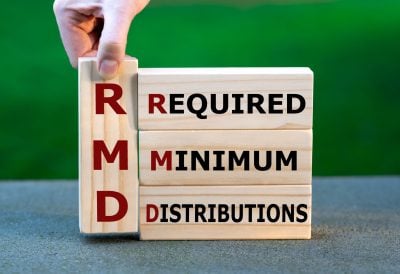
A 75-year-old widower spent late 2025 settling his wife’s estate. December 31 came and went, and his IRA’s required minimum distribution (RMD) never left the account. He found the miss in spring 2026 when his tax preparer asked for the Form 1099-R.
The tax code charges an excise tax of 25% of the amount owed. He can erase that charge with one IRS form, a short letter, and the withdrawal itself. The IRS has approved this request for years.
Section 4974 Charged 50% for Decades, and SECURE 2.0 Cut It to 25%
The penalty comes from Section 4974 of the Internal Revenue Code, which goes back to the 1974 pension law known as ERISA. For most of its life, it charged 50% of the shortfall. Suze Orman reminded her podcast listeners about that 50% hit in January 2023.
The SECURE 2.0 Act, passed Dec. 29, 2022, cut the penalty to 25%. It drops to 10% if you make up the shortfall within a correction window. That window generally runs to the end of the second year after the missed RMD, so a missed 2025 RMD can be corrected through December 31, 2027. Section 4974 also gives the IRS power to waive the tax entirely. The shortfall has to come from “reasonable error,” and you have to be taking “reasonable steps” to fix it.
What a $20,000 Missed RMD Actually Costs
Assumptions: The widower had $492,000 in his IRA on December 31, 2024. He turned 75 in 2025, giving him a Uniform Lifetime Table divisor of 24.6. He’s in the 22% federal bracket for 2025.
| Line item | Amount |
|---|---|
| 2025 RMD ($492,000 ÷ 24.6) | $20,000 |
| Income tax at 22% (owed either way) | $4,400 |
| Excise tax at 25% | $5,000 |
| Excise tax at 10% (corrected in window) | $2,000 |
| Excise tax with waiver granted | $0 |
He owes the $4,400 regardless. That’s income tax on the withdrawal. The penalty is what he can control. A granted waiver keeps the full $5,000 in his pocket.
How to Request the Waiver on Form 5329, Step by Step
- Take the missed distribution right away. Withdraw the full shortfall before asking for anything.
- Fill out Form 5329, Part IX, for the year you missed. Write “RC” and the amount of the shortfall you want waived on the specified line, then report zero tax due.
- Attach a two-paragraph letter. Paragraph one explains what went wrong. Reasons the IRS accepts include confusion over the RMD rules, medical issues, a death in the family or incorrect advice. Paragraph two gives the date and amount of your corrective withdrawal.
- File it. Send it with your 1040, or separately if you’ve already filed. Don’t pay the excise tax up front.
Why Nearly Every Waiver Request Has Been Approved
The IRS doesn’t publish approval rates, but practitioners report strong success. IRA specialist Ed Slott told Kiplinger in 2019 that he had never seen a penalty not waived when the person withdrew the money promptly and filed Form 5329. Planner Jeff Levine called a waiver “quite likely” as long as corrective steps are taken.
The IRS has also waived penalties in bulk. Many inherited-IRA beneficiaries under the 10-year rule got penalty relief for missed annual withdrawals through 2024. That broad relief is over: those beneficiaries had to start taking annual RMDs in 2025.
One catch: Slott wrote in InvestmentNews in 2023 that it’s unknown whether the IRS will stay as generous now that the penalty can fall to 10%. A clear, specific letter matters for more than it used to.
Three Mistakes That Can Sink a Waiver Request or Cost More Later
- Waiting. The waiver depends on reasonable steps to fix the error. A shortfall left sitting for years looks like neglect.
- Skipping the form. You request relief on Form 5329. Without it, the IRS has no request to consider.
- Missing the double-up. If he makes up his 2025 RMD in 2026, the extra $20,000 lands on top of his 2026 RMD on one return. Medicare looks back two years, so 2026 income sets 2028 premiums. Going $1 over an IRMAA tier reprices the whole year. If his state taxes IRA withdrawals, it taxes the catch-up distribution too. The 25% excise tax is federal only.
If you have an RMD due this year, December 31, 2026, is less than three months away. Set up an automatic withdrawal with your custodian to avoid writing the letter at all.
Contact [email protected] for any questions or corrections.
Vilma Rios is a tax professional and tax content contributor with more than 15 years of experience in tax and accounting. She specializes in federal tax research, tax education, and translating complex tax rules into clear, practical information for individuals, families, and small-business owners.
Vilma is a Content Tax Contributor II with the National Association of Tax Professionals (NATP), where she contributes to tax education and professional content. She has also presented tax information through webinars, including Spanish-language tax education, and has appeared on Telemundo 47 discussing tax topics and helping viewers understand important tax-filing requirements.
Her experience also includes tax and accounting work, tax research, IRS-related matters, and public tax education. While in college, Vilma volunteered in an IRS-sponsored tax assistance program and was recognized for her community service by local and state officials.
Known as “Your Tax Geek,” Vilma is passionate about making taxes easier to understand and helping people navigate an increasingly complex tax system.