America’s Wealthiest Politicians and the Sources of Their Fortunes
By definition, politicians should be public servants focused on governance rather than personal gain. But in the United States, many elected officials and political leaders have made enormous personal fortunes, some due to their political careers themselves. Some entered politics…

By definition, politicians should be public servants focused on governance rather than personal gain. But in the United States, many elected officials and political leaders have made enormous personal fortunes, some due to their political careers themselves. Some entered politics already wealthy through business, law, or family fortune, while others built their riches through investments, real estate, book deals, or post-political careers. Together, these political figures represent a powerful mix of money and influence at the highest levels of government.
In this article, we take a closer look at the richest politicians in America and how they made their money, looking at the industries, investments, and career paths that shaped their wealth. These real politicians’ stories highlight how financial success and political power often overlap and how personal fortunes can affect public perception, priorities, and policy decisions.
This list excludes figures such as Elon Musk, who, despite his wealth and political influence through donations and advisory roles, does not hold elected office.
We will be listing only elected officials—not appointed cabinet members, bureaucrats, military leaders, or others with unelected roles.
This post was updated on May 12, 2026.
Why It Matters

Understanding how wealthy politicians gain and maintain their fortunes offers important insight into transparency, accountability, and potential conflicts of interest. Extreme wealth can influence priorities and policymaking, raising questions about fair representation and justice in a democracy meant to serve all citizens. By examining where political money comes from, voters are better able to see whose interests may be driving decisions in Washington. As of 2026, new legislative pushes for transparency in litigation funding and the potential ban on individual stock trading for members of Congress have brought these personal fortunes back into the public spotlight.
10. Mark Warner
- Party: Democrat
- Office: Senator, Virginia
- Wealth: $215 million
Mark Warner has served in the Senate since 2009. He built his fortune as a venture capitalist at Columbia Capital and is currently among the richest members of Congress, and the wealthiest Democrat in Congress. He is known for his centrist political positions and bipartisan legislative approach.
9. Rick Scott
- Party: Republican
- Office: Senator, Florida
- Wealth: $300 million
Rick Scott has served as a U.S. Senator since 2019 and was previously the governor of Florida from 2011 to 2019. He founded Columbia Hospital Corporation, which became one of the largest for-profit healthcare companies in the country. After leaving the company, Scott entered venture capital and later pursued a political career.
8. Kevin Hern
- Party: Republican
- Office: Representative, Oklahoma
- Wealth: $361 million
Kevin Hern amassed his wealth through the acquisition and operation of McDonald’s franchises and other businesses. He has drawn scrutiny over delayed disclosures under the STOCK Act, a topic that remains a focal point of legislative debate in mid-2026.
7. Glenn Youngkin
- Party: Republican
- Office: Governor of Virginia
- Wealth: $400 million
Glenn Youngkin, elected governor in 2022, previously served as CEO of private equity firm The Carlyle Group. He has promoted conservative policies on issues such as education and tax regulation.
6. Jared Polis
- Party: Democrat
- Office: Governor of Colorado
- Wealth: $400 million
Jared Polis built his wealth by founding and selling internet and e-commerce companies in the 1990s and 2000s. He remains one of the wealthiest self-made tech entrepreneurs in executive government.
5. Darrell Issa
- Party: Republican
- Office: Representative, California
- Wealth: $500 million
Darrell Issa built his fortune by founding Directed Electronics, known for automotive security systems. Issa has also invested heavily in commercial real estate, which continues to form the bedrock of his personal wealth.
4. Jefferson Shreve
- Party: Republican
- Office: Representative, Indiana
- Wealth: $590 million
Jefferson Shreve entered the national political stage as one of the wealthiest freshmen members of Congress. He built his significant fortune in the storage industry, selling his company, Storage Express, for hundreds of millions of dollars before his 2024 election victory.
3. Jim Justice
- Party: Republican
- Office: Senator, West Virginia
- Wealth: $1.3 billion
Jim Justice, the former Governor and current Senator of West Virginia, is one of the few billionaires in the Senate. His wealth is primarily derived from his family’s coal and agriculture empire, which includes dozens of companies across the Appalachian region.
2. J.B. Pritzker
- Party: Democrat
- Office: Governor of Illinois
- Wealth: $3.5 billion
J.B. Pritzker is an heir to the Hyatt hotel fortune and a co-founder of Pritzker Group Private Equity. His net worth remains stable as he continues to lead Illinois with a focus on progressive economic reforms.
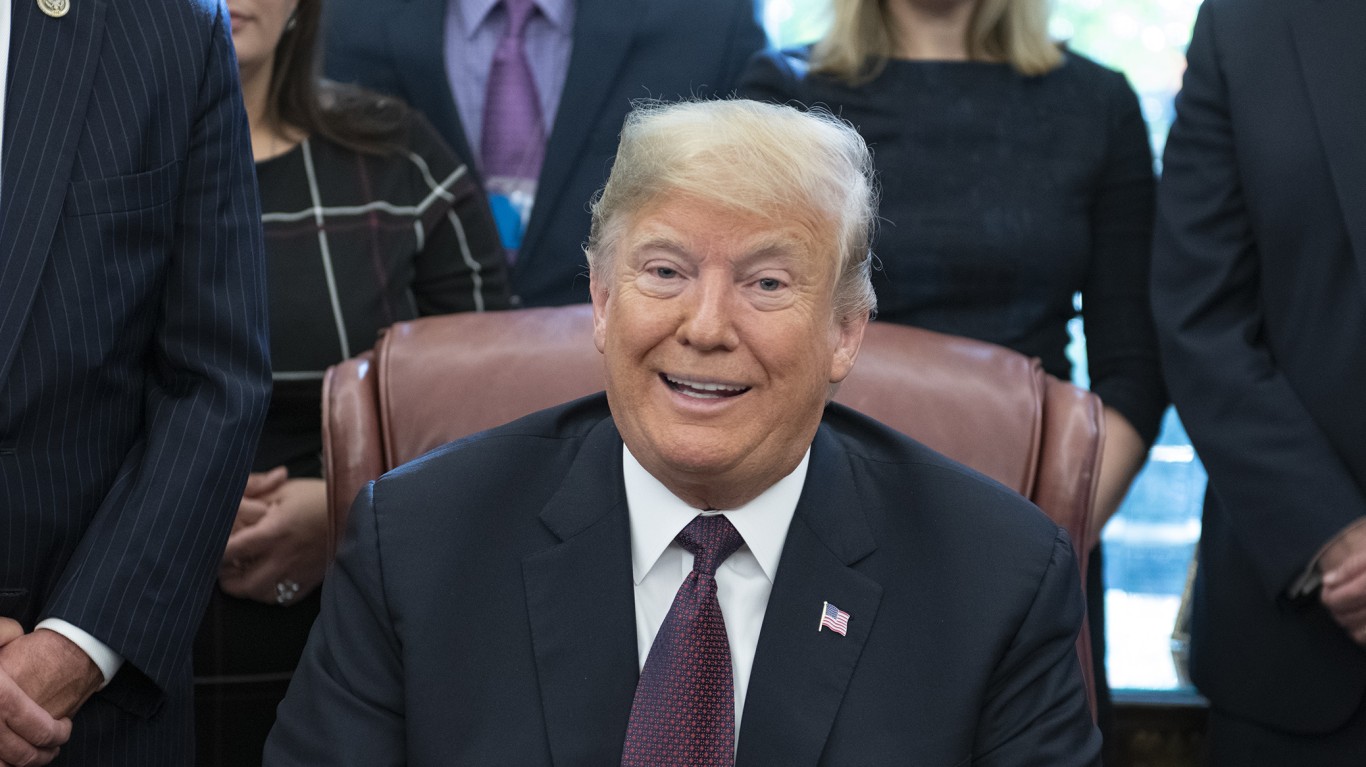
1. Donald Trump
- Party: Republican
- Office: President
- Wealth: $6.5 billion
Donald Trump’s net worth saw a significant uptick in 2025 and early 2026, largely attributed to the valuation of his media and technology ventures and digital assets. His wealth remains a central point of political discussion regarding the intersection of global business and the Presidency.
Editor’s Note: This article was significantly updated in May 2026 to include current Q1 financial disclosures and two new entries, Jefferson Shreve and Jim Justice, to reflect the current ranking of the wealthiest elected officials in the United States. Wealth estimates for several existing entries, including Donald Trump and J.B. Pritzker, have been adjusted to align with the latest market data and legislative transparency filings.
Contact [email protected] for any questions or corrections.
Aaron Webber is a veteran of the marketing, advertising, and publishing worlds. With over 15 years as a professional writer and editor, he has led branding and marketing initiatives for hundreds of companies ranging from local Chicago restaurants to international microchip manufacturers and banks. Aaron has launched new brands, managed corporate rebranding campaigns, and managed teams of writers in the education and branding agency industries. His experience extends to radio spots, mailers, websites, keynote presentations, TED talks, financial prospecti, launch decks, social media, and much more.
He is now a full-time freelance writer, editor, and branding consultant. Most of his work is spent ghost-writing for corporate executives, long-form articles, and advising smaller agencies on client projects.
Aaron’s work has been featured on INC.com and The Huffington Post. He has written for Fortune 100 companies and world-class brands. His extensive experience in C-suite ghostwriting has launched the personal branding initiatives of dozens of executives. He is a published fiction writer with publishing credits in science fiction, horror, and historical fiction.
Aaron graduated from Brigham Young University with a bachelor’s degree in macroeconomics, and is the owner and primary contributor of The Lost Explorers Club on www.lostexplorersclub.com. He spends his free time teaching breathwork and hosting healing ceremonies in his home.