Will Gap Close All Its Gap Stores?
In an age when e-commerce already has wrecked or nearly wrecked some of America's largest and most iconic retailers, decisions for brick-and-mortar retailers to retrench or close are ever more frequent.

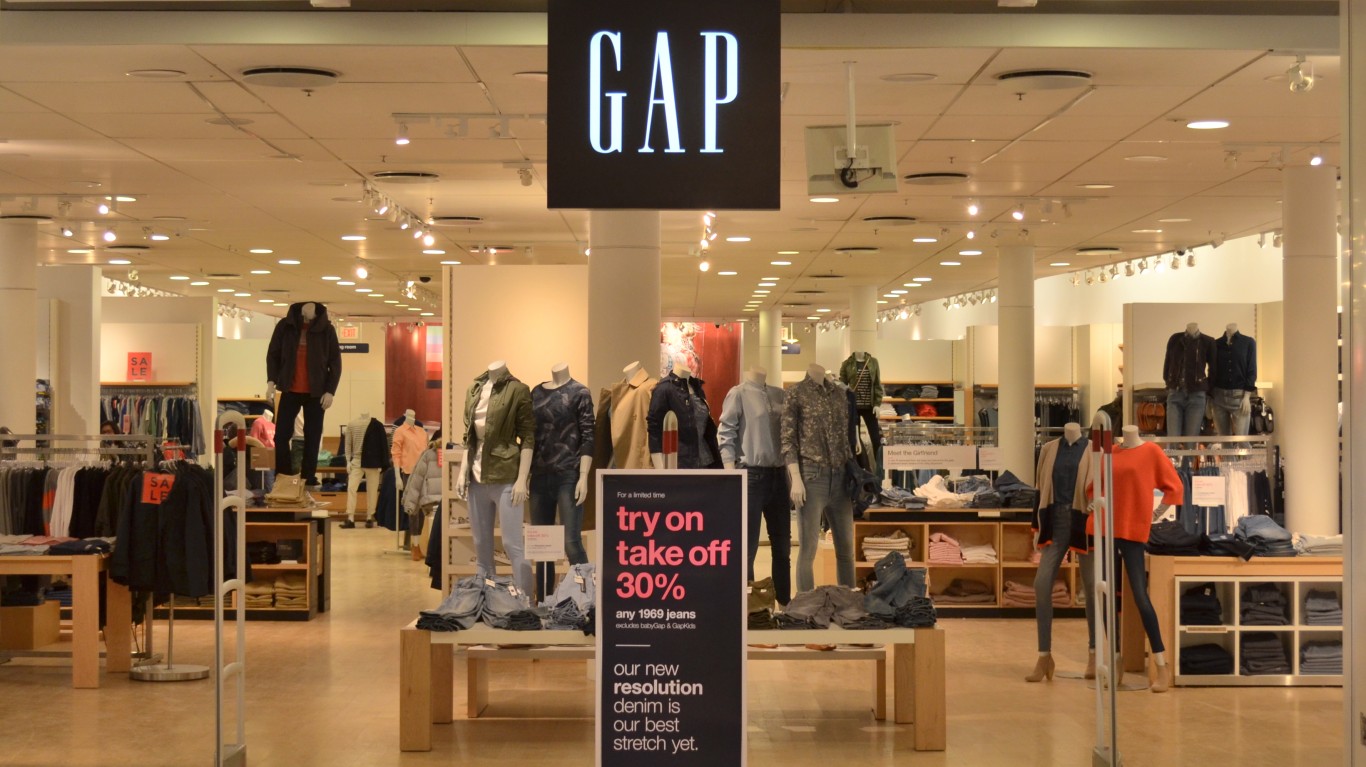
Gap Inc. (NYSE: GPS) has disappointed investors again, and they have paid the price. Revenue for its most recent quarter was down 2% to $3.7 billion. That does not tell much of a terrible story.
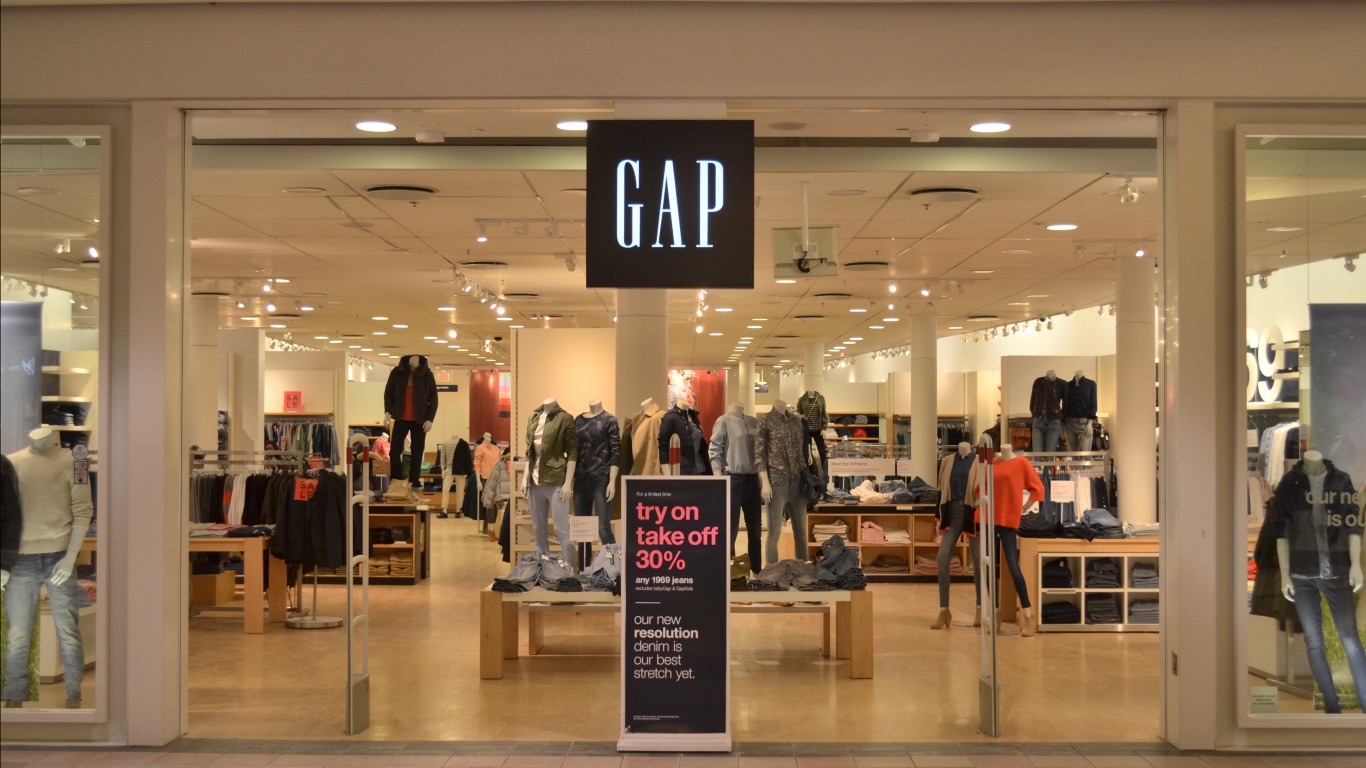
Net operating margins for the entire company were only 6%, which means many locations lost money. Sales at of its flagship Gap brand dropped 10% in the quarter, after a 4% drop in the comparable quarter last year. The Gap brand can barely close stores fast enough to keep up with the decline. Its alternative is to kill the brand and keep its healthier Old Navy and Banana Republic operations.
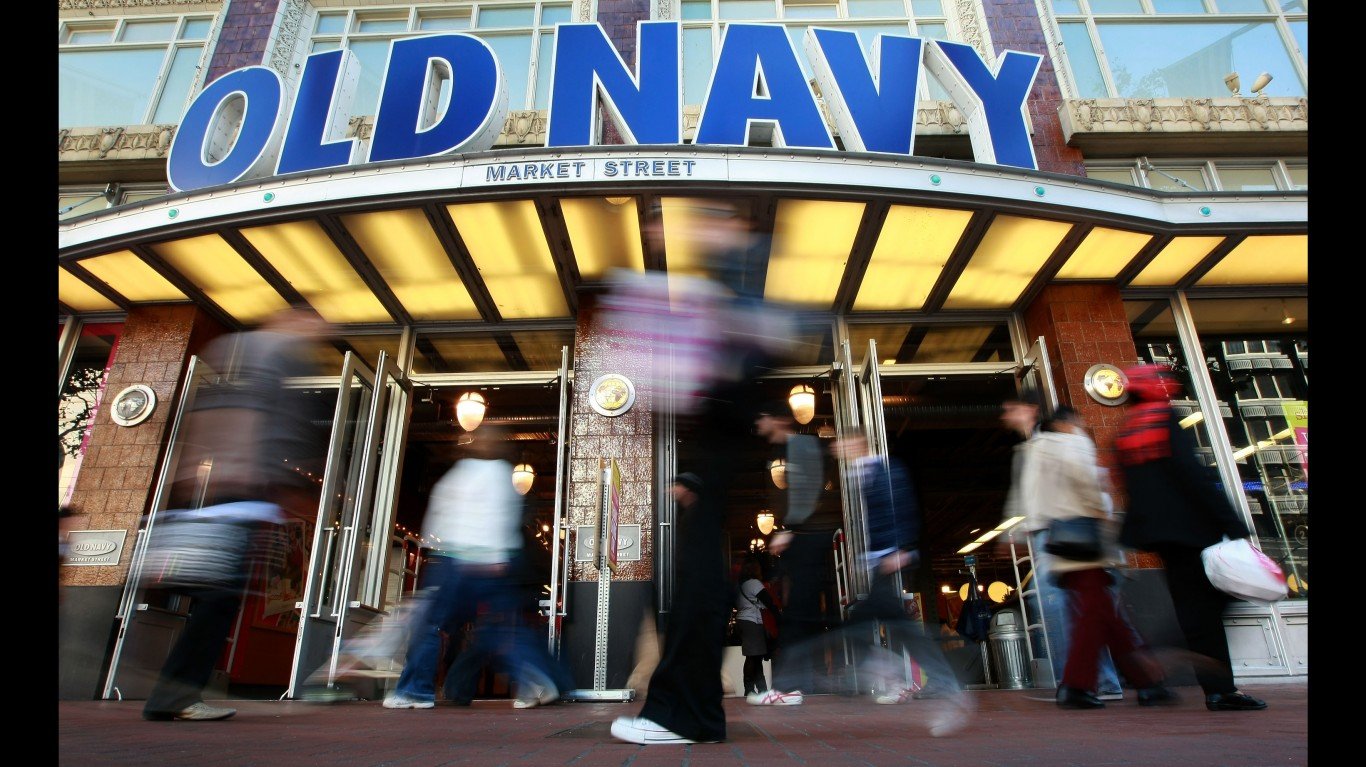
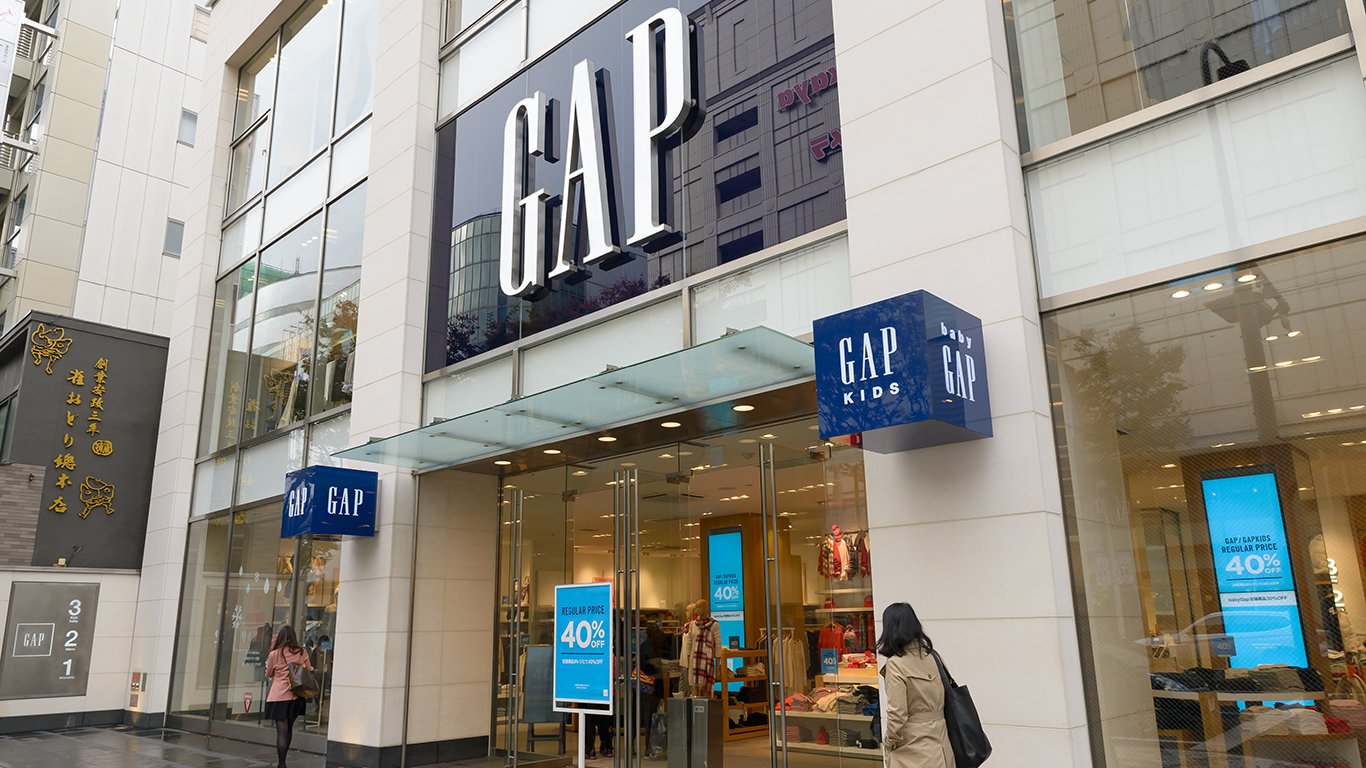
Gap already has decided to spin off Old Navy to shareholders, which is a radical plan. Its success contrasts with the trouble at the rest of the company. The spin-off will happen sometime next year. The idea is that Gap management can focus on its damaged brands, but what does it really have to focus on? The Gap brand will close 230 stores in the next two years. The 10% plunge in Gap store sales last quarter begs the question of whether an effort to save the brand is worthwhile at all.
Gap’s third brand, Banana Republic, seems worth saving. It is smaller than the other two brands. At the end of last quarter, it had 600 stores, compared to 1,082 for Gap and 1,160 for Old Navy.
In an age when e-commerce already has wrecked or nearly wrecked some of America’s largest and most iconic retailers, decisions for brick-and-mortar retailers to retrench or close are ever more frequent. Sears went bankrupt, and it has barely risen from the ashes. Only 400 Sears stores will remain from a total that was close to 2,300 in 2006.
Dressbarn recently disappeared and closed its 650 stores. Toys “R” Us is gone. So are Bon-Ton, Charlotte Russe and Gymboree.
Gap’s share price is down over 50% in the past five years, while the S&P 500 is 43% higher. Gap has started to retrench, aggressively, to pull shareholders out of that spin. However, it will take the only really valuable large brand, Old Navy, it has left and pass it on to shareholders. What is left behind? Primarily, a Gap brand that, by almost any measure, won’t make it. It’s already among the retailers closing the most stores.
Contact [email protected] for any questions or corrections.
Douglas A. McIntyre is the co-founder, chief executive officer and editor in chief of 24/7 Wall St. and 24/7 Tempo. He has held these jobs since 2006.
McIntyre has written thousands of articles for 24/7 Wall St. He is an expert on corporate finance, the automotive industry, media companies and international finance. He has edited articles on national demographics, sports, personal income and travel.
His work has been quoted or mentioned in The New York Times, The Wall Street Journal, Los Angeles Times, The Washington Post, NBC News, Time, The New Yorker, HuffPost USA Today, Business Insider, Yahoo, AOL, MarketWatch, The Atlantic, Bloomberg, New York Post, Chicago Tribune, Forbes, The Guardian and many other major publications. McIntyre has been a guest on CNBC, the BBC and television and radio stations across the country.
A magna cum laude graduate of Harvard College, McIntyre also was president of The Harvard Advocate. Founded in 1866, the Advocate is the oldest college publication in the United States.
TheStreet.com, Comps.com and Edgar Online are some of the public companies for which McIntyre served on the board of directors. He was a Vicinity Corporation board member when the company was sold to Microsoft in 2002. He served on the audit committees of some of these companies.
McIntyre has been the CEO of FutureSource, a provider of trading terminals and news to commodities and futures traders. He was president of Switchboard, the online phone directory company. He served as chairman and CEO of On2 Technologies, the video compression company that provided video compression software for Adobe’s Flash. Google bought On2 in 2009.