Key Numbers Behind the April Jobs Report
The unemployment rate dropped to 4.4% in April, the federal government announced May 5. The economy added 211,000 jobs last month. Expectations were for 190,000 new jobs and an unemployment rate of 4.5%. The Bureau of Labor Statistic releases jobs…


The unemployment rate dropped to 4.4% in April, the federal government announced May 5. The economy added 211,000 jobs last month. Expectations were for 190,000 new jobs and an unemployment rate of 4.5%.
The Bureau of Labor Statistic releases jobs figures for each month on the first Friday of the month that follows. The report, “Employment Situation Summary,” is among the most carefully watched by economists, the Federal Reserve, and the market.
The jobless rate peaked at 10% in October 2009 during the financial crisis. It has been below 5% for all of 2017. The economy has now added jobs for 79 consecutive months.
Click here to see the key numbers behind the April jobs report.
While the national unemployment rate of 4.4% marks nearly a full return to pre-crisis levels, unemployment in some segments of the population is far higher. For others, the rate is lower.
Among black American workers, the unemployment rate of 7.9% in April was twice as high as the rate for white workers at 3.8%.
The report also offers information on people who would like to work full-time but work part-time, as well as on those who are “marginally attached” — individuals who have not looked for a job in the last 12 months. In April, 8.6% of the workforce was considered underemployed, versus 8.9% in March.
Among other important data released in the report are jobs added and lost in major industries. Jobs were added in leisure and hospitality (55,000), health care and social assistance (37,000), financial activities (19,000), and mining (9,000) industries. Jobs were also added in the retail (6,300), construction (5,000), and government (17,000) sectors. The education sub-industry, which is part of the health care and social assistance sector added 4,000 jobs in April.
Experts regard the jobless situation as critical to consumer confidence, and an early indicator of GDP, inflation, and import and export levels. That is among the reasons the Monthly Employment Summary is so closely followed.
24/7 Wall St. reviewed data released on May 5 in the Bureau of Labor Statistics monthly report, “Employment Situation Summary.” Data by each of the breakouts listed here are published monthly by the BLS. The amount of time people have spent unemployed, average wages, and weekly hours worked, also came from the BLS.
These are the numbers behind the April jobs report.

1. All workers (all members of the labor force)
> April unemployment: 4.4%
> March unemployment: 4.5%
> Total unemployed: 7.1 million
The unemployment rate in April was 4.4%, down slightly from the same time last year.

2. Women
> April unemployment: 4.1%
> March unemployment: 4.0%
> Total unemployed: 3.3 million
The unemployment rate for women remained in line with the March rate.

3. Men
> April unemployment: 4.0%
> March unemployment: 4.3%
> Total unemployed: 3.8 million
The Jobless rate for adult men declined from 4.3% in March to 4.0% in April.

4. Blacks
> April unemployment: 7.9%
> March unemployment: 8.0%
> Total unemployed: 1.6 million
At 7.9%, the black unemployment rate remains roughly double the white jobless rate.

5. Hispanics
> April unemployment: 5.2%
> March unemployment: 5.1%
> Total unemployed: 1.4 million
5.2% of Hispanics were unemployed in April, little changed from March.

6. Whites
> April unemployment: 3.8%
> March unemployment: 3.9%
> Total unemployed: 4.8 million
The white unemployment rate ticked downward in each month so far this year, to 3.8% in April.

7. Asians
> April unemployment: 3.2%
> March unemployment: 3.3%
> Total unemployed: 316,000
No demographic group tracked by the government has a lower unemployment rate than Asians.

8. Young workers (16 to 19 years)
> April unemployment: 14.7%
> March unemployment: 13.7%
> Total unemployed: 881,000
While typically more mobile, young workers continue to have among the higher jobless rates. In April, 14.7% of Americans ages 16 to 19 were unemployed.

9. Underemployed
> April unemployment: 8.6%
> March unemployment: 8.9%
> Total underemployed: N/A
The underemployment rate is an important alternative measure of the U.S. labor force. The measure counts unemployed individuals who have given up looking for work, part-time workers who would prefer full-time jobs, and other dissatisfied workers.

10. College graduates
> April unemployment: 2.4%
> March unemployment: 2.5%
> Total unemployed: 1.4 million
College graduates continue to report lower jobless rates and higher incomes compared to labor force participants with less education.

11. High school graduates, no college
> April unemployment: 4.6%
> March unemployment: 4.9%
> Total unemployed: 1.7 million
The jobless rate for Americans with only a high school diploma declined in April, to 4.6%.

12. Industry: education and health services
> April unemployment: 2.6%
> March unemployment: 2.8%
> Total unemployed: 612,000
The education and health services sector, which includes several sub-industries such as the health care and social assistance industry, added 41,000 in April.

13. Industry: retail
> April unemployment: 4.2%
> March unemployment: 4.8%
> Total unemployed: 844,000
The BLS said there was little change in retail jobs, which was reassuring based on the huge number of layoffs the industry has had since the 2016 holiday season, married with large number of store closings.

14. Industry: construction
> April unemployment: 6.3%
> March unemployment: 8.4%
> Total unemployed: 585,000
As the economy enters the spring home building period, construction jobs were little-changed in April. The housing market has been relatively strong as prices have recovered in many areas to pre-recession levels.

15. Industry: leisure and hospitality
> April unemployment: 5.9%
> March unemployment: 6.3%
> Total unemployed: 819,000
The leisure and hospitality jobs spiked by 55,000 in April. This was driven by employment in “food services and drinking” which had an increase of 26,000. The food services category has added 260,000 jobs so far this year.
16. Government sector
> April unemployment: 1.8%
> March unemployment: 1.8%
> Total unemployed: 379,000
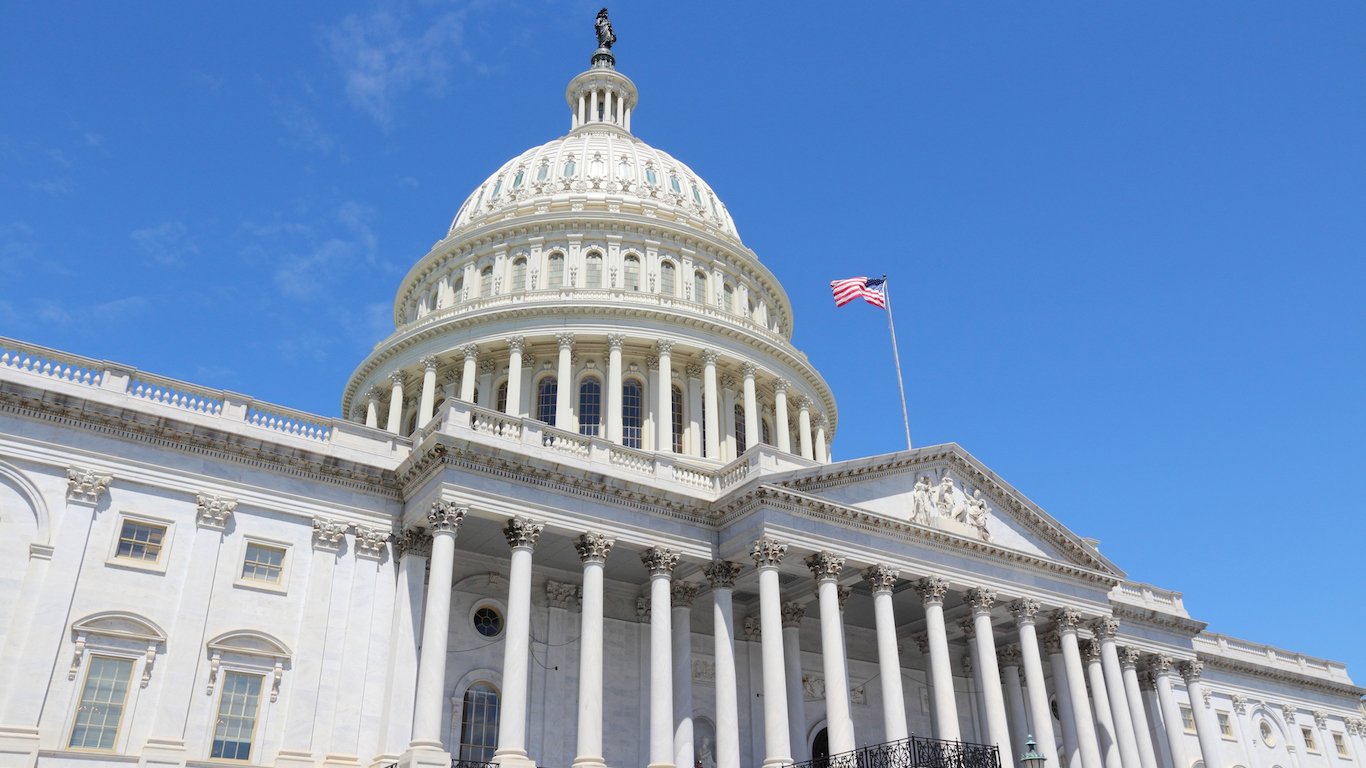
This sector includes all state, local, and federal employees. There is some speculation that President Trump cuts in federal jobs will eventually drop the federal component lower.
Contact [email protected] for any questions or corrections.
Douglas A. McIntyre is the co-founder, chief executive officer and editor in chief of 24/7 Wall St. and 24/7 Tempo. He has held these jobs since 2006.
McIntyre has written thousands of articles for 24/7 Wall St. He is an expert on corporate finance, the automotive industry, media companies and international finance. He has edited articles on national demographics, sports, personal income and travel.
His work has been quoted or mentioned in The New York Times, The Wall Street Journal, Los Angeles Times, The Washington Post, NBC News, Time, The New Yorker, HuffPost USA Today, Business Insider, Yahoo, AOL, MarketWatch, The Atlantic, Bloomberg, New York Post, Chicago Tribune, Forbes, The Guardian and many other major publications. McIntyre has been a guest on CNBC, the BBC and television and radio stations across the country.
A magna cum laude graduate of Harvard College, McIntyre also was president of The Harvard Advocate. Founded in 1866, the Advocate is the oldest college publication in the United States.
TheStreet.com, Comps.com and Edgar Online are some of the public companies for which McIntyre served on the board of directors. He was a Vicinity Corporation board member when the company was sold to Microsoft in 2002. He served on the audit committees of some of these companies.
McIntyre has been the CEO of FutureSource, a provider of trading terminals and news to commodities and futures traders. He was president of Switchboard, the online phone directory company. He served as chairman and CEO of On2 Technologies, the video compression company that provided video compression software for Adobe’s Flash. Google bought On2 in 2009.