After Voter Rejection, Switzerland Revises Plan for Climate Goals
Lawmakers in Switzerland on September 16 drafted a new proposal with the goal of cutting greenhouse emissions in half by 2030, more than a year since their first attempt to pass similar legislation was rebuffed by voters. In the most…

Lawmakers in Switzerland on September 16 drafted a new proposal with the goal of cutting greenhouse emissions in half by 2030, more than a year since their first attempt to pass similar legislation was rebuffed by voters.
In the most recent legislation drafted by the Swiss cabinet, the lawmakers have proposed spending $4.3 billion to protect the environment. The measure includes earmarking $2.89 billion toward making buildings greener and directing $827 million for transport improvements that include electric vehicle charging stations and purchasing electric buses for public transportation.
The proposal includes limiting the amount of tax on fossil fuels that importers – who will be required to offset some emissions – can pass on to customers at the fuel pump to 5 Swiss cents per liter of diesel or gasoline. Car importers would need to boost the fuel efficiency of their fleets, while airlines would have to mix fuels from renewable sources to fly their planes.
The Swiss government’s goal is to increase production from renewables as it phases out nuclear energy, focusing on an additional 2 terawatts of greener electricity output by 2040.
Green parties in Switzerland, which have made notable gains in recent years, criticized the plan as too timid. In 2019, the left-leaning Green Party
garnered 13.2% support, topping its pre-election projection with a six-point jump from its showing in the previous election in 2015. The more centrist Liberal Greens, who espouse a more libertarian approach, also gained ground with 7.8% of the vote, up from under 5% in 2015.
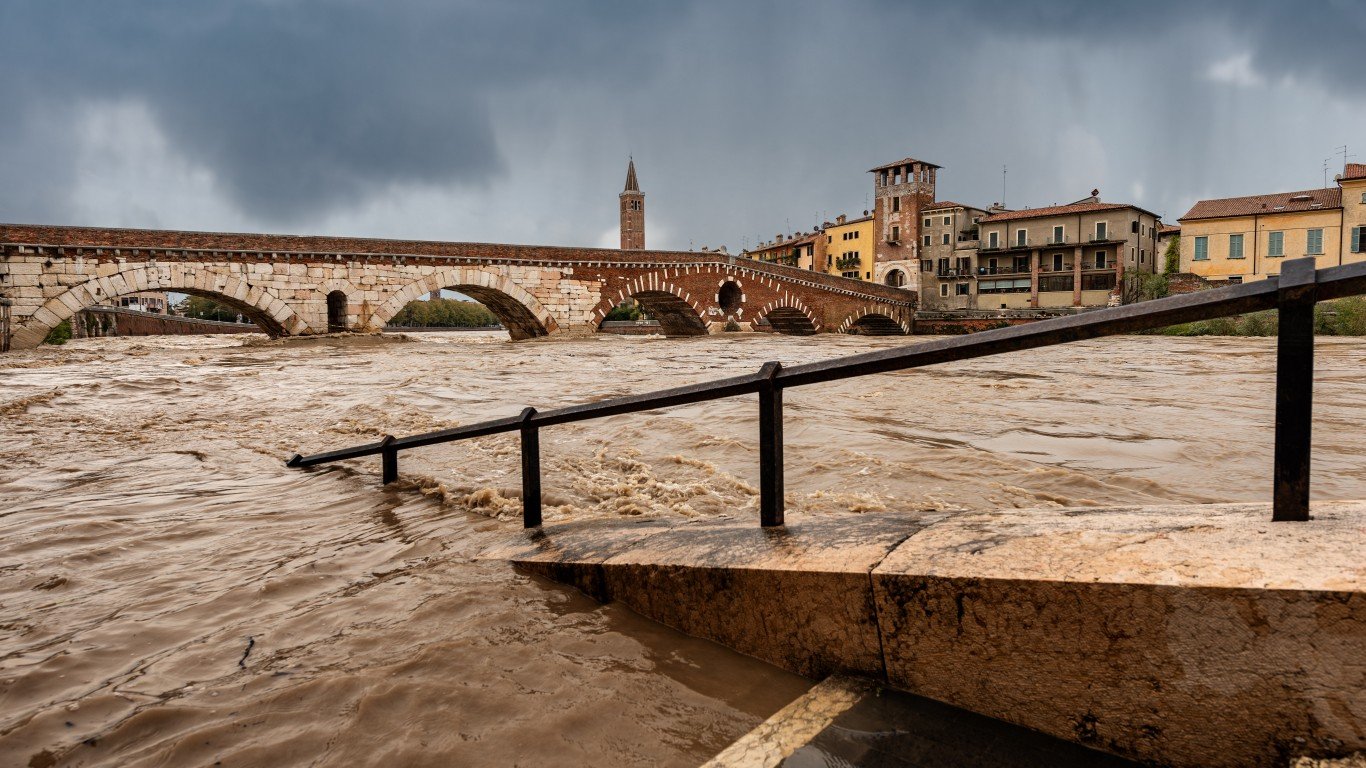
Climate change is of paramount concern in Switzerland. Temperatures in the Alpine nation are rising at twice the global average, and glacier melts are threatening to reduce Swiss hydropower at the Grande Dixence Dam, the world’s tallest gravity dam.
Also complicating matters is the energy crisis triggered by Russia’s invasion of Ukraine. Switzerland, like other European countries, is scrambling to avoid gas and power outages this winter.
Last year, a referendum on climate-change proposals resulted in voters narrowly rejecting the government’s plans for a car-fuel tax and a levy on air tickets. Both of those measures were not included in the latest proposal. That legislation was designed to help Switzerland meet targets under the Paris Agreement on climate change.
Some voters apparently feared the impact that proposal would have on the economy as Switzerland emerged from the pandemic. Opponents to the proposal from July of a year ago said Switzerland is responsible for only 0.1% of global emissions, and they were doubtful that such policies would help the environment. Switzerland operates as a direct democracy, meaning all major decisions are undertaken at the ballot box.
Switzerland’s latest proposal to address climate change comes as the secretary general of the United Nations, Antonio Guterres, said at a mid-September press conference that emissions must be reduced to limit the increase in global temperature to 1.5 degrees above pre-industrial levels.
Trey has been an editor and author at 24/7 Wall St. for more than a decade, where he has published thousands of articles analyzing corporate earnings, dividend stocks, short interest, insider buying, private equity, and market trends. His comprehensive coverage spans the full spectrum of financial markets, from blue-chip stalwarts to emerging growth companies.
Beyond 24/7 Wall St., Trey has created and edited financial content for Benzinga and AOL's BloggingStocks, contributing additional hundreds of articles to the investment community.
Trey's editorial expertise extends across multiple publishing environments. He served as production editor at Dearborn Financial Publishing and development editor at Kaplan, where he helped shape financial education materials. Earlier in his career, he worked as a writer-producer at SVE. His freelance editing portfolio includes work for prestigious clients such as Sage Publications, Rand McNally, the Institute for Supply Management, the American Library Association, Eggplant Literary Productions, and Spiegel.
Outside of financial journalism, Trey writes fiction and has been an active member of the writing community for years, moderating workshop sessions at regional conventions.