Faraday Stock Falls Toward $0
EV stocks in general have been in trouble for the last several months. Even Tesla has had an uncharacteristic falloff. Smaller companies, which include Rivian, face existential moments. It just recalled almost every car it has sold since it began…


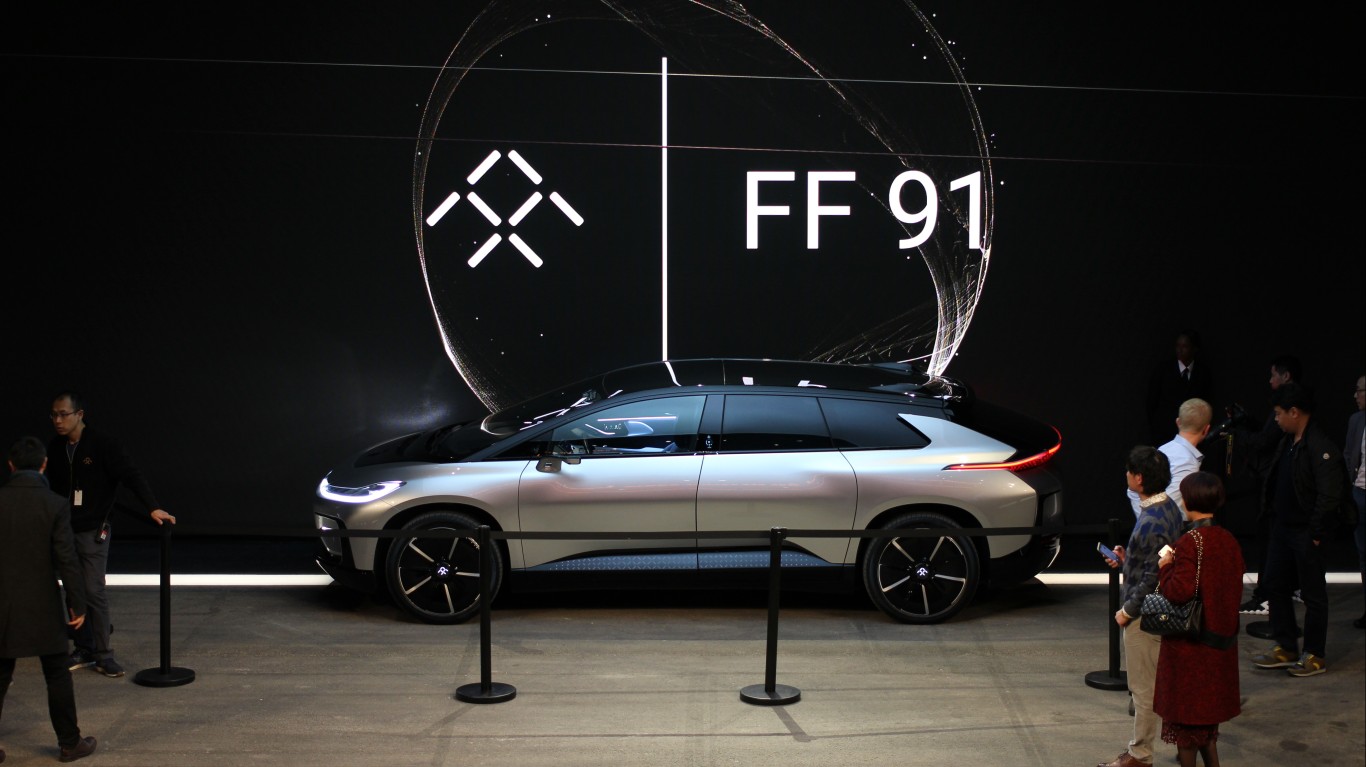
EV stocks in general have been in trouble for the last several months. Even Tesla has had an uncharacteristic falloff. Smaller companies, which include Rivian, face existential moments. It just recalled almost every car it has sold since it began production. No electric car company is in more trouble than Faraday Future Intelligent Electric Inc. Despite raising a modest sum of money recently, its shares trade at an extremely low $.63. More bad news about its operations could drive that to $0.
Faraday’s drop is stunning. Shares traded for over $7 in July.
The management and board situation at Faraday has turned ugly. Executive chair Susan Swenson resigned because of death threats, two other directors left at the same time.
Faraday has a long list of troubles. Outside shareholders have essentially taken control of the company and it is unclear precisely what they plan to do. The SEC has started a probe of Faraday’s finances. Its auditors have resigned. Faraday’s stock has also faced delisting because its share price has traded below $1, a Nasdaq regulation.
One bright spot is that Faraday has cut a deal for new capital. According to The Wall Street Journal, “…has secured up to $100 million in new financing to fund operations after reaching a deal with one of its largest shareholders to resolve a monthslong governance dispute.”
Finally, Faraday delayed the release of its new vehicle. While this has become almost routine among new EV companies, most have at least adequate financing to remain in business for a few years. With an operating loss of $137 million in its most recent quarter, Faraday does not have that kind of runway.
Even with new governance and an infusion of cash, Faraday’s delay in releasing a car means its future is in great doubt.
Contact [email protected] for any questions or corrections.
Douglas A. McIntyre is the co-founder, chief executive officer and editor in chief of 24/7 Wall St. and 24/7 Tempo. He has held these jobs since 2006.
McIntyre has written thousands of articles for 24/7 Wall St. He is an expert on corporate finance, the automotive industry, media companies and international finance. He has edited articles on national demographics, sports, personal income and travel.
His work has been quoted or mentioned in The New York Times, The Wall Street Journal, Los Angeles Times, The Washington Post, NBC News, Time, The New Yorker, HuffPost USA Today, Business Insider, Yahoo, AOL, MarketWatch, The Atlantic, Bloomberg, New York Post, Chicago Tribune, Forbes, The Guardian and many other major publications. McIntyre has been a guest on CNBC, the BBC and television and radio stations across the country.
A magna cum laude graduate of Harvard College, McIntyre also was president of The Harvard Advocate. Founded in 1866, the Advocate is the oldest college publication in the United States.
TheStreet.com, Comps.com and Edgar Online are some of the public companies for which McIntyre served on the board of directors. He was a Vicinity Corporation board member when the company was sold to Microsoft in 2002. He served on the audit committees of some of these companies.
McIntyre has been the CEO of FutureSource, a provider of trading terminals and news to commodities and futures traders. He was president of Switchboard, the online phone directory company. He served as chairman and CEO of On2 Technologies, the video compression company that provided video compression software for Adobe’s Flash. Google bought On2 in 2009.